

More news on this day
Travellers across Asia faced mounting disruption this weekend as more than two dozen flights linking Taiwan, Hong Kong, Indonesia and Malaysia were cancelled or heavily delayed, stranding passengers in major hubs and disrupting itineraries to Jakarta, Bali, Makassar, Kuala Lumpur, Penang, Taipei and other key destinations.
Get the latest news straight to your inbox!
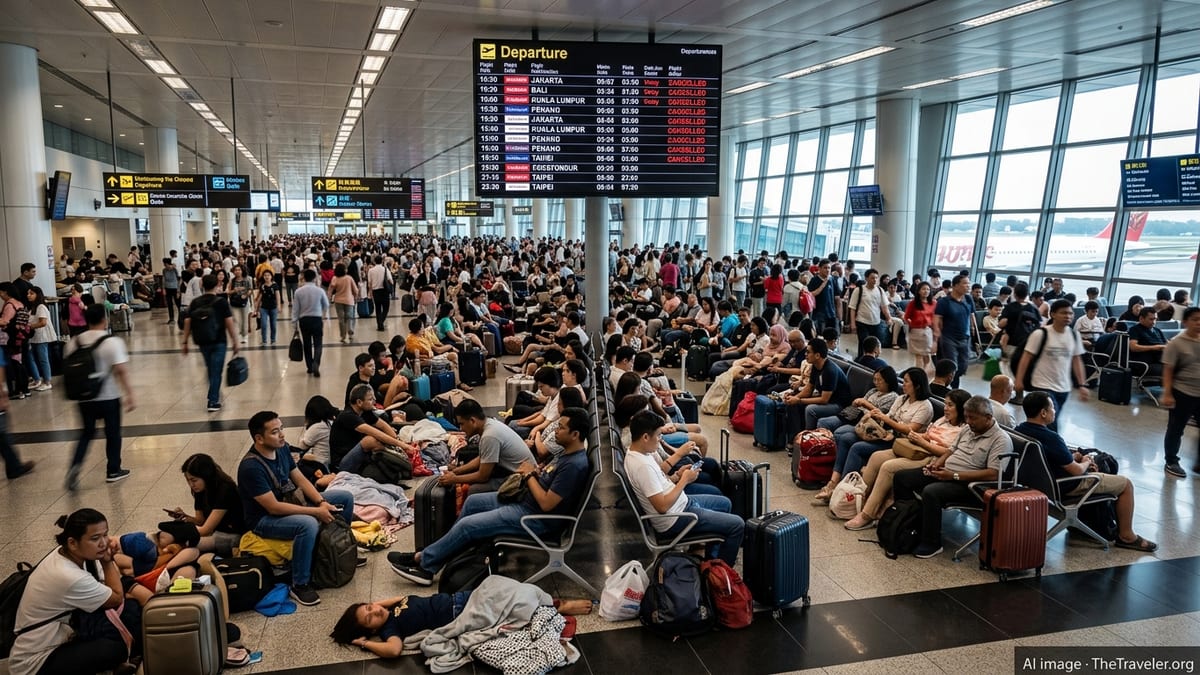
Widespread Disruptions Hit Regional Flight Networks
According to publicly available flight tracking data and regional media coverage, at least 25 flights were cancelled across multiple Asian airports over the past 24 to 48 hours, with ripple effects across domestic and international networks. Carriers affected include Batik Air, low cost and full service operators in Indonesia and Malaysia, and other regional airlines operating routes through Taiwan and Hong Kong.
Services into and out of Jakarta, Bali, Makassar, Kuala Lumpur, Penang and Taipei have seen the sharpest disruption, with cancellations, rolling delays and aircraft being repositioned. Passengers reported missed connections, overnight airport stays and short-notice schedule changes, particularly on itineraries combining regional and long haul sectors.
The pattern of disruption follows several weeks of heightened operational strain on Asian airlines, which have been managing volatile airspace conditions, weather related issues and tight aircraft utilisation. Recent advisories from carriers such as Batik Air highlight a continued focus on safety driven adjustments to schedules when conditions change.
Passengers Stranded in Bali, Kuala Lumpur, Hong Kong and Taipei
In Indonesia, cancellations at Bali’s Ngurah Rai International Airport have left thousands of travellers unable to depart on schedule. Local reports and passenger accounts indicate that multiple international services, including some operated or codeshared by Batik Air and other regional carriers, were pulled from the departure boards, forcing visitors to extend hotel stays or queue for rebooking at crowded airline counters.
Jakarta and Makassar have also experienced knock on effects as aircraft and crew went out of position. Travellers on domestic connections reported being moved to later services or re-routed via alternative hubs, sometimes arriving a full day later than planned. Similar scenes have been reported at Kuala Lumpur International Airport, where Malaysia based carriers, including Malaysia Airlines and Batik Air Malaysia, have adjusted frequencies and cancelled selected departures.
Further north, Hong Kong and Taipei saw a mix of cancellations and extended delays on flights linking Southeast Asia with North Asia. Publicly available airport information shows that some services to and from Taipei Taoyuan and Hong Kong International Airport were pulled from operation, leaving transfer passengers stranded in transit areas while they awaited updated itineraries from airlines and travel agents.
Operational Pressures Behind the Wave of Cancellations
While the precise triggers varied by route and carrier, the latest wave of cancellations reflects a combination of operational and external pressures. Airlines in the region have been adjusting schedules in response to evolving airspace constraints linked to tensions in the Middle East, which have affected long haul routings between Asia, Europe and parts of Africa. Rerouted aircraft, longer flight times and crew duty limitations have all contributed to tighter operating margins.
At the same time, weather related challenges and high seasonal demand have limited spare capacity. Taiwan and parts of Southeast Asia remain susceptible to heavy rain and strong winds during late March, and publicly available airport data from previous disruptions shows how quickly even a small number of weather related cancellations can propagate through complex regional networks.
Batik Air recently issued a precautionary advisory noting that flights into certain regions may be subject to changes, including cancellations and diversions, as conditions evolve. Similar notices from other Asian and Gulf based carriers underscore how sensitive current schedules are to further shocks, from airspace closures to technical issues that take aircraft temporarily out of service.
Impact on Key Routes to Jakarta, Bali, Makassar and Malaysian Cities
The latest cancellations have been particularly disruptive on leisure heavy routes to Bali and Penang and on business corridors to Jakarta, Kuala Lumpur and Taipei. Travellers heading to Bali from hubs such as Kuala Lumpur and Hong Kong reported that early morning or late night departures were among the first to be cut, reflecting airlines’ efforts to consolidate demand onto fewer, fuller flights.
In Indonesia’s domestic market, links between Jakarta, Bali and Makassar are crucial for both tourism and inter island connectivity. When international arrivals are delayed or cancelled, downstream flights often depart with empty seats or are retimed, complicating logistics for passengers attempting same day connections to secondary cities. Reports indicate that some travellers bound for Makassar and eastern Indonesia were rebooked via Jakarta with overnight layovers.
In Malaysia, cancellations on services linking Kuala Lumpur to Penang and other regional destinations have prompted a mix of short notice schedule changes and upgauging of selected flights to larger aircraft where available. This has helped absorb some of the displaced demand, but many passengers have still faced multi hour waits or overnight stays near the airport.
What Travellers Can Expect in the Coming Days
Airline and airport data suggest that further short notice adjustments are possible as carriers work to reposition aircraft and crew and to rebuild normal schedules. Travellers with upcoming itineraries touching Jakarta, Bali, Makassar, Kuala Lumpur, Penang, Hong Kong or Taipei should be prepared for gate changes, retimings or aircraft swaps, especially on services operated by carriers already running tight utilisation patterns.
Publicly available guidance from airlines across the region encourages passengers to monitor their flight status closely through official channels on the day of travel and, where possible, to allow additional time for connections. Many carriers are offering limited flexibility for those affected by cancellations, including rebooking on later flights or alternative routings without change fees, subject to seat availability and fare rules.
For travellers already stranded in transit, local media coverage indicates that rebooking queues at major Asian hubs remain lengthy at peak times. Travel experts recommend keeping boarding passes, receipts and written confirmation of disruptions, as these documents can support subsequent claims with airlines, travel agents or travel insurance providers once journeys are completed and normal operations gradually resume.