

More news on this day
Thousands of passengers were left stranded across major Gulf hubs on April 12, 2026, as a fresh wave of cancellations and delays hit Saudia, Kuwait Airways, Gulf Air, FlyDubai and EgyptAir, disrupting already fragile air links between Saudi Arabia, the United Arab Emirates and Kuwait.
Get the latest news straight to your inbox!
Targeted Groundings Add to Regionwide Airspace Disruption
According to published flight-tracking data compiled on April 12, a combined 19 flights operated by Saudia, Kuwait Airways, Gulf Air, FlyDubai and EgyptAir were grounded across the Middle East, on top of more than 100 recorded delays. These latest figures follow weeks of rolling airspace closures and capacity cuts triggered by heightened regional tensions and military activity.
Coverage from specialist aviation outlets indicates that traffic across key Gulf hubs has been volatile since the end of February, when a sharp escalation in the Iran conflict led to temporary shutdowns or severe restrictions in the airspace of Iran, Iraq, Kuwait and parts of the Gulf. Airlines have since been forced into complex rerouting, extended flying times and repeated last minute changes to schedules.
Operational updates from multiple carriers show that while some long haul and regional services continue to operate on modified routings, short haul intra-Gulf flights have borne the brunt of the latest disruption. The grounding of 19 services in a single day, spread across five major regional airlines, underscores how fragile the recovery remains even as some routes begin to reopen.
The pattern emerging over recent days suggests that airlines are prioritising a core set of trunk routes and repatriation-style services, while trimming or temporarily suspending point to point links that rely on seamless overflight permissions and predictable traffic flows.
Kuwait Airport Shutdown Amplifies Strain on Regional Networks
The suspension of operations at Kuwait International Airport has become one of the most acute choke points in the current disruption. Publicly available information on April 11 showed the airport remaining closed to commercial traffic, forcing Kuwait Airways to cancel or reroute its services via alternative hubs such as Dammam, Bahrain and Dubai.
Travel industry coverage notes that the shutdown has stranded thousands of passengers who had been using Kuwait City as a transfer point between Europe, South Asia and the wider Gulf. With no clear timeline yet for a full reopening, regional carriers are still diverting aircraft away from Kuwaiti airspace, adding pressure on neighboring airports and complicating crew and fleet planning.
The knock-on effect is evident across Kuwait Airways’ wider schedule. Flights that would ordinarily connect seamlessly across the carrier’s network are instead being rebooked onto fragmented itineraries or held back entirely. For travelers, this has translated into long overnight waits at surrounding hubs and a surge in demand for scarce seats on remaining services.
Analysts following Gulf aviation trends suggest that prolonged closure of even a single hub like Kuwait can reverberate far beyond its borders, given the high share of connecting traffic and the region’s role as a bridge between Europe, Asia and Africa.
Saudia, Gulf Air and FlyDubai Juggle Limited Capacity
Flag carriers Saudia and Gulf Air, along with Dubai based FlyDubai, have each been operating on significantly reduced schedules since late February, with frequent tactical adjustments. Industry reports describe Gulf Air suspending operations to and from Bahrain for extended periods, while temporarily relocating part of its activity to Saudi Arabia’s King Fahd International Airport in Dammam to keep some services running.
Saudia, which had halted many international flights at the height of the airspace closures, has started restoring a small number of routes. Recent network updates show select flights to Dubai, Abu Dhabi and Amman resuming from April 11 under carefully controlled conditions, even as other sectors remain on hold or subject to last minute change. This partial restart has helped some stranded travelers move onward, but capacity remains well below pre crisis levels.
FlyDubai continues to publish limited operations out of Dubai International, with notices highlighting longer flight times due to indirect routings and temporary suspension of certain destinations. The airline has also had to accommodate diversions linked to infrastructure work, such as runway refurbishment in Europe, compounding the challenge of operating within an already constrained regional airspace environment.
Despite these efforts to maintain a skeletal network, observers point out that day to day reliability is still fragile. With corridors opening and closing at short notice, even flights listed as operating can be delayed for hours or cancelled outright if security conditions shift.
EgyptAir Navigates a Gradual Restart to Gulf Destinations
EgyptAir has emerged as one of the first regional carriers to map out a phased return to Gulf routes, while still grappling with restrictions. Public statements from the airline, reported by Egyptian media, outline a flexible operating plan centred on a limited number of daily flights to key destinations as airspace and regulatory approvals permit.
As of April 10 and 11, coverage indicates that EgyptAir is running one daily flight to Sharjah, Dubai and Riyadh, and two daily flights to Abu Dhabi, Dammam and Amman. These services are designed to restore essential links for business travellers, expatriate workers and those returning to Egypt after being caught up in earlier waves of cancellations.
However, flights to Kuwait, Doha, Bahrain and Beirut remain subject to pending approvals. The airline has stated that new schedules for these markets will only be unveiled once coordination with civil aviation authorities is complete, highlighting the continued sensitivity of airspace conditions around the Gulf.
Travel industry analysts view EgyptAir’s strategy as a cautious template for how other regional carriers might gradually rebuild their Gulf connectivity, using tightly controlled frequencies and a focus on major city pairs, while maintaining the ability to scale back quickly if the security picture deteriorates again.
Passengers Face Long Queues, Rolling Delays and Uncertain Itineraries
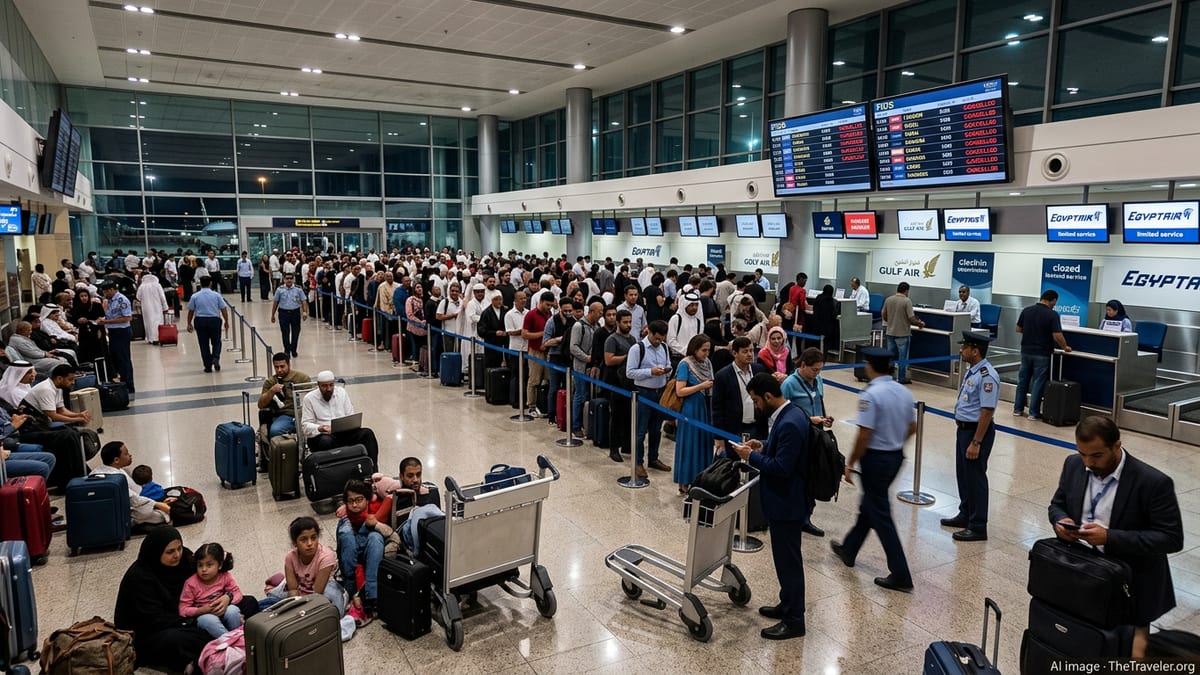
For travellers on the ground, the combination of grounded flights, rolling delays and evolving airspace rules has translated into a difficult and often confusing experience. Reports from airports in Saudi Arabia, the UAE and neighboring states describe crowded departure halls, long queues at airline desks and frequent schedule changes appearing on departure boards with little notice.
With over 100 delays recorded alongside the 19 grounded flights highlighted on April 12, even those whose services are still operating have faced extended transit times. Rerouted flights are taking longer to reach their destinations, while missed connections are forcing passengers into overnight stays or multi stop replacement itineraries.
Public guidance from airlines and airport operators consistently urges passengers to verify their flight status through official channels before leaving for the airport, and to build in additional time for security checks and potential last minute changes. Flexible rebooking policies remain in place at several carriers, although availability is tight on many of the most sought after routes.
With tensions in the wider region still elevated and key airspace corridors only partially reopened, industry observers expect the pattern of intermittent groundings and widespread delays to persist in the short term. For now, travelers using Gulf hubs are being advised to stay informed, remain flexible and prepare for itineraries that may change more than once before departure.