

More news on this day
Travelers across Switzerland faced mounting disruption on Sunday as a cluster of cancellations and rolling delays by Scandinavian Airlines, Pegasus Airlines, Kuwait Airways and several other carriers left passengers stranded at Zurich and Geneva airports and severed key international connections.
Get the latest news straight to your inbox!
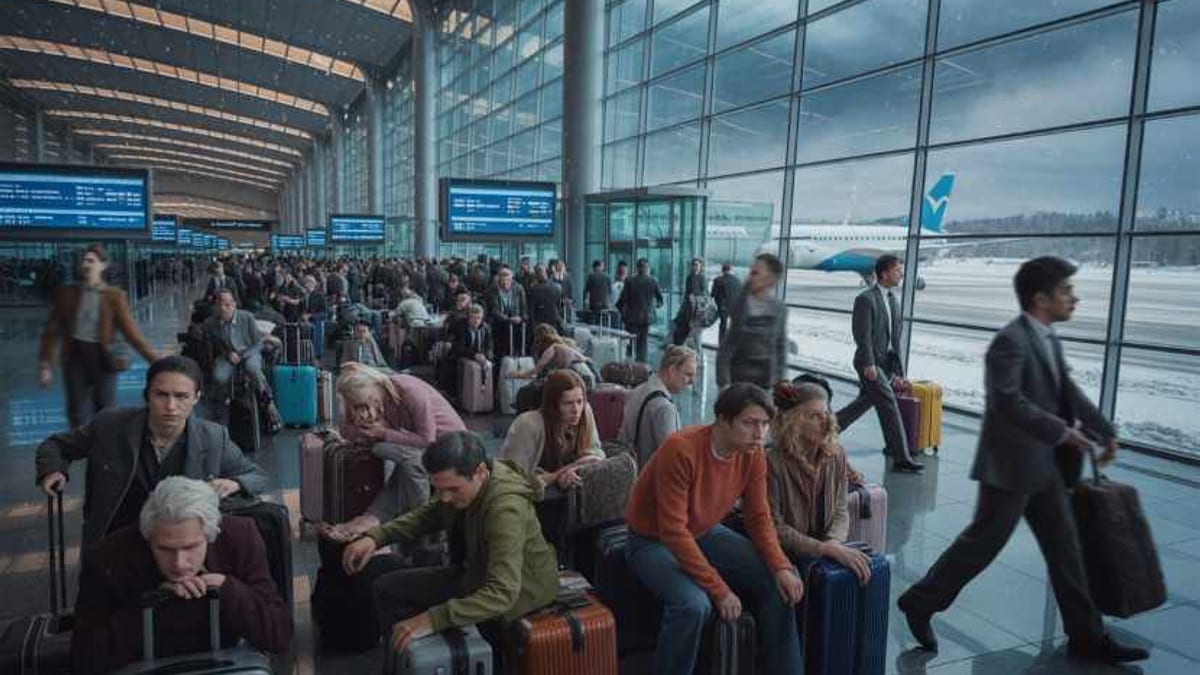
Image by Travel And Tour World
Eight Flights Pulled as Disruptions Hit Zurich and Geneva
Published flight-status information and operational updates from airlines and airport monitors indicate that at least eight services operated by Scandinavian Airlines, Pegasus Airlines, Kuwait Airways and other carriers serving Switzerland were suspended over the weekend, with several additional flights suffering extended delays. The impact has been most visible at Zurich Airport and Geneva Airport, the country’s two largest hubs.
The affected services include a mix of European and long-haul routes, cutting links between Switzerland and key gateways in Scandinavia, Turkey and the Gulf. While precise tallies have continued to shift across the day as timetables are adjusted, the pattern points to a tightening of capacity just as late-March travel demand builds ahead of the Easter holiday period.
According to publicly available tracking data, cancellations and late departures began to cluster overnight and into Sunday morning, creating a knock-on effect that spilled into afternoon and evening schedules. Several of the suspended flights had been expected to depart during peak connecting banks, magnifying the disruption for travelers relying on onward connections.
Airline advisories and airport information boards show that some carriers opted to consolidate services, combining passengers from multiple departures onto a reduced number of flights, while others removed rotations entirely from the schedule for operational reasons. In many cases, revised timings were only confirmed close to departure, heightening uncertainty for those already at the airport.
Passengers Face Long Queues, Missed Connections and Limited Alternatives
Reports from travelers transiting through Zurich and Geneva describe long queues at airline counters, crowded departure halls and difficulty securing rebooked itineraries. With multiple airlines trimming capacity on overlapping dates, options to reroute at short notice on alternative carriers have been limited, especially for long-haul journeys bound for the Middle East, Africa and Asia.
Publicly shared accounts indicate that passengers on Scandinavian Airlines services linking Switzerland with Nordic capitals have faced a particular risk of missed onward flights, as reduced frequencies leave fewer same-day alternatives. Travelers connecting onward from Zurich and Geneva to long-haul routes on partner or codeshare airlines reported being offered rebooking on later dates or via indirect routings that add significant travel time.
Kuwait Airways and Pegasus Airlines passengers have also reported uncertainty about their itineraries, with some accounts highlighting gaps between official timetable information and real-time status updates. In several cases, travelers described receiving confirmation of a cancellation or major delay only within 24 to 48 hours of departure, leaving limited time to adjust plans or secure hotel accommodation.
For those already on the move, the clustering of cancellations has led to overnight stays in Switzerland and unplanned stopovers in third countries when partial journeys could still be completed. Families, students and business travelers have all reported challenges in rearranging onward flights at short notice, as remaining seats on alternative routes are quickly snapped up.
Operational Pressures and Regional Instability Add to Strain
Industry analyses published in recent weeks point to a combination of operational pressures and regional instability as underlying drivers of the current disruption pattern. Carriers serving the Middle East and broader Gulf region have been navigating airspace restrictions, capacity constraints at key hubs and evolving security considerations, all of which can ripple through European schedules.
For Scandinavian Airlines and Pegasus Airlines, which rely on tightly timed aircraft rotations and high aircraft utilization, even modest upstream delays can cascade into cancellations later in the day. When aircraft and crew become out of position, airlines often resort to cutting selected rotations to restore balance across the network, particularly on routes where multiple daily frequencies might otherwise provide flexibility.
Publicly available commentary from aviation analysts suggests that smaller and mid-sized carriers with limited spare aircraft are especially vulnerable to these ripple effects. When disruptions overlap with seasonal peaks or heavy maintenance periods, their ability to absorb shocks through spare capacity is reduced, leading to last-minute schedule changes at outstations such as Zurich and Geneva.
Swiss airports have also been managing broader congestion related to weather-related delays and diversions across Europe in recent weeks. When arrivals into Switzerland are disrupted, outbound flights on affected aircraft often depart late or are removed from the schedule entirely, contributing to the patchwork of cancellations now being felt by passengers.
Confusion Over Rights and Compensation for Stranded Travelers
The latest wave of cancellations has revived questions among travelers about their rights under European and Swiss passenger-protection rules. Online discussions and guidance from consumer organizations emphasize that many flights departing from Zurich and Geneva fall under European-style compensation regimes, even when operated by non-EU carriers, if they depart from an airport within the European Union or a country that mirrors similar standards.
However, the patchwork of jurisdictions creates complexity. Switzerland applies its own framework for passenger rights that is broadly aligned with EU norms but may differ in detail, and not all airlines involved in the current disruptions are based in the EU or Switzerland. This can complicate efforts by passengers to claim compensation or reimbursement for additional expenses such as hotels, meals and replacement tickets.
Travel forums show that some travelers are unsure whether schedule changes attributed to operational constraints, security conditions or airspace restrictions qualify as extraordinary circumstances that would exempt carriers from compensation obligations. Others are focused primarily on obtaining timely rebooking, with many reporting that phone lines and online chat channels have been heavily congested during the latest disruption.
Consumer advocates generally advise passengers to retain all documentation, including boarding passes, written notices of cancellation or delay, and receipts for out-of-pocket costs. Such records can help support any claims lodged with airlines or, where applicable, with national enforcement bodies overseeing passenger rights.
Airlines Urge Passengers to Monitor Status and Expect Ongoing Changes
Public updates from airlines and airport operators indicate that schedules involving Zurich and Geneva remain subject to late adjustments, particularly on routes connecting with the Middle East, Turkey and northern Europe. Travelers booked with Scandinavian Airlines, Pegasus Airlines, Kuwait Airways and other affected carriers are being advised to monitor their flight status closely on the day of departure and to verify any changes before heading to the airport.
Industry observers note that, as of late March, capacity on some international routes remains constrained, meaning that rebooking options can be limited even several days after an initial cancellation. In this environment, passengers seeking alternative arrangements may need to consider nearby departure points or multi-stop itineraries if non-stop options are no longer available.
Airlines are encouraging customers who have flexible plans to make use of offered change-fee waivers or travel credits instead of insisting on immediate travel, in order to ease pressure on the most congested days. Travel agents and corporate travel managers are likewise recommending that passengers build extra time into itineraries that rely on tight connections through Zurich or Geneva, especially when onward segments involve the Middle East or Asia.
With the broader operational environment still volatile, aviation analysts suggest that the pattern of rolling delays and targeted cancellations affecting Swiss hubs could persist in the short term. Travelers planning to pass through Zurich and Geneva in the coming days are therefore being urged, through published guidance and advisories, to remain flexible, stay informed and be prepared for last-minute adjustments to their journeys.