

More news on this day
More than 65 flights across Indonesia, Malaysia, Hong Kong and Taiwan have been cancelled or heavily disrupted in recent days, affecting services operated by Qatar Airways, Batik Air, Malaysia Airlines and other regional carriers and leaving thousands of passengers stranded or forced into last-minute rebooking.
Get the latest news straight to your inbox!
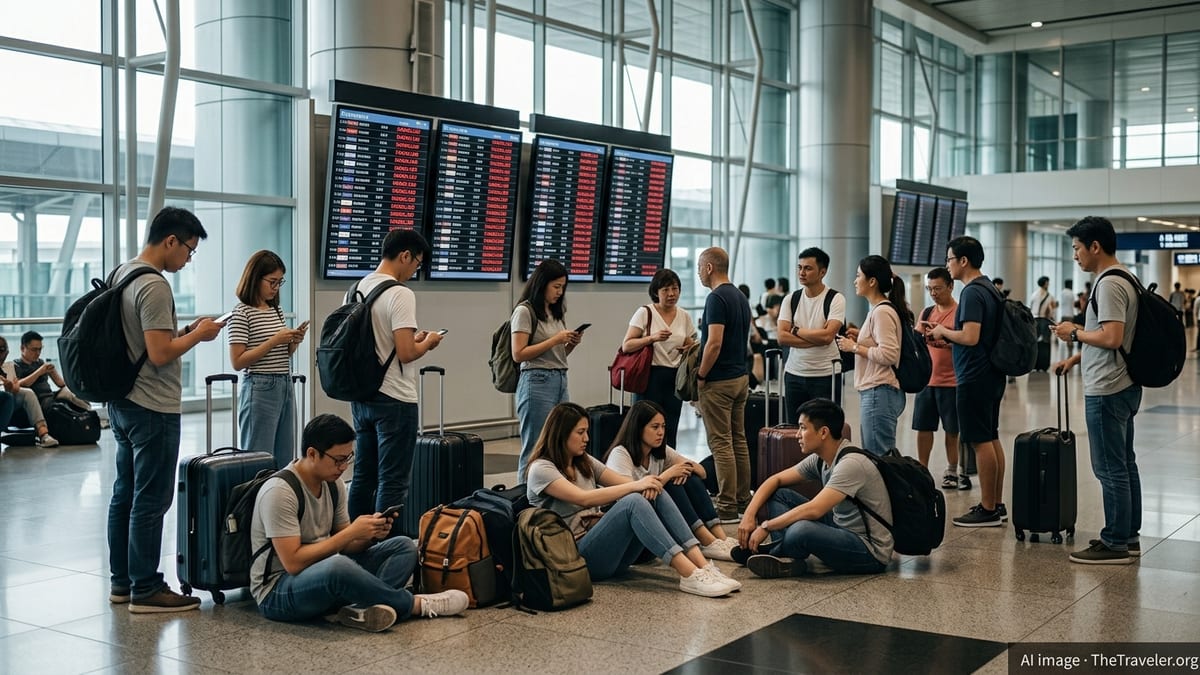
Wide-Ranging Cancellations Hit Major Asian Gateways
Published flight-status data and airline notices show a rolling wave of cancellations and schedule changes across key Southeast and East Asian hubs, including Jakarta, Denpasar in Bali, Kuala Lumpur, Hong Kong and Taipei. The disruptions are concentrated on long-haul and regional connections that typically funnel travelers between Asia, Europe and the Middle East, creating knock-on impacts for onward journeys.
Qatar Airways has been at the center of many of the issues, with numerous passengers reporting last-minute cancellations of services linking Asian cities to Doha and onward to Europe and North America. In several cases, travelers described having one replacement flight cancelled after another, stretching trips out by days and forcing extended hotel stays while they waited for alternatives.
Regional carriers have also been drawn into the turmoil. Operations by Batik Air and Malaysia Airlines on busy routes between Indonesia and Malaysia and onward to Hong Kong and Taiwan have seen aircraft retimed, consolidated or cancelled on short notice. Low-cost and hybrid airlines that share these corridors have made selective cuts as well, reducing options for same-day rebooking.
The result is a patchwork of disrupted schedules that varies by day and by carrier, complicating travel through some of Asia’s most important leisure and business gateways at a time when demand remains strong.
Jakarta and Bali Face Severe Schedule Pressure
Indonesia’s main international gateways at Jakarta Soekarno Hatta and Bali’s Ngurah Rai are among the hardest hit, according to airport departure boards and traveler accounts. Flights serving popular outbound corridors to the Middle East and Europe, particularly those previously routed via Doha, have experienced repeated cancellations or substantial retiming.
Passengers traveling from European cities to Jakarta and onward to Bali reported losing at least one full travel day when their original Qatar Airways services were cancelled and the next available departures departed days later. Some were rebooked via alternative hubs such as Istanbul or Singapore, while others were told to seek refunds and arrange their own itineraries on remaining carriers.
Domestic and short-haul regional links are feeling the strain as connecting travelers attempt to piece together new routings. Batik Air, which operates dense schedules across Indonesia and into Kuala Lumpur and other regional centers, has adjusted frequencies and aircraft types on some routes, further tightening seat availability for those trying to move between Jakarta, Bali and neighboring countries at short notice.
The combination of international cancellations and constrained regional capacity has led to longer queues at airline counters and information desks at both Jakarta and Bali, with many travelers facing complex rebookings that span multiple tickets and different airlines.
Kuala Lumpur, Hong Kong and Taipei Experience Ripple Effects
Kuala Lumpur International Airport has been grappling with its own challenges as Malaysia Airlines and several partner and competitor carriers trim or consolidate selected flights. Publicly available schedule updates show reduced frequencies on some links to Hong Kong and Taiwan, tightening connections for travelers shuttling between Southeast Asia and North Asia.
In Hong Kong, where Cathay Pacific and a range of foreign airlines normally provide dense links to Southeast Asia, the impact has manifested more in connection reliability than outright shutdown of routes. Travelers attempting to reroute around cancelled Middle East services have increasingly targeted Hong Kong as an alternative hub to reach Europe or North America, putting additional pressure on already busy flights and limiting same-day rebooking options.
Taipei has seen a similar pattern. While core services remain in operation, the cancellation of connecting flights elsewhere in the region has left some passengers stranded mid-journey, especially those whose itineraries stitched together separate tickets across different airlines. With fewer spare seats on northbound and southbound services, many have had to accept multi-day delays or circuitous routings via secondary hubs.
The cumulative effect is a web of indirect disruptions that extend well beyond the flights formally listed as cancelled, as missed connections and overbooked alternatives cascade through airline networks.
Airlines Struggle With Rebooking and Communication
Across the affected routes, one of the most common complaints from travelers has been the difficulty of securing timely rebookings and clear information about their options. Public posts from stranded passengers describe long waits on customer-service lines, limited availability on partner airlines and uncertainties around refunds or vouchers for disrupted journeys.
Some travelers reported being offered rebookings several days after their original departure date, with intermediate segments to or from Asia cancelled again before travel could be completed. A number of passengers have opted to purchase entirely new tickets on other carriers, citing the risk of repeated changes and the desire to secure a confirmed seat on a route that avoids the most affected corridors.
Airlines including Qatar Airways, Batik Air and Malaysia Airlines have issued general advisories outlining policies for date changes and cancellations, but implementation appears to vary depending on the point of sale, whether tickets were issued directly or through third-party agencies, and the specific combination of routes on a booking. In some cases, travelers have reported that online rebooking tools showed no available options, forcing them to negotiate alternative routings manually with call centers or at airport desks.
The heavy reliance on partner airlines and interline agreements to move stranded passengers has also highlighted differences between carriers in handling compensation, accommodation and meal support, especially where disruptions stretch beyond 24 hours.
What Travelers Should Expect in the Coming Days
Published schedules indicate that airlines are gradually adjusting operations for the coming weeks, but further short-notice changes remain possible across Indonesia, Malaysia, Hong Kong and Taiwan. Routes to and from Jakarta, Bali, Kuala Lumpur and Taipei are expected to continue operating, yet with a higher-than-normal risk of cancellation or significant retiming, particularly for travelers relying on Middle East connections.
Travelers preparing to depart in the next several days are being advised by industry observers and consumer advocates to monitor bookings closely through airline apps and departure boards, to allow extra time for check-in and potential schedule changes, and to consider contingency plans that include alternative routings via secondary hubs such as Singapore, Bangkok or Seoul.
Those already en route through the region may find that flexibility improves the chances of reaching their final destinations without excessive delay. Accepting reroutes through different airlines or hubs, even if it means a longer or less direct journey, is increasingly being presented as a pragmatic way to avoid extended stays at crowded airports in Jakarta, Bali, Kuala Lumpur, Hong Kong and Taipei.
With airlines still recalibrating networks and passengers continuing to share real-time experiences of cancellations and rebookings, conditions across the affected Asian gateways remain fluid, and travelers are likely to face an unsettled period before flight operations stabilize.