

More news on this day
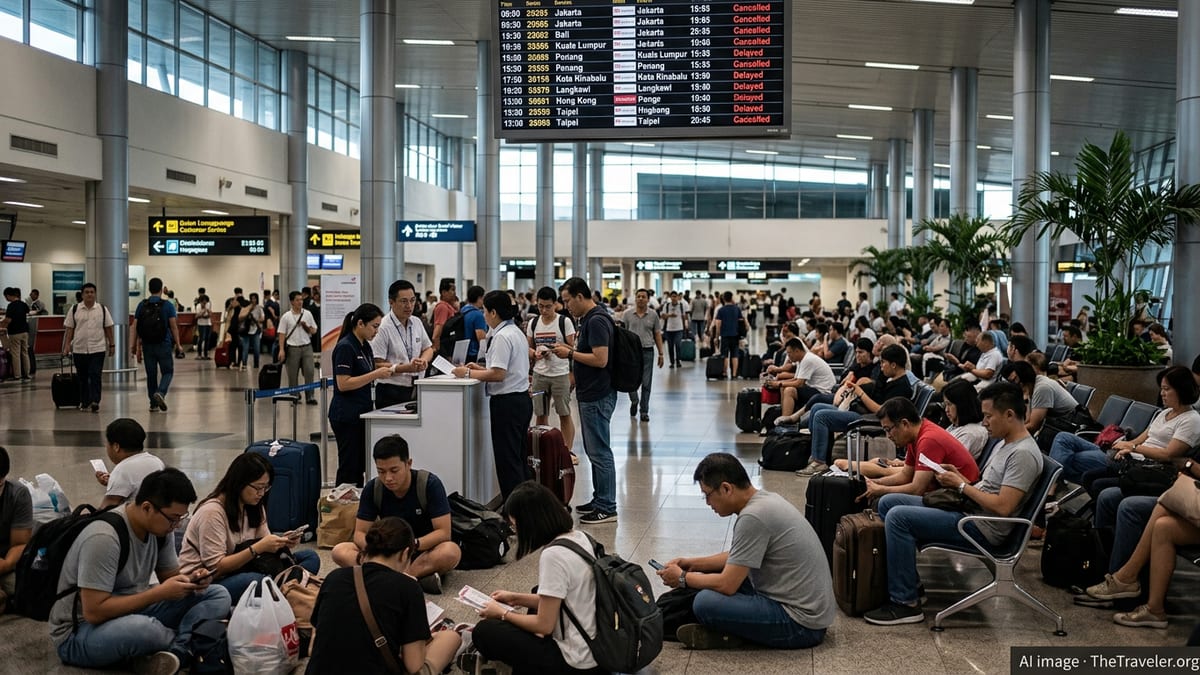
Passengers across Asia and the Middle East are facing cascading travel disruption as China Eastern, Batik Air and Uzbekistan Airways collectively cancel 42 flights and delay a further 499 services, snarling operations in Shanghai, Jakarta, Tashkent and other major hubs.
Get the latest news straight to your inbox!
Weather Turmoil in China Ripples Through Shanghai and Beyond
Travel disruption has intensified in China as severe weather unsettles airline operations and airport capacity. Recent reports indicate that multiple Chinese carriers, including China Eastern, have scrapped hundreds of flights and delayed thousands more at key airports such as Guangzhou, Shenzhen, Shanghai and Beijing. China Eastern, a primary operator at Shanghai Hongqiao and Pudong, has been among the hardest hit as thunderstorms and poor visibility trigger rolling schedule adjustments.
Coverage from regional travel and aviation outlets on April 1, 2026, describes widespread cancellations and hours long delays that have left passengers sleeping in terminals or scrambling for alternative routes. While the 42 cancellations and 499 delays attributed to the latest disruption affect a subset of China Eastern’s network, they come on top of broader weather related cuts, heightening the sense of instability for travelers transiting China’s busiest hubs.
Shanghai’s dual airport system plays a central role in this turbulence. With Hongqiao and Pudong serving as connection points for domestic and international itineraries, disruptions quickly cascade into missed onward flights across Asia, Central Asia and Europe. Publicly available flight tracking and scheduling data show knock on delays at secondary Chinese cities, complicating travel for passengers who never intended to pass through Shanghai but rely on aircraft and crew coming from the city.
Airline statements and travel advisories have urged customers to monitor flight status closely and allow additional time at airports. However, crowded customer service desks and limited remaining seat capacity mean that same day rebooking is often difficult, especially for travelers with fixed commitments or limited flexibility in visa and accommodation arrangements.
Indonesia’s Network Strains as Batik Air Faces Spikes in Delays
Indonesia’s aviation network is experiencing its own wave of disruption, with Batik Air and other carriers grappling with a heavy schedule of delays and targeted cancellations. Recent coverage focusing on Indonesia’s major hubs indicates that Jakarta Soekarno Hatta, Surabaya and Medan have each reported significant interruption in recent weeks, including dozens of cancellations and several hundred delayed services in a single day across multiple airlines.
Within this broader pattern, Batik Air features prominently as one of the country’s busiest carriers. Industry statistics for Indonesia show Batik Air operating hundreds of daily sectors, with a measurable share affected by late departures or operational rescheduling. Reports from February and March 2026 note that travelers across Jakarta, Bali and Makassar have faced hours long waits, with domestic routes such as Jakarta to Surabaya and Jakarta to Makassar particularly exposed when weather, congestion or airspace constraints compound existing pressure on the timetable.
The latest count of 22 cancellations and 453 delays tied to Indonesian operations in one recent update underscores the scale of strain in the country’s network. Although that figure covers multiple carriers, Batik Air’s role in these disruptions has been widely referenced in aviation focused coverage. Combined with the additional cancellations and delays associated with the cross regional total of 42 and 499, passengers linking between Indonesia and China or Central Asia face a heightened risk of missed connections.
Airport operators and tourism bodies in Indonesia have emphasized the broader impact on business travel and holiday plans, noting that bottlenecks at immigration, baggage reclaim and ground transport intensify once flight schedules slip out of alignment. Travelers heading to secondary cities often discover that even when their long haul or trunk route is preserved, follow on domestic flights may be rescheduled or overbooked, extending the disruption by a full day or more.
Operational Setbacks in Uzbekistan Add to Central Asian Disruption
In Central Asia, Uzbekistan Airways has been contending with its own operational challenges, contributing to the regional tally of delays. Local media in Uzbekistan have recently documented technical issues on individual aircraft that led to delays on several flights, as well as broader routing complications linked to airspace restrictions in the Middle East. These factors have occasionally forced aircraft to divert, return to their point of origin or await revised clearances, creating uncertainty for passengers.
Separate reporting earlier in 2026 highlighted how closures or restrictions in key transit airspace prompted rerouting and schedule changes for flights serving Uzbekistan. This environment increases the likelihood of knock on delays, especially for carriers such as Uzbekistan Airways that operate long sectors between Central Asia, the Gulf and Southeast Asia. When an inbound aircraft arrives late in Tashkent, subsequent departures on that aircraft type often depart behind schedule, affecting travelers who may not be aware that their flight depends on a previous leg in a different region.
The opening of new connections, such as a recently launched Shanghai to Tashkent service operated by China Eastern, illustrates the growing demand for travel between East Asia and Central Asia. Yet these same cross border links are now vulnerable to the combined effect of weather troubles in China, airspace constraints to the west and local operational limitations at Central Asian airports. For passengers, this can mean arriving in Tashkent only to discover that regional connections or code share flights are delayed or rescheduled.
Publicly available information from airport and airline sources in Uzbekistan shows a steady effort to keep schedules stable while responding to unfolding constraints beyond the country’s borders. However, with regional networks increasingly interconnected, even a modest disruption can reverberate quickly, especially on days when traffic volumes peak.
Stranded Passengers Feel the Human Cost of Chain Disruptions
The combined effect of 42 cancellations and 499 delays across networks involving China Eastern, Batik Air and Uzbekistan Airways is measured not only in statistics but in the experience of stranded passengers. Social media posts, local news coverage and tourism industry commentary in China, Indonesia and Uzbekistan point to crowded departure halls, long lines at service desks and heightened anxiety among travelers facing missed events or visa complications.
In hub cities such as Shanghai, Jakarta and Tashkent, passengers caught in rolling delays often struggle to obtain timely information as airlines repeatedly update departure times in response to changing conditions. Families traveling with children, elderly passengers and those with tight connection windows are particularly vulnerable when weather and airspace disruptions align with already busy travel days. Accommodation near major airports can quickly sell out, leaving some travelers to rest in terminal seating while they await rerouting.
From a tourism standpoint, the disruptions arrive at a sensitive moment for Asia’s travel recovery. Industry analysis suggests that international arrivals and outbound travel have been rebuilding over the past year, with new routes adding capacity between key markets. When large scale delays strike, the immediate economic impact is felt not only by airlines and airports but also by hotels, tour operators and small businesses that rely on predictable visitor flows.
Consumer advocates and travel commentators in the region are drawing renewed attention to passenger rights frameworks, refund policies and rebooking procedures. Guidance in public advisories urges travelers to keep documentation of airline communications, maintain flexibility in their itineraries where possible and build longer layovers into multi segment journeys, especially when itineraries involve weather sensitive hubs or airspace prone to short notice restrictions.
What Travelers Can Do as Disruptions Persist
With adverse weather patterns and regional airspace uncertainties likely to recur, aviation specialists caution that similar waves of disruption may emerge again in the coming weeks. For travelers planning routes that transit Shanghai, Jakarta, Tashkent or other affected hubs, publicly available guidance recommends monitoring flight status through official airline channels up to and including the day of departure.
Many carriers, including China Eastern, Batik Air and Uzbekistan Airways, offer mobile apps and notification systems that push real time updates on gate changes and schedule shifts. Travel industry coverage notes that passengers who enroll in these tools and confirm contact details often receive earlier notice of disruptions, improving their chances of securing alternative options. Some airlines have also introduced more flexible rebooking windows during periods of operational strain, allowing travelers to move trips by a few days without additional charges.
Experts in consumer travel rights point out that local regulations differ by country, influencing what compensation or assistance passengers can expect when flights are delayed or canceled. In some jurisdictions, airlines may provide meals and accommodation for long delays, while elsewhere support is more limited. Travelers with tight schedules or essential commitments are being encouraged in media commentary to consider travel insurance that explicitly covers missed connections and extended delays, particularly when flying across multiple regions.
As airlines and airports in China, Indonesia and Central Asia work to stabilize operations, the current wave of disruptions serves as a reminder of the fragility of highly interconnected flight networks. For passengers, advance planning, flexible routing and awareness of their rights can mitigate some of the stress, even when events beyond any single carrier’s control continue to reshape the skies.