

More news on this day
Air travel across Australia suffered a fresh wave of disruption on April 5, with hundreds of flight delays and cancellations across Sydney, Melbourne, Brisbane and Canberra leaving more than 30,000 passengers facing missed connections, overnight stays and hours-long queues in terminal halls.
Get the latest news straight to your inbox!
Major East Coast Hubs Hit by 164 Disruptions
Published coverage indicates that at least 164 flights were affected by a mix of cancellations and extensive delays across Australia’s busiest east coast gateways, with Sydney, Melbourne, Brisbane and Canberra bearing the brunt of the disruption. The impact has rippled through both domestic and international schedules, as aircraft and crews fell out of position and peak-hour congestion intensified.
Sydney and Melbourne, the country’s two largest aviation hubs, reported the highest concentration of affected services as delays stacked up through the morning and afternoon peaks. Brisbane and Canberra, key nodes on the nation’s busiest business corridors, also experienced cancellations and rolling knock-on delays that made reliable travel planning difficult throughout the day.
Publicly available flight-tracking data and industry reports show that Qantas, Virgin Australia and QantasLink were among the carriers most exposed, alongside several international airlines operating transpacific and trans-Tasman services. Affected routes included trunk corridors such as Sydney to Melbourne and Brisbane, regional connections via Canberra, and onward long haul services linking Australia with Asia, North America and the Pacific.
The timing of the disruption has compounded pressures on an already stretched aviation network, which has been contending with a combination of strong demand, crew resourcing constraints and earlier weather and technical issues across Australia and New Zealand in recent weeks.
Stranded Passengers Face Long Queues and Missed Connections
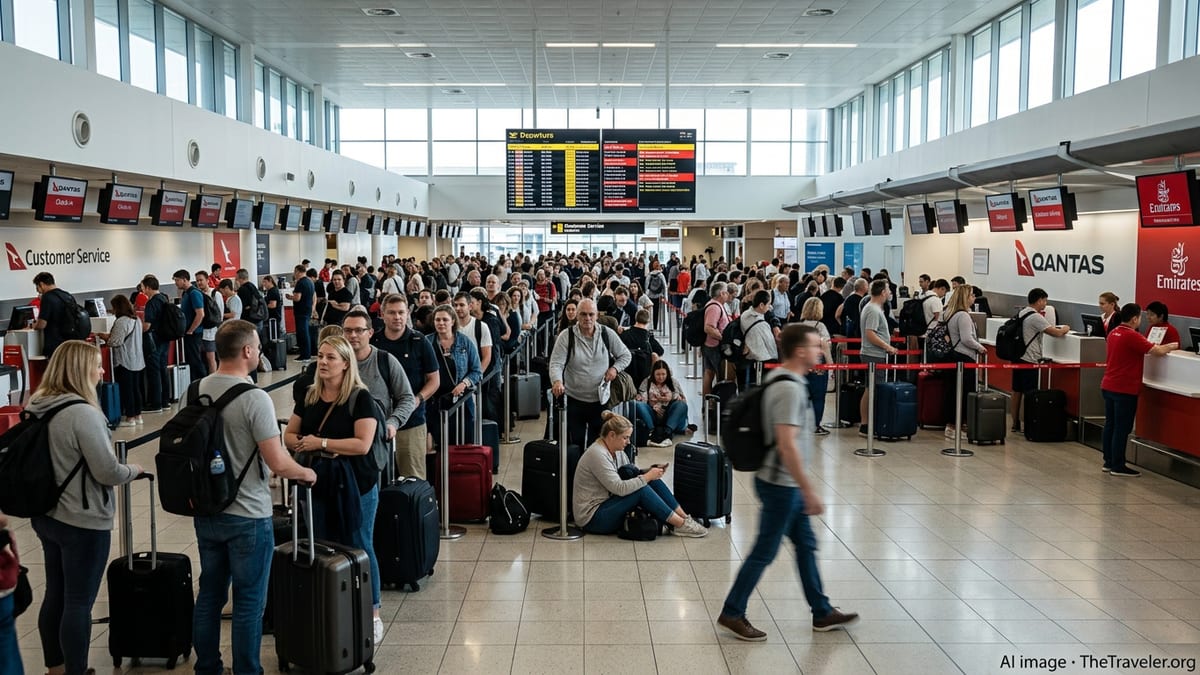
The squeeze on capacity has translated into significant disruption for travelers, with more than 30,000 passengers estimated to have been stranded or heavily delayed as schedules unraveled. Reports from major terminals describe long queues at check in and service desks, crowded seating areas and passengers attempting to rebook itineraries on limited remaining services.
Families returning from school holidays, business travelers shuttling between capital cities and international passengers connecting through Sydney and Melbourne all appear to have been affected. Many domestic travelers were rebooked onto later flights or routed through alternative cities, while some international passengers faced the prospect of overnight hotel stays and reissued tickets due to missed onward legs.
The knock-on impact has been particularly acute for travelers relying on tight connections, including those using Canberra and Brisbane as feeders into long haul departures from Sydney and Melbourne. Travel industry commentary notes that even short delays on high frequency routes can rapidly cascade into widespread disruption when aircraft and crews are out of sequence and turnaround times are stretched.
Social media posts and local media coverage highlight a mix of frustration and resignation among passengers, with many expressing concern about additional costs such as last minute accommodation, meals and alternative transport, as well as uncertainty around compensation and refund options.
Operational Pressures Behind the Latest Wave of Cancellations
While a detailed root-cause breakdown for every affected flight is still emerging, recent patterns in Australian aviation point to a convergence of operational pressures. Published analyses of on time performance across the domestic network in late 2024 and early 2025 have highlighted the sensitivity of east coast hubs to bouts of low cloud, strong crosswinds, runway works and air traffic control flow restrictions.
When such conditions coincide with crew shortages or aircraft maintenance requirements, the result can be rapid schedule degradation. Earlier this week, separate reporting on Australian operations described how dozens of flights were withdrawn or delayed when air traffic control constraints and weather limited runway capacity at key hubs, forcing airlines to thin out schedules and prioritize certain services.
The current episode appears to fit into that broader pattern. Industry observers note that the Sydney to Melbourne and Sydney to Brisbane corridors, among the busiest in the world by frequency, leave airlines with limited slack to absorb unplanned disruption. Once a proportion of flights on those routes are cancelled or depart significantly late, aircraft rotations into secondary airports such as Canberra and into international banks quickly come under strain.
Longer term data compiled by government and competition regulators has also drawn attention to structural challenges in the market, including high utilization of aircraft fleets, constrained airport capacity in peak periods and increasing passenger volumes through major terminals. These factors can magnify the impact of even modest operational setbacks, leading to exactly the kind of wide ripple effect seen across the network on April 5.
Domestic and International Networks Knocked Off Balance
The disruption has hit both domestic and international operations, underscoring the interconnected nature of contemporary airline networks. On the domestic side, cancellations and delays on east coast trunk routes have forced Qantas, Virgin Australia and QantasLink to reshuffle aircraft and adjust frequencies, affecting not only capital city links but also regional services that depend on shared fleets and crews.
On the international side, publicly available schedules show that several carriers operating long haul flights into Sydney, Melbourne and Brisbane have been caught in the congestion. This includes joint services and codeshare operations with local airlines, meaning that a delayed or cancelled domestic feeder flight can cause passengers to miss long haul departures that operate only once a day or a few times per week.
In recent weeks, global aviation has also been contending with separate disruptions linked to geopolitical tensions and earlier technical issues affecting aircraft fleets and airport IT systems. Analysts note that Australian carriers have already been fine tuning their long haul timetables to account for altered routings and increased block times between Australia, Europe and the Middle East. The latest domestic disruption adds an additional layer of complexity, particularly for airlines trying to keep far-flung networks synchronized.
Travel trade publications suggest that recovery could take several days as airlines reposition aircraft, clear passenger backlogs and rebuild schedule reliability. Even as operations stabilize, residual delays and occasional cancellations are expected as carriers work through maintenance checks and crew duty time limitations built up during the worst of the disruption.
What Travelers Can Do as the Network Recovers
Consumer guidance from Australian regulators and travel advocacy groups emphasizes the importance of checking individual fare conditions and airline policies when flights are delayed or cancelled. Under general consumer law principles and carrier-specific terms, passengers may be entitled to refunds, rebooking at no extra cost or assistance with accommodation and meals when disruption is within an airline’s control.
Travel planners recommend that affected passengers keep detailed records of boarding passes, booking references, receipts and any written notifications received from airlines, as this documentation can support later claims. Many carriers have also expanded self-service rebooking tools in their mobile apps and online portals, which can be quicker than lining up at physical service desks during peak disruption.
For upcoming journeys over the next several days, publicly available advice from airports and travel agents suggests allowing extra time to reach the terminal, monitoring flight status closely, and considering slightly longer connection windows, particularly when linking domestic flights in Sydney, Melbourne or Brisbane to onward international departures.
With Australian aviation still in a period of high demand and tight capacity, analysts argue that episodes such as the April 5 disruption underline both the resilience and the fragility of the system. As airlines and airports work to restore normal operations, travelers are being urged to stay informed, flexible and prepared for potential last minute changes to their plans.