

More news on this day
Hundreds of travelers across Canada are facing fresh disruption as a new wave of flight cancellations and delays by Air Canada, Inuit, Borealis, PAL Airlines and other carriers snarls traffic through major hubs including Toronto, Vancouver, Montreal, Ottawa and Kelowna.
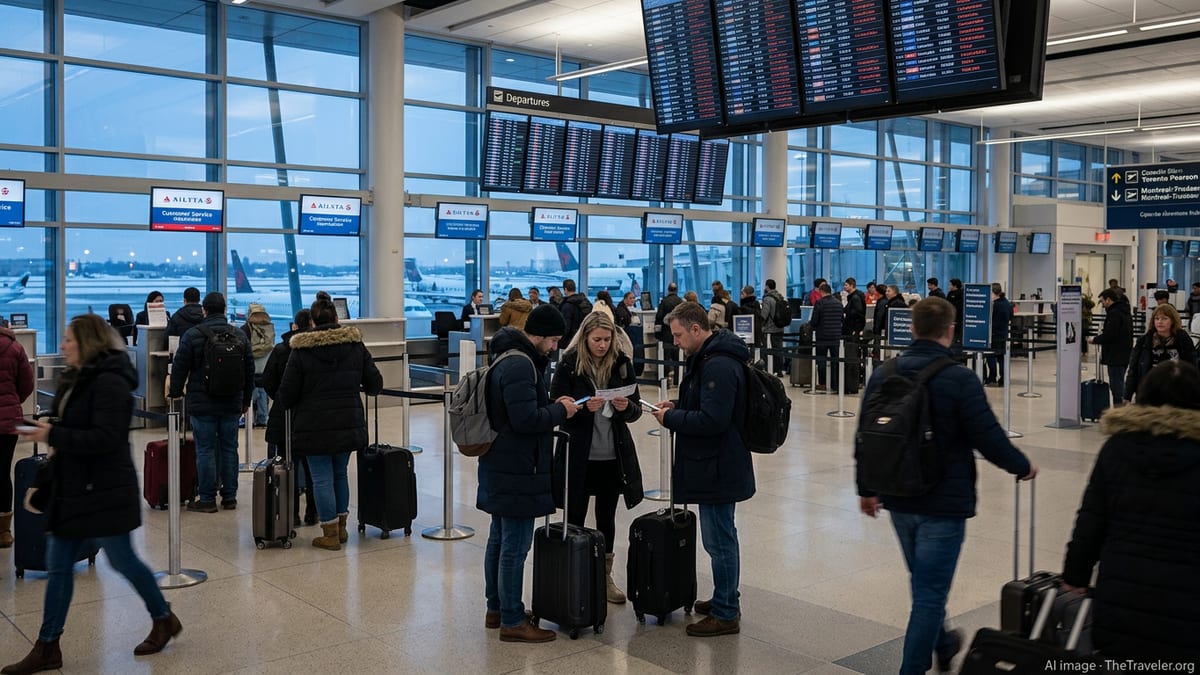
New Wave of Disruptions Hits Major Canadian Hubs
According to the latest operational tallies, at least 43 additional flights have been canceled and 278 delayed nationwide, compounding an already difficult winter of irregular operations for Canadian carriers. The newest interruptions are concentrated at Toronto Pearson, Vancouver International, Montréal–Trudeau, Ottawa Macdonald–Cartier and smaller but strategically important airports such as Kelowna, where regional connections are vital for remote communities.
Air Canada remains the most heavily affected airline by sheer volume of passengers, but it is far from alone. Inuit and Borealis regional services, along with PAL Airlines and a mix of domestic and international operators, are all reporting schedule changes that have cascaded throughout the day. Many of the newly affected flights are short-haul legs feeding into or out of larger hubs, meaning a single cancellation can trigger missed connections across the network.
The fresh disruptions follow a similar pattern to earlier episodes in recent weeks, in which weather, congestion and operational constraints combined to push Canadian airports to their limits. Travel industry analysts say the cumulative effect is eroding traveler confidence at a time when demand for both business and leisure trips remains strong.
Travelers Stranded, Rebooked and Rerouted
At terminals in Toronto, Vancouver and Montreal, lines at airline service counters and self-service kiosks stretched across check-in halls as passengers sought new itineraries. In Ottawa and Kelowna, where alternative flights are less frequent, some travelers reported being offered rebookings more than 24 hours later or routed through multiple connections in order to reach their destinations.
Families returning from school holidays, business travelers with same-day meetings and international passengers heading for long-haul connections all found themselves jostling for scarce seats on remaining flights. Some were offered hotel vouchers or meal credits where cancellations met compensation thresholds, while others were advised to pursue reimbursement or compensation claims after travel.
Social media posts from affected passengers described confusion over departure boards that showed flights as on time even as delays lengthened, and instances where gate changes or schedule shifts were announced with little advance notice. Many travelers said they relied heavily on airlines’ mobile apps and text alerts to stay ahead of last-minute changes, with mixed results.
Causes Range From Weather to Crew and Aircraft Constraints
Industry sources say there is no single cause behind the latest 43 cancellations and 278 delays. Instead, a blend of challenging winter weather, tight aircraft rotations and ongoing crew availability issues has left carriers with little resilience when problems arise. A single aircraft held for extended de-icing or maintenance can create knock-on effects across several subsequent flights, particularly on densely scheduled routes between Canada’s largest cities.
In recent days, frigid temperatures, low visibility and gusty winds have forced slower operations at several airports, extending turn times and triggering ground holds. Airlines have also had to juggle aircraft and crews that were themselves delayed earlier in the week, leaving some routes vulnerable to preemptive cancellations when recovery windows narrowed.
Regional operators such as Inuit, Borealis and PAL Airlines face additional complexity serving smaller and weather-exposed airfields, where runway and de-icing infrastructure may be more limited. When conditions deteriorate or a single aircraft is taken out of service, options to substitute equipment are fewer than at major hubs, resulting in disproportionate impacts for communities that rely heavily on air links.
Ripple Effects Felt Across Domestic and Regional Networks
The impact of the latest disruptions has extended beyond the headline hubs to secondary and northern destinations. Delays into Montreal and Ottawa, for example, have caused late departures on onward flights to smaller Quebec and Nunavik communities, including vital lifeline services that carry medical staff, essential goods and residents connecting to southern Canada.
Kelowna and other Western Canadian airports have also reported knock-on delays as late-arriving aircraft from Vancouver and Toronto compress already tight schedules. With many regional flights operating just once or twice daily, a delay of several hours can effectively wipe out a day’s travel options for some passengers, forcing overnight stays or lengthy ground journeys.
Travel planners note that high load factors mean there are fewer empty seats available on later flights to absorb displaced passengers. As a result, some travelers are being split across multiple departures or rerouted through cities far off their original path, adding stress and travel time even when they ultimately reach their destinations.
Airlines Urge Passengers to Check Status and Plan for Delays
Carriers affected by the latest 43 cancellations and 278 delays have urged passengers to check their flight status frequently and to allow extra time at the airport. Many airlines are waiving change fees or offering flexible rebooking windows for those willing to move travel to less congested days or times, in an effort to smooth demand and prevent further backlogs.
Airport authorities in Toronto, Vancouver, Montreal, Ottawa and other affected cities have echoed calls for patience, advising travelers to arrive early, complete check-in online where possible and proceed to security and departure gates promptly. They also emphasize that safety-related measures such as de-icing and low-visibility procedures can significantly extend turnaround times but remain non-negotiable.
Consumer advocates, meanwhile, are reminding travelers to keep records of boarding passes, receipts and communications with airlines in case they are eligible for compensation under Canadian regulations or carrier-specific policies. With winter still in full force and aviation networks stretched, experts say passengers planning upcoming trips should build flexibility into their itineraries, avoid tight connections where possible and be prepared for further short-notice changes across Canada’s skies.