

More news on this day
Hundreds of air travelers were stranded across China after a fresh wave of disruption led to 42 flight cancellations and around 150 delays affecting services by China Eastern, Air China, XiamenAir, Hainan Airlines and other carriers at major hubs including Shanghai, Beijing, Nanjing, Chengdu and Changsha.
Get the latest news straight to your inbox!
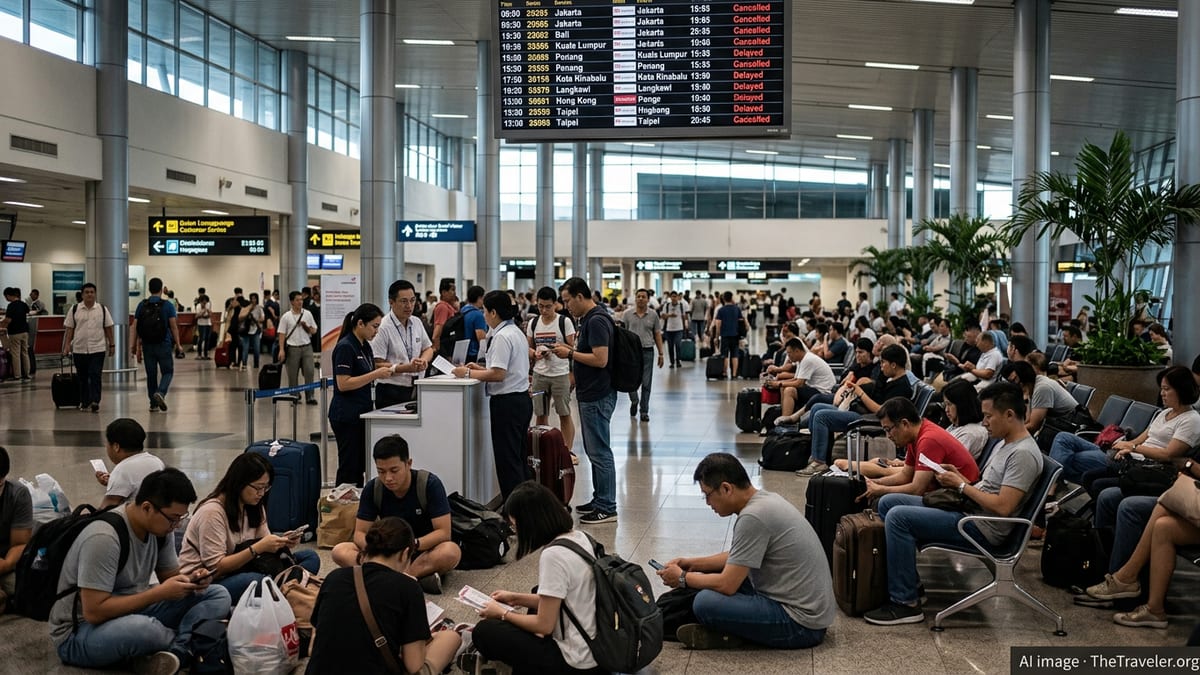
Major Chinese Hubs Hit by Wave of Disruptions
The latest disruption unfolded across a network of China’s busiest airports, with Shanghai, Beijing, Nanjing, Chengdu and Changsha among the hardest hit. Flight tracking dashboards and airport operations data pointed to 42 cancellations and about 150 delays concentrated over a relatively short time window, creating knock-on effects throughout the day.
At Shanghai’s twin gateways, Hongqiao and Pudong, cancellations and late departures rippled across domestic and regional routes, particularly on services operated by China Eastern and its code share partners. Beijing Capital and Beijing Daxing International also reported a cluster of disrupted flights, contributing to crowded departure halls and extended waiting times as passengers sought rebooking options.
In central and western China, Nanjing Lukou, Chengdu’s Shuangliu and Tianfu airports, and Changsha Huanghua International saw schedules thin out as a mix of China Eastern, Air China, XiamenAir and Hainan Airlines flights were canceled or pushed back. Publicly available airport statistics showed that while the overall number of affected flights was modest compared with China’s daily totals, the impact on individual passengers and connecting itineraries was significant.
Additional reports from regional airports suggested that secondary cities feeding into these hubs also experienced delays, as airlines adjusted rotations to recover aircraft and crews. This created a patchwork of disruptions that left many travelers facing missed connections and same day travel plans in doubt.
Multiple Airlines Adjust Operations in Tight Network
The disruption involved a cross section of China’s major full service and regional carriers. China Eastern, with its extensive network centered on Shanghai, accounted for a notable share of the delayed flights as rotations through Hongqiao and Pudong were pushed back. Air China, heavily exposed at Beijing and other northern hubs, also reported schedule changes affecting both trunk and connecting services.
Hainan Airlines and XiamenAir, which link coastal cities such as Changsha, Xiamen and Nanjing with Beijing and Shanghai, were among the carriers appearing on cancellation and delay lists. Publicly accessible airline performance dashboards indicated that a number of flights in and out of these cities were either grounded or subject to rolling departure time changes, complicating onward travel for passengers holding multi segment itineraries.
Aviation analytics for the Chinese market show that when even a relatively small number of flights are canceled within a tightly scheduled network, spare aircraft capacity can quickly disappear, especially in peak travel periods. Once rotations are disrupted at key hubs, recovery often requires aircraft to be reassigned, crews to be rescheduled and ground handling slots to be renegotiated, which can prolong delays beyond the original weather or operational trigger.
Industry data on Chinese airline performance over recent seasons also points to recurring pressure on on time operations, particularly at saturated metroplex regions such as Shanghai and Beijing where limited airspace and high traffic volumes leave little margin for disruption. In those environments, a localized problem can spread rapidly across carriers and airports, even when the absolute number of cancellations remains relatively contained.
Weather and Congestion Highlight Structural Vulnerabilities
While a single cause for the latest cancellations and delays was not immediately clear, publicly available coverage of recent operations across China highlights a combination of weather related disruption and structural congestion. Earlier periods of heavy rain, low visibility and storms in and around major cities have already produced days with far higher numbers of cancellations and delays nationwide, exposing how sensitive the system remains to adverse conditions.
Research into China’s civil aviation network has repeatedly noted that rapid traffic growth, concentrated at a handful of mega hubs, has outpaced the expansion of airspace and runway capacity. Studies of delay patterns at airports such as Beijing Capital, Shanghai Pudong, Chengdu and Guangzhou describe how limited route options and tight sequencing windows make it difficult to absorb even modest schedule shocks without cascading effects.
In metropolitan areas served by multiple airports, such as Shanghai’s Hongqiao and Pudong or Beijing’s Capital and Daxing, coordinated arrival and departure management has been introduced to reduce congestion. Academic case studies of these metroplex areas suggest that optimized runway and terminal area scheduling can cut delays, but also acknowledge that severe weather or unexpected operational constraints can still overwhelm capacity and lead to ground stops, diversions and large backlogs of waiting aircraft.
The current episode, though smaller in scale than some of the mass disruption days recorded this season, underscores how even a few dozen cancellations and roughly 150 late departures at the wrong time and place can leave hundreds of passengers stranded, particularly when their plans depend on tight domestic connections.
Passengers Face Long Queues, Rebooking and Limited Alternatives
For travelers on the ground, the disruption translated into long lines at check in desks, customer service counters and transfer zones, as stranded passengers sought information, vouchers and new itineraries. Social media posts and user generated travel reports from affected airports described departure boards filled with delayed listings, recurring gate changes and flights that shifted from delayed to canceled status after hours of waiting.
China’s civil aviation rules provide for rebooking or refunds when flights are canceled, although compensation and accommodation often depend on the cause of the disruption and individual airline policies. In practice, travelers at busy hubs can encounter limited availability on same day alternatives, especially on trunk routes linking Shanghai, Beijing, Chengdu and other high demand cities where most remaining seats have already been sold.
Rail and long distance bus services provide some fallback options between major urban centers, but same day interchange from an airport to rail can be challenging for visitors unfamiliar with local transport networks or language. In several previous disruption events, large numbers of stranded air passengers have turned to high speed rail to complete their journeys, often facing sold out trains and standing room only conditions on popular corridors.
Travel advisories and aviation analysts frequently recommend that passengers flying within China build additional buffers into their itineraries, particularly when making same day domestic connections or onward international departures. The latest round of cancellations and delays is likely to reinforce that guidance, highlighting how quickly conditions at a small group of critical hubs can affect travel plans across the country.
Ongoing Flight Season Shows Both Recovery and Strain
The disruption comes during a flight season that otherwise reflects a broad recovery of China’s aviation sector. Publicly available scheduling data for the current summer and autumn period shows domestic and international airlines planning well over one hundred thousand weekly flights serving Chinese airports, with total capacity roughly in line with the same period a year earlier.
China Eastern, Air China, Hainan Airlines, XiamenAir and other carriers have been expanding or reinstating key routes, including services linking Shanghai and Beijing to destinations in South and Southeast Asia, Europe and the Middle East. At the same time, the volume of domestic travel has remained strong, with major hubs such as Shanghai, Beijing, Chengdu and Guangzhou handling dense banks of departures in morning and evening peaks.
Analysts of China’s aviation market note that this high utilization environment leaves airlines and airports more vulnerable to disruption, since there are fewer unused aircraft and slot buffers available when problems arise. Efforts to introduce new aircraft types, optimize terminal area management and adjust schedules are intended to improve resilience, but the latest cancellations and delays suggest that passengers will continue to face episodes of significant disruption when weather and operational challenges overlap.
With the current flight season still in its early stages, observers of the sector will be watching how frequently similar episodes occur and how quickly airlines are able to restore normal operations after localized shocks. For travelers, the events at Shanghai, Beijing, Nanjing, Chengdu, Changsha and other affected airports provide a reminder that flexibility, contingency planning and real time monitoring of flight status remain essential parts of flying across China’s busy skies.