

More news on this day
Thousands of air passengers across Europe are facing long waits and missed connections as a new wave of flight disruption ripples through major hubs in France, England, the Netherlands, Norway and Spain, with data indicating 58 cancellations and 1,379 delays affecting services operated by flagship carriers such as SAS, KLM, British Airways and Lufthansa.
Get the latest news straight to your inbox!
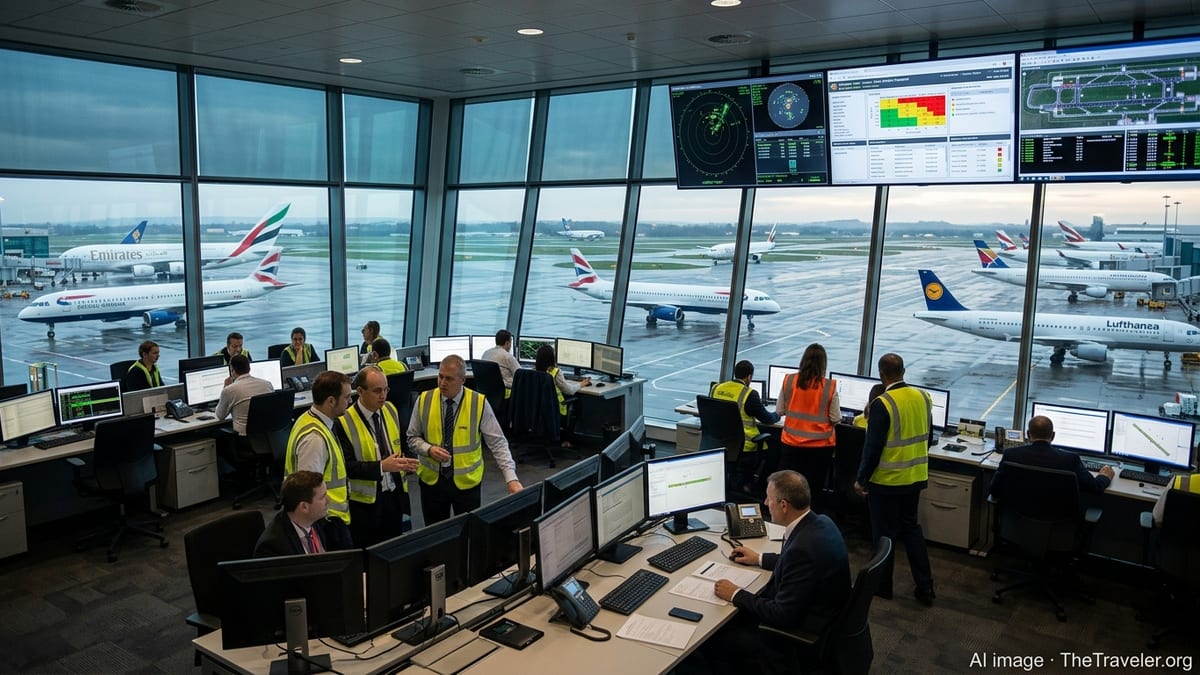
Major Hubs in France, UK, Netherlands, Norway and Spain Hit Hard
Publicly available tracking data and disruption dashboards show that flights in and out of Paris, London, Amsterdam, Oslo and Madrid have been particularly affected, with delays rippling across domestic, intra-European and long haul networks. While 58 outright cancellations represent a relatively small share of total scheduled movements, the 1,379 recorded delays are creating extensive knock-on effects that strand passengers far beyond the initial departure points.
In France, services at Paris Charles de Gaulle and Orly are experiencing rolling hold-ups that feed into wider European connections, affecting travelers bound for Scandinavia, the Mediterranean and transatlantic destinations. Reports indicate that ground handling bottlenecks and air traffic flow restrictions are among the factors contributing to extended turnaround times and missed runway slots.
Airports in England, particularly London Heathrow and London Gatwick, are also reporting elevated levels of disruption, adding pressure to already busy spring schedules. As delays accumulate through the day, even minor timetable changes are resulting in missed connections for passengers traveling onward to cities such as Oslo, Madrid and Amsterdam.
In the Netherlands and Norway, Amsterdam Schiphol and Oslo Gardermoen are functioning as key nodes in the disruption pattern. Delayed arrivals are forcing airlines to retime onward departures, leading to rotating late operations across Northern and Western Europe and leaving travelers waiting in terminal queues for rebookings, meal vouchers and accommodation.
Flagship Carriers See Networks Stretched
According to compiled flight status data, major European network airlines are bearing much of the impact. SAS, KLM, British Airways and Lufthansa, all of which operate dense connecting schedules through their hubs, are reporting a combination of late departures, aircraft rotations out of sequence and crew schedules stretched by duty-time limitations.
British Airways services in and out of London are seeing clusters of delays that feed directly into connections with partner and codeshare flights across the continent. Passengers connecting from regional UK airports to onward European services are among those most exposed, as even short hold-ups of 60 to 90 minutes can lead to missed minimum connection times at large hubs.
KLM and its partners at Amsterdam are dealing with similar challenges as late inbound aircraft from France, the UK and Scandinavia arrive outside their planned slots. This is prompting last-minute gate changes and re-timings that reverberate through evening departure waves to Southern Europe, North America and Asia.
SAS and Lufthansa are likewise contending with out-of-position aircraft and crew as delays accumulate in Oslo, Copenhagen, Frankfurt and Munich. Public disruption summaries indicate that even when cancellations remain limited, the scale of delays is enough to fragment carefully timed bank structures that normally allow rapid connections for passengers transferring between regional and long haul flights.
Knock-on Effects for Travelers Across the Continent
For passengers, the most immediate consequence of the imbalance between 58 cancellations and more than a thousand delays is uncertainty about when they will actually depart and whether they will make onward connections. Long queues at customer service desks are being reported at several hubs as travelers seek rebookings, hotel accommodation and meal vouchers while they wait for updated departure times.
Travel rights organizations note that, under European compensation rules, eligibility for payouts typically depends on both the cause and length of the delay, as well as the distance of the affected flight. With many of the disruptions currently presenting as rolling delays of several hours rather than outright cancellations, some travelers are focusing on practical assistance such as re-routings and care provisions rather than formal compensation claims.
The disruption is also creating challenges for travelers on tightly planned itineraries, including those with cruise departures, rail connections or important events scheduled shortly after their intended arrival. Missed connections in Paris, London or Amsterdam can add overnight stays or forced reroutings through alternative hubs such as Frankfurt, Zurich or Brussels, increasing both travel time and out-of-pocket costs.
Families and leisure travelers are particularly affected in the early April travel window as school holidays in parts of Europe coincide with increased demand. Reports from passenger forums and social media indicate that crowded gate areas, limited seating and stretched airport amenities are compounding frustration as travelers wait for updated information on revised boarding and departure times.
Operational Pressures Behind the Latest Disruptions
While precise causes vary by airport and airline, aviation analysts point to a familiar mix of factors behind the current pattern of 58 cancellations and more than a thousand delays. These include tight aircraft utilization, ongoing staffing challenges in ground handling and air traffic control, and weather-related constraints that reduce available capacity during peak operating windows.
Even relatively short periods of reduced runway throughput can trigger a cascade of late departures that persists for many hours, especially at capacity-constrained hubs like Heathrow, Schiphol and Paris Charles de Gaulle. Once delays exceed certain thresholds, crew duty-time limits may force airlines to cancel or significantly retime specific flights in order to remain compliant with safety regulations.
In parallel, wider European network complexity continues to magnify local issues. When a morning wave of flights into one hub arrives late, the disruption often propagates to afternoon and evening waves in other regions, particularly when aircraft are scheduled to operate multiple sectors per day across different countries.
Industry observers note that similar episodes of widespread, same-day disruptions have become more common in recent years, as airlines rebuild networks and utilization levels following the pandemic. The latest figures from Europe underscore how even a modest number of cancellations, paired with widespread delays, can still translate into thousands of disrupted journeys for passengers across the continent.
What Passengers Can Do if Their Flight Is Affected
Consumer advocates advise passengers caught up in the disruption to closely monitor their flight status through airline apps and airport information boards, as departure times may change multiple times before boarding. Travelers are also encouraged to keep boarding passes, booking confirmations and any written notices from carriers, as these documents can be important if they later pursue compensation or reimbursement.
Those facing long delays or missed connections are often able to request rerouting on the next available flight to their destination, subject to seat availability. In many cases, particularly when overnight stays become necessary, airlines may arrange hotel accommodation and meals, although the extent of this support can vary based on the specific circumstances of the disruption.
For future trips, travel experts suggest allowing additional buffer time between flights, especially when connecting through large European hubs that handle dense schedules and are more vulnerable to knock-on effects from regional weather or airspace restrictions. Booking slightly longer connection windows and avoiding the final flight of the day on critical legs can reduce the risk of becoming stranded when large-scale delays occur.
As Europe moves deeper into the spring travel season, the latest disruption figures serve as a reminder that even routine operating challenges can quickly escalate into continent-wide travel headaches, particularly when major carriers and hubs are all affected on the same day.