

More news on this day
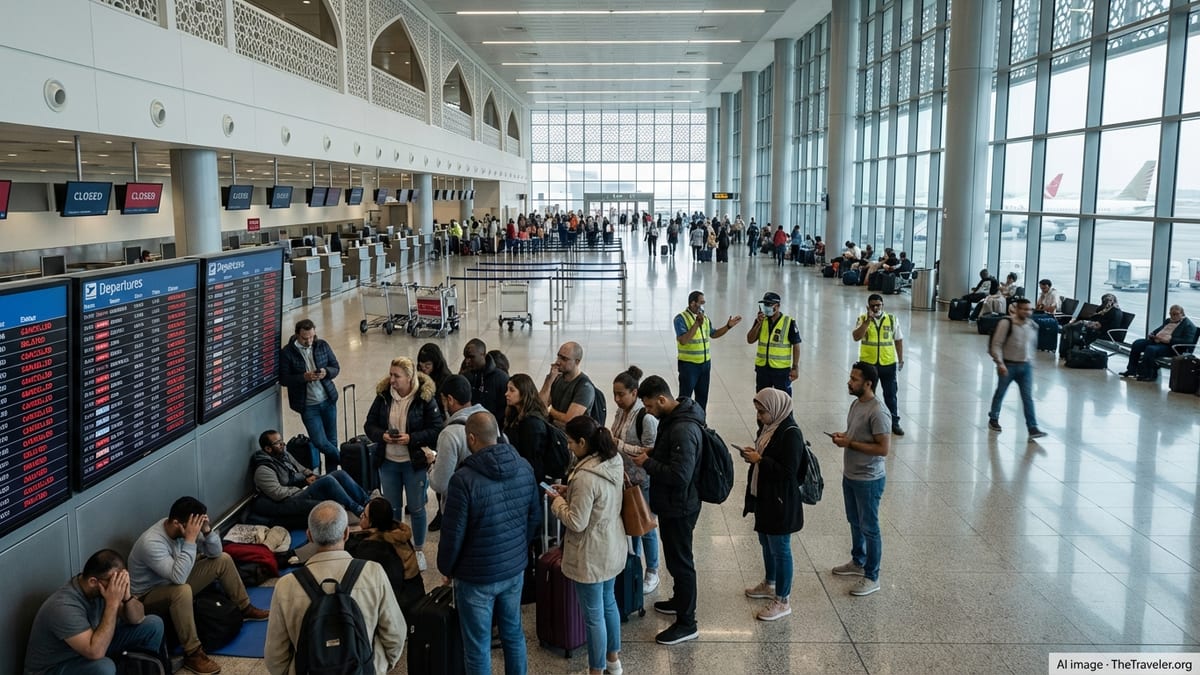
Thousands of passengers across Europe are facing long queues, missed connections and overnight airport stays after widespread disruption led to 1,475 delayed flights and 172 cancellations across Spain, England, Italy, Norway, Denmark, Sweden and the Netherlands.
Get the latest news straight to your inbox!
Major Hubs From Rome to London Struggle With Knock-On Disruption
The latest figures, compiled from operational data published in recent days, indicate that flight disruption has rippled across several of Europe’s busiest air travel markets. Spain, Italy and England account for a large share of affected services, with congestion building at hubs such as Rome Fiumicino, Madrid Barajas and London’s main airports as schedules slip behind.
Airports in the Netherlands, Norway, Denmark and Sweden have also reported clusters of delays and cancellations, creating a web of missed connections across the continent. Amsterdam Schiphol, a key transfer point for intercontinental and intra-European trips, has again emerged as a particular pressure point, with disrupted departures feeding directly into problems at secondary airports.
Publicly available airport and tracking data show that the disruptions are not confined to any single corridor. Services linking southern European holiday destinations with northern capitals, as well as core business routes between London, Amsterdam, Rome and Madrid, have all seen extended delays, forcing travelers to abandon tight itineraries and overnight stays.
While the disruption on this specific day falls short of historic shutdowns caused by volcanic ash or major storms, travel industry coverage notes that the scale is significant enough to affect tens of thousands of passengers and to trigger large volumes of rebooking and compensation claims.
Airlines Hit: ITA Airways, Vueling, KLM, SAS and Ryanair Among Those Affected
The disruption has cut across full service and low cost carriers alike. Network airlines such as ITA Airways, KLM and Scandinavian Airlines have reported substantial schedule impacts, particularly on routes that rely on tight banked connections at their main hubs in Rome, Amsterdam and Scandinavian airports.
Low cost operators including Vueling and Ryanair are also heavily exposed, given their dense coverage of Spanish, Italian and British markets and their frequent use of secondary airports that can quickly become congested when rotations run late. Industry statistics on recent operational performance show that carriers with high daily frequencies in these countries tend to see disruption cascade rapidly across their networks once the first wave of flights is affected.
Recent reports on European punctuality trends highlight that airlines are still operating in a fragile environment in which limited spare capacity, staffing constraints and congested airspace leave little room to absorb shocks. When an early morning departure is significantly delayed, the knock-on effect can reach late into the evening as aircraft and crews fail to return to position in time for subsequent legs.
Observers also note that carriers serving multiple hubs in the affected countries are especially vulnerable. A delay in a northern European base can strand aircraft needed for evening departures from Spain or Italy, forcing airlines to choose between long waits, consolidating services, or canceling select flights to stabilize their fleets.
Weather, Airspace Constraints and Operational Strain Behind the Numbers
Although no single dramatic incident has been identified as the cause of the latest spike in delays and cancellations, the pattern reflects a mix of familiar pressures on European aviation. Recent seasons have seen repeated bouts of severe weather in northern Europe, including storms and heavy snowfall that periodically reduce runway and airspace capacity in countries such as Norway, Sweden and the Netherlands.
Network and delay analyses released by European aviation bodies over the past year show that structural limitations in air traffic control capacity, combined with periodic industrial action, continue to generate large volumes of so called en route and airport flow management delays. These issues often intersect with local weather events, creating bottlenecks that affect flights far from the original source of disruption.
In southern Europe, particularly Spain and Italy, strong growth in demand has outpaced the pace at which airports and airlines can add resilient capacity. Industry reviews of recent summers underline that even routine thunderstorms or temporary staff shortages can translate into hundreds of delayed flights when terminals and runways are already operating close to saturation.
Analysts following the sector point out that the latest figures on 1,475 delays and 172 cancellations are broadly in line with previous episodes of pan-European disruption documented in late 2025 and early 2026. In those cases, a combination of unsettled weather, air traffic control restrictions and congested hubs produced similar tallies scattered across multiple countries over the course of a single day.
Impact on Travelers: Missed Connections, Overnight Stays and Compensation Claims
For travelers, the operational statistics translate into long queues at customer service desks, crowded terminal seating areas and a spike in hotel bookings near key airports. Social media posts and consumer advocacy updates from recent disruption days show passengers sleeping in terminals in Rome, Madrid and London while waiting for rebooked flights after late night cancellations.
Missed connections are a particular problem at transfer hubs such as Amsterdam, Copenhagen and Scandinavian capitals, where many passengers rely on short layovers. When arrival delays stretch beyond an hour or two, large numbers of travelers fail to make onward services, leaving airlines to arrange rebooking on later flights or alternative routings through different cities.
Passenger rights frameworks in the European Union and the United Kingdom remain central to how the disruption is managed. Public information from regulators and consumer organizations emphasizes that, within Europe, travelers are often entitled to care in the form of meals, refreshments and hotel accommodation in the event of significant delays or overnight cancellations, regardless of the fare paid.
Specialist claims services report that days with more than a thousand delays and over one hundred cancellations typically generate a surge in requests for compensation assessments. Where disruption is not attributed to extraordinary circumstances such as severe weather or airspace closures, affected travelers may be eligible for fixed cash payments in addition to rerouting or refunds.
What Passengers Can Do If Their Flight Is Affected
Travel industry advice based on recent disruption patterns stresses the importance of proactive monitoring. Passengers are encouraged to check airline apps and airport departure boards frequently in the 24 hours before departure, as schedules can shift repeatedly even after check in opens.
When delays start to accumulate, publicly available guidance suggests using digital tools first to avoid long lines at airport counters. Many airlines now allow same day changes, self rebooking and voucher issuance through their websites and mobile applications, which can be faster than waiting for in person assistance during peak disruption.
Travel experts also recommend that those with tight connections through major European hubs build additional buffer time into their itineraries during periods of unsettled weather or known air traffic constraints. A slightly longer layover in cities such as London, Amsterdam or Madrid can reduce the risk of missed onward flights when schedules come under pressure.
Finally, consumer organizations advise passengers to keep documentation of boarding passes, delay notifications and any expenses incurred for meals or accommodation. These records can be important when submitting claims under European passenger rights rules in the days and weeks after large scale disruption events such as those currently affecting Spain, England, Italy, Norway, Denmark, Sweden and the Netherlands.