

More news on this day
Air travellers across northern Europe are facing widespread disruption as a wave of delays and cancellations ripples through major hubs including Amsterdam Schiphol and Stockholm Arlanda, with publicly available operational data and live tracking services indicating 1,393 flights delayed and 49 cancelled, affecting passengers in Denmark, the Netherlands, the United Kingdom, Switzerland and several neighbouring countries.
Get the latest news straight to your inbox!
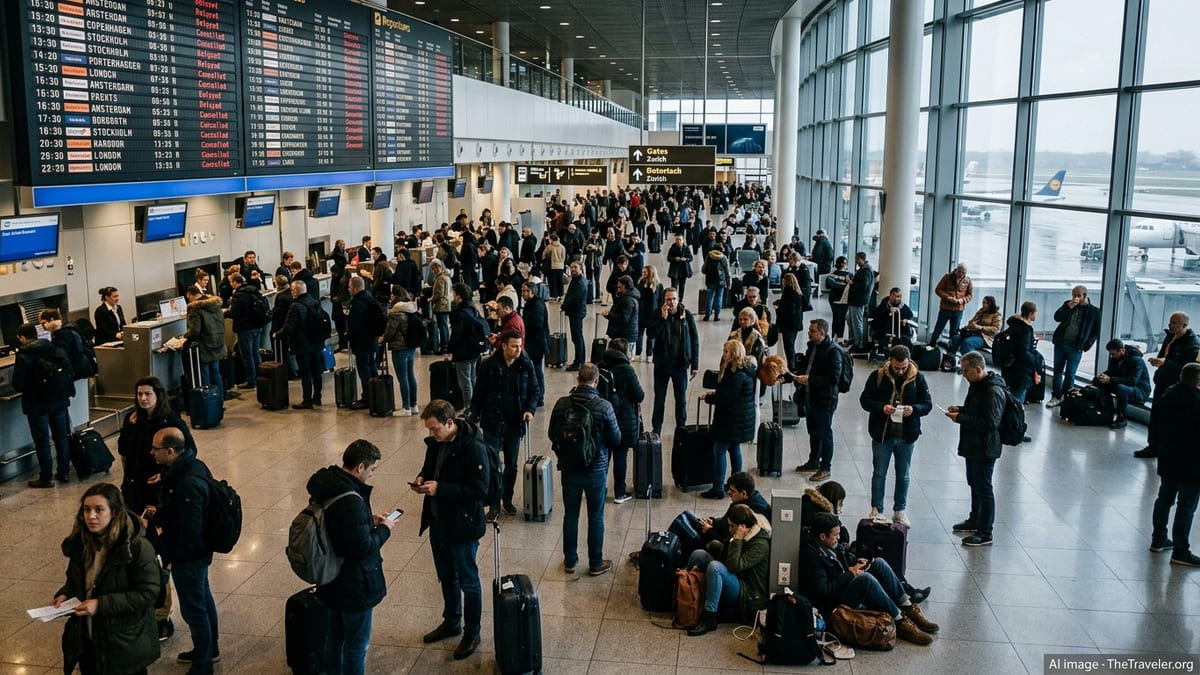
Schiphol and Arlanda Bear the Brunt of Weather-Driven Disruption
Amsterdam Schiphol and Stockholm Arlanda have emerged as key pinch points in the latest bout of disruption, as a combination of winter weather, de-icing bottlenecks and air traffic flow restrictions slows operations across northern Europe. Recent seasons have shown how vulnerable Schiphol is to snow and crosswinds, with published coverage of past storms describing hundreds of cancellations and extensive delays in a single day, and current data indicates a similar pattern of pressure building once again.
At Stockholm Arlanda, network statistics for recent winters highlight relatively strong punctuality in normal conditions, yet a sharp increase in delays when snow and low visibility coincide with peak traffic. When runway capacity is cut for de-icing and snow clearance, the queue of departures and arrivals grows quickly, feeding into a broader network of missed connections and diverted flights.
The latest figures of 1,393 delayed and 49 cancelled flights reflect a single day snapshot across several leading European airports, rather than just one location. However, because Schiphol and Arlanda are among the primary transfer gateways for Scandinavia, the Baltic states and parts of the UK and Ireland, disruption at these hubs is being felt widely, particularly by travellers attempting same-day connections.
Ryanair, easyJet and Other Carriers Scramble to Recover Schedules
Low-cost giants Ryanair and easyJet are among the most exposed to the current wave of delays, according to publicly available performance reports and historical punctuality data. Both airlines operate dense point-to-point networks through Amsterdam, Copenhagen, London-area airports and regional bases linked to Zurich and other continental hubs, which means even a short-lived capacity reduction can quickly escalate into network-wide disruption.
Operational bulletins and prior delay analyses show that when severe weather hits, low-cost carriers often respond by proactively cancelling a limited number of rotations to prevent more damaging knock-on effects later in the day. This strategy limits the growth of reactionary delays but leaves some passengers facing overnight stays or complex rebookings, particularly on popular city-pair routes where alternative seats are scarce.
Legacy airlines are not immune. Flag carriers based in the Netherlands, Scandinavia and the UK are confronting their own challenges as crew reach duty time limits and aircraft end up out of position. Publicly accessible airline advisories urge passengers to check online flight status tools before travelling to the airport and to anticipate longer queues for customer service as call centres and airport desks handle a surge in rebooking requests.
Knock-On Effects Spread to Copenhagen, Zurich and UK Airports
The disruption is radiating outward from Schiphol and Arlanda into other northern European gateways, including Copenhagen and Zurich, as well as major airports in the United Kingdom. When connecting flights arrive late or miss their slots, subsequent departures from these secondary hubs are forced to wait, pushing back tightly timed schedules in the afternoon and evening peaks.
Operational summaries from European air traffic management bodies consistently show how en-route capacity constraints, low visibility and strong winds at key hubs can trigger wider delays across the network. Once aircraft begin arriving late into Copenhagen or Zurich from already congested hubs, ground-handling teams must turn planes around more quickly, increasing the risk of further slippage if any problem occurs during boarding, catering or refuelling.
For UK travellers, the impact is especially visible on flights linking London and regional airports with northern Europe. Services bound for Amsterdam, Copenhagen and Stockholm are contending with a mix of upstream disruption and local weather challenges, reducing the reliability of same-day business trips and short leisure breaks. Publicly available arrival and departure boards at major UK airports show clusters of late-running flights in these corridors, even when local weather remains relatively benign.
Passengers Face Long Queues, Misconnections and Limited Alternatives
For travellers, the numbers behind the disruption translate into practical difficulties at check-in counters, security lanes and transfer desks across Europe. When more than a thousand flights in a day run behind schedule, even by modest margins, the cumulative effect can be seen in longer queues, crowded departure lounges and pressure on airport facilities from restaurants to restrooms.
Passengers connecting through Amsterdam, Stockholm, Copenhagen or Zurich are particularly vulnerable to missed onward flights if minimum connection times are tight. Publicly available advisories recommend allowing extra time between connections wherever possible and, for those booking new itineraries, favouring slightly longer layovers over the tightest available options.
Options for rerouting can also be limited. On busy days in late winter and early spring, many European routes already operate near capacity, so a cancelled departure may leave stranded passengers competing for a relatively small pool of spare seats. Travel insurance policies and the European Union’s passenger rights framework can help mitigate some of the financial impact, but refunds and compensation do not always address the immediate challenge of getting to the intended destination on time.
Outlook: Continued Volatility Likely as Winter Weather Persists
While the specific tally of 1,393 delayed and 49 cancelled flights reflects current conditions, the underlying factors point to an ongoing period of volatility for air travel across northern Europe. Seasonal patterns suggest that further episodes of heavy snow, freezing rain and strong winds are possible in the coming weeks, particularly across the North Sea basin and Scandinavia, keeping pressure on already stretched airport operations.
Recent reports from European aviation and meteorological agencies underscore how winter weather can amplify existing constraints on runway capacity, staffing and air traffic management. Even as airlines refine their schedules and attempt to build in greater resilience, the combination of high passenger demand and tight operational margins leaves little room for error when conditions deteriorate.
Travellers planning journeys through Amsterdam Schiphol, Stockholm Arlanda, Copenhagen, Zurich or major UK airports are being advised in publicly available guidance to monitor forecasts and flight status closely in the 24 hours before departure. Flexibility on travel dates and times, as well as a willingness to consider alternative routings through less congested hubs, may prove essential for those hoping to avoid the worst of the disruption in the days ahead.