

More news on this day
As the Iran war enters its second month, rolling airspace closures and security fears are driving widespread flight cancellations to and from the Middle East, stranding travelers and forcing airlines to redraw some of the world’s busiest corridors.
Get the latest news straight to your inbox!
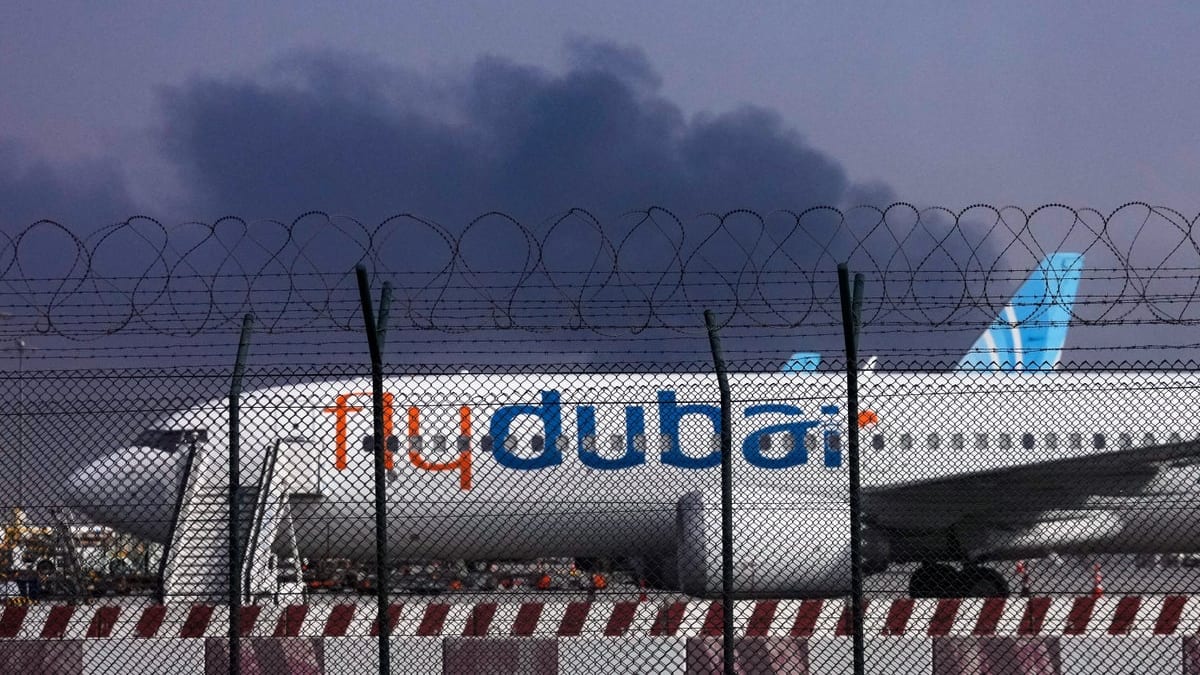
Image by the-independent.com
Airspace closures ripple from Israel to the Gulf
Since large-scale strikes began on February 28, multiple Middle Eastern states have intermittently shut or heavily restricted their airspace, triggering immediate suspensions of commercial flights. Early closures over Israel and parts of the Gulf pushed carriers to cancel departures en masse, with local hubs such as Tel Aviv and several airports in the United Arab Emirates and Saudi Arabia experiencing near standstills at various points in March.
Publicly available aviation and shipping advisories indicate that, although not every country has imposed a blanket ban, security restrictions, military activity and insurance concerns have sharply curtailed civilian traffic across the region. A regional port and transport bulletin from early March noted that airspace in most Gulf countries was effectively closed or severely constrained, with some national carriers halting services on short notice and inbound flights diverted or turned back.
Subsequent missile and drone attacks on infrastructure in Israel, Qatar and across the Gulf have reinforced a cautious stance from regulators and airlines. Reports from regional media and specialist outlets describe waves of short-notice airspace shutdowns around major strikes, producing clusters of cancellations and diversions at hubs from Doha to Dubai, even when airports technically remain open.
The result is a patchwork of restrictions that can change by the day. Flights may operate on some routes in limited numbers while others remain fully suspended, leaving passengers dependent on last-minute updates from airlines rather than fixed schedules.
Gulf mega-hubs suffer historic cutbacks
Major Gulf carriers that once relied on dense networks through Dubai, Abu Dhabi and Doha are now contending with the deepest disruption in their history. Recent coverage in regional and Asian media indicates that Emirates, Etihad, Qatar Airways, flydubai and Air Arabia saw their combined flight volumes collapse in the days after the first strikes, with services reduced to a fraction of normal levels as conflict spread and airspace corridors narrowed.
Industry analysis published this week describes how repeated closures across the Persian Gulf have eroded the hub-and-spoke model that made these airlines dominant connectors between Europe, Asia, Africa and Oceania. Long-haul routes that once transited efficiently through the Gulf are being thinned out, suspended or rerouted far to the north or south, adding hours of flying time and undermining tight connection banks.
Even when airports in the UAE and Qatar are technically open, operating constraints remain severe. Airlines must plan around potential missile alerts, restrictions on specific flight levels and insurer-imposed limitations on overflying conflict zones. This has led to rolling cancellations on routes to nearby states such as Saudi Arabia, Bahrain and Kuwait, and to further afield destinations when safe and commercially viable routings cannot be guaranteed.
Travel and tourism outlets report that the squeeze on Gulf capacity is rippling outward to travelers around the world, particularly those in Europe and Australia who traditionally rely on one-stop options via Dubai or Doha. Seats on remaining services are scarce and often significantly more expensive than before the conflict.
European and Asian carriers pull back or reroute
As regional carriers trim operations, airlines from Europe and Asia are likewise cancelling or radically reconfiguring their flights to the Middle East. Some European brands have extended suspensions to Tel Aviv and key Gulf destinations, with travel industry reports citing continued security concerns and the difficulty of planning around shifting airspace permissions.
Low-cost and leisure-focused airlines have also been affected. Recent guidance for passengers from fare comparison and booking platforms notes that at least one European carrier has cancelled all services to Dubai until late October and extended its halt on Tel Aviv flights until the end of April, advising customers not to travel to the airport unless their flight status is explicitly confirmed.
Asian airlines are juggling similar challenges on long-haul routes that would normally overfly Iran or the Gulf. Aviation trade coverage describes some carriers inserting technical stops in European cities on journeys to North America, adding fuel breaks and crew changes to avoid restricted airspace. These detours increase operating costs and pressure already tight aircraft and crew schedules, contributing to further cancellations when resources run short.
For passengers, this means that even flights not directly serving the Middle East can be disrupted. Journeys between Asia, Europe and the Americas that previously transited Iranian or Gulf airspace may now involve longer routings, additional connections or unexpected overnight stays when schedules unravel.
US and Canadian travelers face prolonged uncertainty
Travelers from North America are confronting a particularly fluid situation. In early phases of the conflict, major US carriers suspended services to Tel Aviv and introduced temporary waivers for customers ticketed to affected destinations, allowing changes or refunds within specified travel windows. Community reports and airline advisories indicate that such flexibility programs have been adjusted and extended multiple times as the war drags on.
Canadian and US passengers have also been caught up in broader evacuation and repatriation efforts. Travel-industry publications describe governments grappling with citizens stranded in Israel, the UAE, Saudi Arabia and other states after sudden rounds of Iranian missile strikes prompted fresh airspace closures and mass cancellations. Ad hoc charter flights, diversions to secondary hubs such as Athens, and complex multi-stop routings have all featured in recent evacuations.
With the security landscape changing rapidly, North American airlines are relying heavily on dynamic scheduling rather than long-term timetables. Publicly available information shows that some carriers are adding short-notice segments to reposition aircraft or to help clear backlogs of stranded passengers, while keeping regular commercial service to certain Middle Eastern cities suspended or sharply reduced.
For individual travelers, this has translated into a reliance on real-time status checks and a greater likelihood of last-minute changes, even after reaching an intermediate hub in Europe or the Mediterranean.
Regional carriers tighten policies while extending waivers
Within the region, smaller and mid-sized airlines are issuing rolling updates on cancellations while trying to preserve customer goodwill. Aegean Airlines, for example, recently extended its suspension of flights to destinations including Tel Aviv, Dubai, Riyadh, Iraq and Lebanon, citing the security environment and ongoing missile and drone threats. The carrier paired these cancellations with free rebooking options and refunds for passengers whose travel fell within defined date ranges.
Similar patterns are emerging across other Middle Eastern and European airlines serving the conflict zone. Public statements and customer notices commonly highlight fee-free changes, extended validity for unused tickets and, in some cases, travel credits that can be applied months into the future. At the same time, carriers are narrowing the windows in which passengers can alter plans without penalties as they move from initial crisis response toward longer-term capacity management.
Loyalty specialists note that several Gulf airlines are deploying targeted benefits to retain frequent flyers through the turmoil, such as soft-landing elite members who cannot fly enough to requalify this year. These measures acknowledge that wide-scale cancellations are beyond passengers’ control, even as airlines struggle with their own operational and financial constraints.
Despite these efforts, uncertainty remains high. Travelers planning journeys to, from or through the Middle East in the coming weeks are being encouraged by publicly available guidance to monitor airline channels closely, avoid assuming previously reliable hub connections will be available, and build extra time and flexibility into any itinerary touching the region.