

More news on this day
Queen Alia International Airport in Amman faced another day of severe disruption on March 7, with 54 flight cancellations and 43 delays affecting routes to and from Cairo, Doha and Dubai, as Royal Jordanian, Qatar Airways, Ryanair and FlyDubai struggled to operate amid regional airspace restrictions and security concerns.
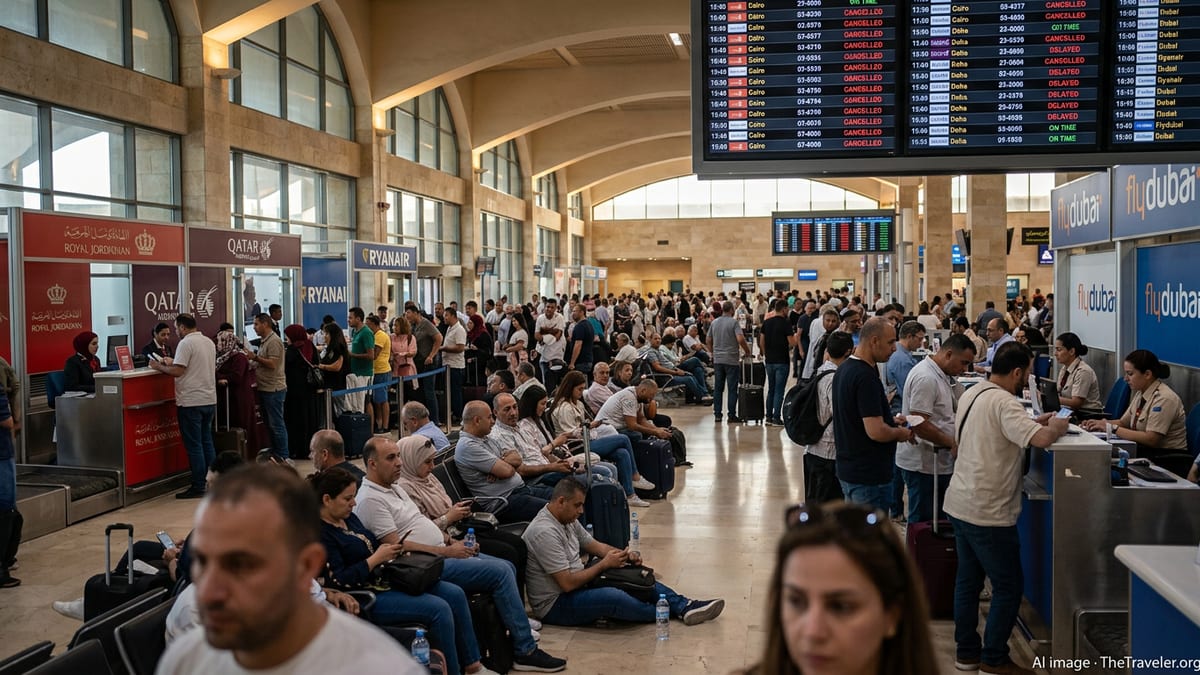
Mounting Cancellations Hit Key Middle East Routes
Airport operations data from Queen Alia International Airport showed a sharp spike in disrupted services on Saturday, with a combined 97 flights cancelled or delayed across the day. The hardest-hit routes were those linking Amman with Cairo, Doha and Dubai, all of which have been at the center of wider regional instability and shifting airspace closures in recent days.
Royal Jordanian bore the brunt of the disruption, cancelling and delaying multiple departures and arrivals between Amman and Cairo as well as regional connections across the Levant. Qatar Airways services linking Amman and Doha were also heavily affected, while FlyDubai and low-cost carrier Ryanair saw schedules to and from Dubai and other regional hubs thrown into disarray.
The wave of disruptions at Queen Alia coincided with widespread cancellations reported at other Middle Eastern gateways, including Doha’s Hamad International Airport, Dubai International Airport and Cairo International Airport, where carriers such as Qatar Airways, FlyDubai and Royal Jordanian have also cut or reshaped operations in response to evolving security assessments.
Although the precise breakdown of cancellations and delays varied by airline and route throughout the day, airport display boards in Amman showed multiple back-to-back services listed as cancelled or significantly delayed, leaving departure lounges crowded with passengers seeking information and rebooking options.
Passengers Stranded in Amman, Cairo, Doha and Dubai
The knock-on effect of the cancellations stretched well beyond Jordan, leaving travelers stranded or re-routed across Amman, Cairo, Doha and Dubai. Many passengers in Amman reported missing onward connections, with some forced into overnight stays after late-notice cancellations by Royal Jordanian and other regional carriers.
In Cairo, travelers bound for Amman and onward destinations faced long queues at airline service desks as flights were scrubbed or rescheduled. Similar scenes played out at Hamad International Airport in Doha, where recent days have already seen hundreds of cancellations, and at Dubai International Airport, a major transit hub for FlyDubai and a critical connection point for passengers heading to and from Jordan.
Travel industry observers noted that the disruption particularly affected those relying on tight connections. Passengers who had planned same-day links between Amman and global cities via Doha or Dubai found themselves rebooked on indirect routings or waiting for available seats on later departures, with limited spare capacity during peak travel periods.
Hotels near major hubs in Doha and Dubai have reported an uptick in distressed bookings from transit passengers unable to continue their journeys, while travel agencies in Amman and Cairo have been fielding a surge in calls from travelers seeking alternative routes or refunds.
Airlines Adjust Schedules Amid Security and Airspace Constraints
Behind the scenes, airlines serving Queen Alia International Airport spent much of the day recalibrating schedules as regional airspace restrictions shifted. Carriers including Qatar Airways and FlyDubai have already acknowledged in recent public updates that they are continuously reviewing flight plans in response to evolving security guidance and temporary route closures across parts of the Middle East.
Royal Jordanian, which has long used Amman as a key connecting hub, has reiterated its commitment to keeping passengers informed through its website, mobile app and airport customer service desks when delays or cancellations occur. The carrier’s published customer policies commit to rebooking affected travelers on the next available services or offering refunds where flights cannot operate as scheduled.
Qatar Airways has similarly urged passengers not to travel to the airport without a confirmed seat and to monitor their booking status closely, particularly on services that rely on air corridors subject to last-minute operational changes. FlyDubai, which has faced its own series of disruptions across the region, has been operating a reduced schedule, with some passengers in Dubai reporting same-day timetable changes to flights serving Amman and Cairo.
Low-cost carrier Ryanair, which links Amman with select European and regional destinations, has also been impacted when operating into airspace affected by restrictions. Industry analysts say such carriers are especially vulnerable to knock-on schedule issues because they operate tighter aircraft rotations and have less spare capacity to absorb unexpected delays.
Travel Advice: What Affected Passengers Should Do Now
With disruptions at Queen Alia International Airport and across the wider region expected to fluctuate in the short term, travel experts are urging passengers to adopt a more cautious approach to itineraries that rely on multiple connections through Amman, Cairo, Doha or Dubai. Travelers are being advised to build in longer layovers where possible and to keep contact details updated in airline booking profiles so they can receive real-time notifications about changes.
Airlines including Royal Jordanian and Qatar Airways recommend that passengers check flight status via official websites or mobile apps before leaving home, rather than relying solely on third-party travel platforms. In the event of a cancellation, travelers should immediately approach airline staff at departure airports or use dedicated call centers and online chat services to request rebooking or refunds.
Consumer advocates also stress the importance of reviewing fare rules and travel insurance coverage, particularly for trips passing through multiple Middle Eastern hubs. Some policies offer additional protection for delays or missed connections caused by airspace closures or security-related disruptions, while others may exclude such events, leaving passengers to rely on airline goodwill and statutory passenger-rights frameworks where applicable.
For those already stranded in Amman, Cairo, Doha or Dubai, airport authorities are encouraging cooperation with security and airline staff and advising travelers to remain within terminal areas unless instructed otherwise. With airport hotels and nearby accommodations under pressure, early contact with airlines to secure confirmed onward travel is being presented as the best way to minimize further disruption.
Outlook for Queen Alia and Regional Air Travel
Aviation officials and industry analysts caution that the situation at Queen Alia International Airport and other key Middle Eastern hubs remains fluid, with further cancellations and delays possible as security assessments and airspace restrictions evolve. While some carriers have begun cautiously restoring selected flights, schedules remain far from normal, and last-minute changes are likely to persist.
For Queen Alia, the latest wave of 54 cancellations and 43 delays underscores the airport’s vulnerability to broader regional developments. Amman’s role as a strategic connector between Europe, the Gulf and North Africa means that disruptions in any one of those regions can quickly ripple through the airport’s tightly timed network of departures and arrivals.
Industry watchers say that once airspace conditions stabilize, airlines such as Royal Jordanian, Qatar Airways, Ryanair and FlyDubai are expected to progressively restore full schedules, though crews, aircraft positioning and passenger backlogs will take time to normalize. In the meantime, travelers are being reminded that flexibility, close monitoring of flight status and a willingness to accept alternative routings will be essential for journeys touching Amman, Cairo, Doha or Dubai in the days ahead.
Until then, departure boards at Queen Alia International Airport are likely to remain a barometer of wider tensions in the region, with each new wave of cancellations and delays rippling outward to affect passengers and aviation partners across multiple continents.