

More news on this day
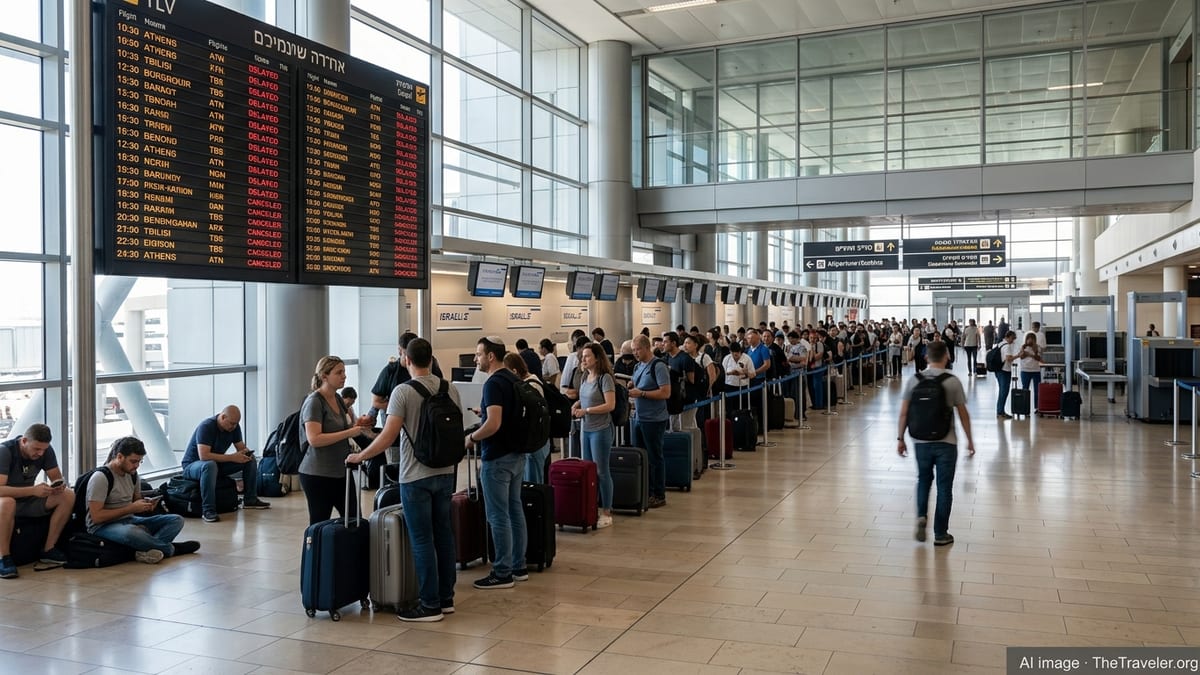
Ben Gurion International Airport is again at the center of major travel disruption as a wave of cancellations and delays involving El Al, Arkia Israel Airlines, Israir and other carriers ripples from Tel Aviv to Miami, Athens, Tbilisi and additional hubs across Europe and North America.
Get the latest news straight to your inbox!
Conflict-Driven Strain on Israel’s Main Gateway
Ben Gurion International Airport, Israel’s primary international gateway and hub for El Al, Arkia, Israir and other local carriers, is operating under exceptional strain in late March 2026. Regional conflict and intermittent airspace restrictions linked to ongoing hostilities between Israel and Iran have already forced dramatic reductions in flight schedules, with travel advisories describing widespread disruption and “very limited” operations at times for commercial passenger services.
Against this backdrop, a new cluster of three cancellations and eight significant delays has underscored the fragility of the current network. While these numbers are modest compared with the thousands of flights culled across the wider Middle East since late February, their impact at Ben Gurion is magnified by an already reduced timetable and strict caps on outbound passenger numbers.
Publicly available information shows that outbound flights remain particularly constrained, especially long haul services to the United States. Reports from Israeli media and airline communications in mid-March described authorities limiting passenger loads on transatlantic and European departures, which leaves carriers little flexibility when additional operational issues emerge.
The latest disruption primarily affects services touching Tel Aviv, Miami, Athens and Tbilisi, illustrating how even a handful of schedule changes can cascade across multiple regions when aircraft and crew are already tightly rostered.
El Al, Arkia and Israir Under Pressure
El Al, Arkia Israel Airlines and Israir, which collectively shoulder much of Israel’s remaining international traffic during the current crisis, are at the forefront of the latest wave of changes. Each airline has been running a patchwork of regular, special and repatriation-style flights since the start of hostilities, frequently adjusting timetables as security assessments and government directives evolve.
El Al, the country’s flag carrier, has taken on additional responsibilities transporting both Israeli citizens and foreign nationals on adjusted routes, including extra services to North American gateways. Even before the most recent cancellations and delays, the airline had been coping with intense operational complexity, from heightened security procedures to rapidly shifting demand as foreign carriers suspend or curtail Israel service.
Arkia and Israir, both smaller but vital players, have focused heavily on regional connectivity to destinations such as Greece and Georgia. Travellers have reported late-notice schedule changes, re-timings and equipment swaps as these airlines attempt to thread flights through available air corridors while complying with evolving safety guidance. A pattern has emerged of flights operating, but often at different times or on different days than originally planned.
The additional trio of cancellations and multiple delays reported in recent hours adds to an already volatile operating environment. For the airlines, each disruption requires a complex rebalancing of aircraft rotations, crew duty hours and maintenance windows, all while demand far outstrips the currently permitted capacity out of Israel.
Routes to Miami, Athens and Tbilisi Disrupted
The current round of irregular operations has been most visible on services linking Tel Aviv with Miami, Athens and Tbilisi, routes that connect Israel to key leisure, family and business markets. Miami has become an important alternative for North American travel at a time when connections via traditional European hubs are less predictable, while Athens and Tbilisi function as critical short haul links and onward-transfer points.
Reports from flight tracking data and airport information boards indicate that long haul departures between Tel Aviv and major U.S. cities have been subject to tight passenger controls and occasional last-minute changes. When one such service to or from Miami is cancelled or heavily delayed, the effect is felt on both sides of the Atlantic as passengers scramble to rebook scarce seats and airlines juggle aircraft positioning.
On the regional front, flights between Ben Gurion and Athens or Tbilisi have been experiencing schedule slippage and day-of-travel timing changes. With limited daily frequencies, even a single delay can cause passengers to miss onward connections or lose an entire travel day. In some cases, travellers are being routed through secondary gateways or asked to accept alternative dates, reflecting the limited slack in the current system.
These disruptions also illustrate how closely tied Israel’s aviation network is to its neighbors. When conflict alters airspace usage over parts of the Middle East, carriers flying between Israel, Greece and Georgia must consider longer routings, possible fuel stops and revised crew duty calculations, all of which increase the risk of knock-on delays.
Impact on Passengers from Israel, Greece, Georgia and Beyond
For passengers, the immediate effects of three cancellations and eight delays are measured in missed connections, overnight stays, reissued tickets and extended uncertainty. Travellers originating in Israel face congested phone lines and digital channels as they seek confirmation that their already-limited outbound options remain intact, while those in Greece, Georgia and other countries watch their plans hinge on the latest update from Tel Aviv.
Accounts shared on social platforms and travel forums in recent weeks describe individuals stranded in Athens or Tbilisi after schedule changes, with some resorting to multi-leg itineraries through third countries to complete journeys that once involved a single direct sector. Others report receiving late-night messages about revised departure times from Arkia or Israir, complicating transfers, hotel bookings and ground transportation.
For passengers in Miami and other U.S. cities, the disruption often takes the form of uncertainty around return dates and times. With outbound capacity from Israel still constrained, those planning trips to the country must factor in the possibility that return flights could be rescheduled or consolidated, resulting in shorter stays or unexpected extensions abroad.
Travel insurers and corporate travel managers are also adjusting their guidance. Many are advising flexible booking strategies, including fully refundable tickets where possible, as well as contingency plans that may involve alternate routings via European or regional hubs that continue to receive at least limited service from Israeli carriers.
What Travelers Should Watch in the Coming Days
In the short term, the outlook for operations at Ben Gurion remains highly dependent on the broader security situation and airspace management decisions. Analysts following the conflict note that while Israel has been progressively reopening its skies since the initial wave of closures in late February, flight levels remain well below pre-crisis norms, and the system is vulnerable to renewed missile activity or precautionary shutdowns.
Travelers with imminent departures to or from Tel Aviv, Miami, Athens or Tbilisi are being urged in public advisories and airline notices to monitor flight status frequently, remain prepared for last-minute gate or timing changes, and keep accommodation and ground transport plans as flexible as possible. Where airlines offer voluntary change windows or fee waivers, taking advantage of these options early can reduce the risk of getting caught in a sudden backlog.
Industry observers expect Israeli carriers to continue prioritizing essential and high-demand routes while gradually rebuilding wider networks as conditions allow. For now, however, even a small cluster of cancellations and delays can ripple widely through a constrained system, affecting passengers not just in Israel, Greece and Georgia, but across Europe and North America.
With the regional conflict still unresolved, Ben Gurion International Airport is likely to remain a barometer of broader geopolitical tensions in the weeks ahead, and travelers will need to stay alert as the situation continues to evolve.