

More news on this day
Hundreds of passengers were left stranded across Argentina today after a wave of delays and cancellations at Buenos Aires’ Jorge Newbery Airport triggered a domino effect that disrupted services by Aerolíneas Argentinas, LATAM, Flybondi and other carriers on key domestic routes linking the capital with Córdoba, Mendoza, Rosario and several regional cities.
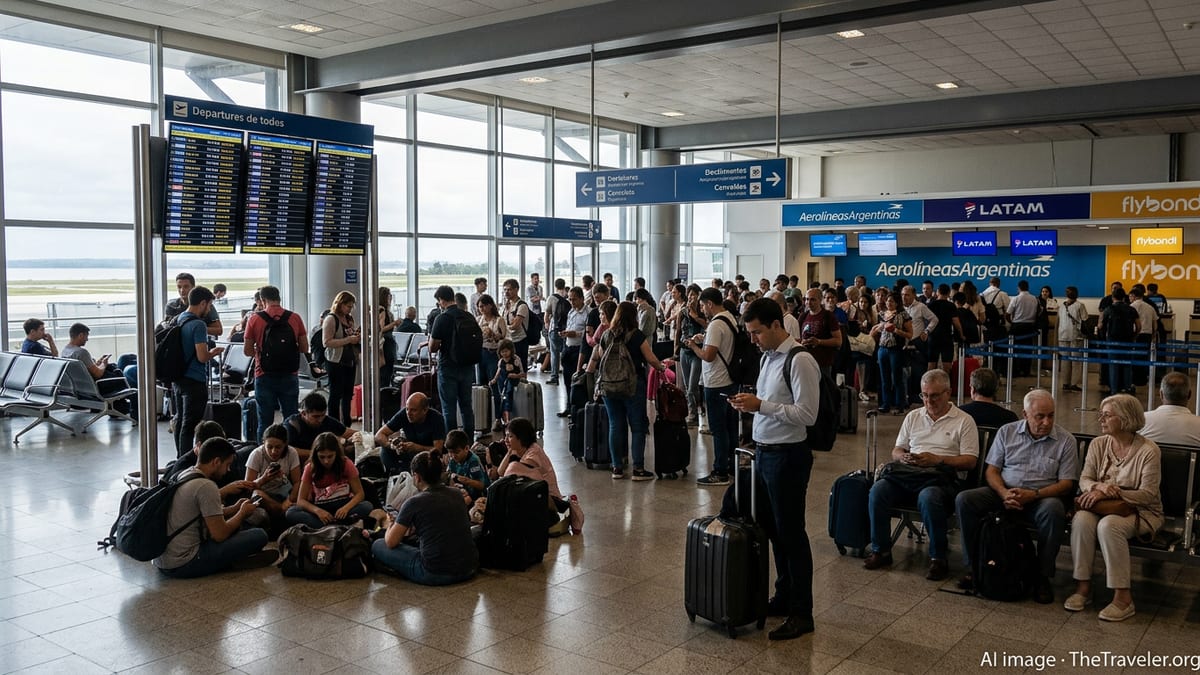
Six Cancellations and 73 Delays Snarl Operations at Aeroparque
By mid-morning, operational data from Aeroparque Jorge Newbery showed at least six flights canceled and more than 70 services delayed, an unusually high level of disruption for Argentina’s busiest domestic hub. The problems began in the early hours with a cluster of aircraft out of position and ground handling bottlenecks, before rapidly spilling into the rest of the schedule.
Passengers arriving for morning departures found departure boards dominated by amber and red status indicators, with many flights pushed back repeatedly in short increments. Several airlines reported knock-on delays of more than two hours as crews and aircraft cycled through the congested rotation.
Although airport authorities emphasized that runway conditions and visibility remained within normal parameters, the compressed schedule following earlier operational constraints meant that even minor timing issues cascaded into widespread disruption. Check-in queues lengthened through the morning peak as staff attempted to rebook travelers and issue meal vouchers.
By early afternoon, airlines were working to stabilize their programs, but the backlog of delayed departures suggested that irregularities would continue into the evening on popular trunk routes connecting Buenos Aires with provincial capitals.
Impact on Aerolíneas Argentinas, LATAM, Flybondi and Other Carriers
Aerolíneas Argentinas, the country’s flag carrier and the dominant operator at Aeroparque, bore the brunt of the disruption, with several high-demand services to Córdoba, Mendoza and Patagonia significantly delayed. The airline deployed additional staff at customer service counters to manage rebooking requests and assist passengers with missed connections.
LATAM, which operates a mix of domestic and regional flights from Aeroparque, also reported schedule irregularities, particularly on routes linking Buenos Aires with northern cities. While most of its operations remained technically active, shorter turnaround times and congestion at boarding gates forced a series of rolling delays.
Low-cost carrier Flybondi, already under heightened regulatory and public scrutiny after a series of cancellations earlier this year, again faced angry scenes at its counters as some of its departures experienced extended holds. Passengers reported fragmented communication and frequent changes in departure estimates, compounding frustration among those who had previously seen flights rescheduled on short notice.
Smaller domestic operators and regional affiliates were not spared. With gate space at a premium and slot times slipping throughout the day, some flights operated significantly behind schedule even when aircraft and crew were ready, simply waiting for clearance to begin boarding and pushback.
Disruptions Felt Nationwide in Córdoba, Mendoza, Rosario and Beyond
The operational turbulence at Aeroparque quickly rippled across the country, affecting airports that depend heavily on the Buenos Aires hub for connectivity. In Córdoba, Argentina’s second-largest city, morning arrivals from the capital landed late, forcing turnarounds to depart behind schedule and compressing the afternoon wave of flights.
In Mendoza, gateway to the country’s most important wine region, delays from Buenos Aires created uncertainty for both business travelers and tourists. Some passengers awaiting return flights reported being advised to remain near their boarding gates because departure times were being adjusted repeatedly as slots opened up at Aeroparque.
In Rosario and other regional centers, airlines struggled to maintain predictable schedules as they waited for incoming aircraft and crews originating from the capital. Provincial terminals saw crowded waiting areas and longer-than-usual lines at information counters, as travelers attempted to confirm whether their onward journeys would operate as expected.
The widespread nature of Argentina’s domestic air network, with many routes funneled through Buenos Aires, meant that even cities not directly mentioned on early disruption lists experienced side effects in the form of aircraft substitutions, schedule compressions and altered crew rotations.
Passengers Face Long Queues, Missed Connections and Unclear Timelines
For passengers, the operational complexity translated into a day of uncertainty and discomfort. Families returning from summer holidays, students heading back to university towns and business travelers connecting to meetings all reported hours spent in terminal queues while waiting for updated information.
Many travelers voiced frustration about communication, noting that flight status notifications on mobile apps and airport screens often lagged behind announcements at the gate. Others said that they received rebooking emails only after they had already arrived at the airport, limiting their ability to adjust ground transportation or accommodation plans.
Stranded passengers in Buenos Aires described scenes of packed food courts and crowded seating areas, with many sitting on the floor near power outlets to keep phones charged. Those traveling from inland cities faced additional anxiety over missed medical appointments, work commitments and onward connections to long-distance buses or international flights departing from Ezeiza.
While airlines reminded customers that they were prioritizing the most time-sensitive cases, many affected passengers indicated they were unsure of their rights regarding refunds, hotel stays or meal compensation, particularly on cheaper promotional fares and low-cost carriers.
Authorities and Airlines Work to Clear Backlog and Urge Travelers to Check Status
Airport authorities and airline operations centers spent the day working through the backlog of delayed flights, focusing first on key trunk routes and services carrying large numbers of connecting passengers. Operational teams attempted to recover punctuality by reallocating aircraft, adjusting crew rosters and, in some cases, consolidating lightly booked departures.
Ground staff and airline representatives urged travelers to arrive with extra time, but not excessively early, in order to avoid additional congestion in the check-in halls. Several carriers renewed their recommendation that passengers rely on official airline apps, direct text messages and airport display boards for the latest status rather than third-party aggregators, which can lag during fast-changing situations.
Consumer advocates reminded travelers that, under Argentina’s aviation and consumer protection framework, airlines are generally required to offer assistance in cases of significant delay or cancellation, ranging from refreshments and communication support to accommodation when overnight stays become necessary. However, the exact entitlements depend on the cause of the disruption and each ticket’s terms and conditions.
With Aeroparque expected to remain busy into the evening as airlines attempt to reposition aircraft and complete as many pending services as possible, officials cautioned that some delays could persist into tomorrow’s early morning wave. Travelers with flights in the next 24 hours were advised to monitor their status closely and maintain flexibility in ground and lodging arrangements where possible.