

More news on this day
Thousands of passengers were stranded at Baltimore/Washington International Thurgood Marshall Airport on Sunday after at least 73 flights were delayed and 247 cancelled, rippling disruption across some of the busiest routes in the United States and snarling travel plans to Miami, New York and Chicago.
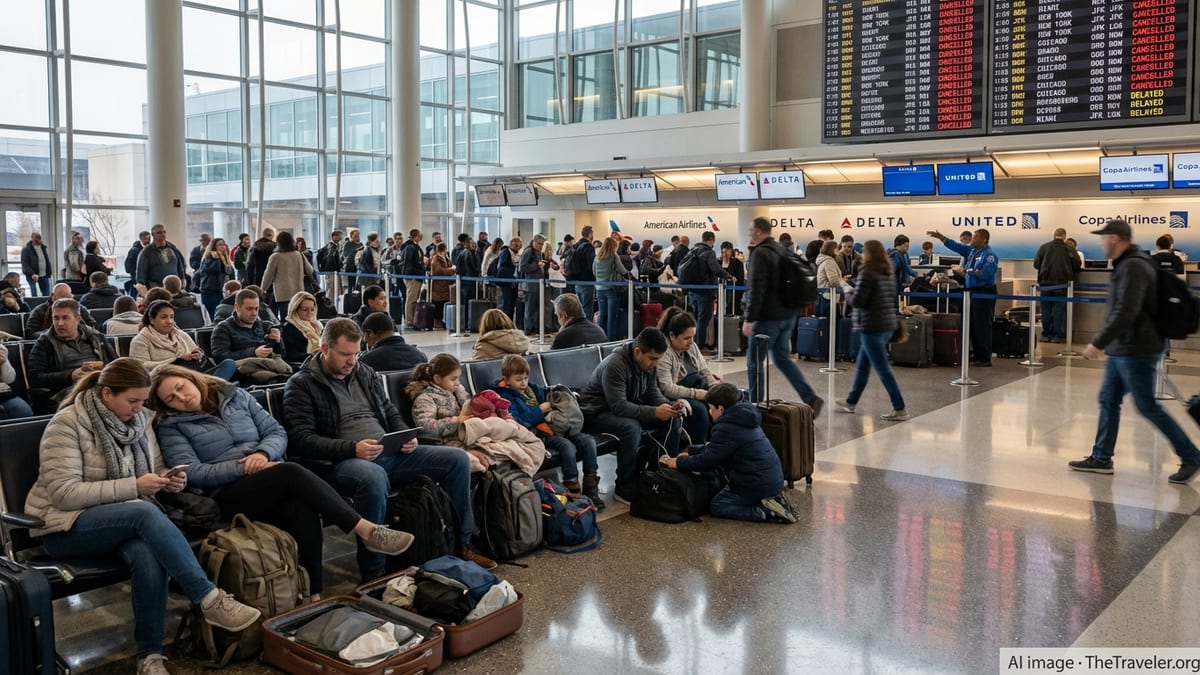
Heavy Disruptions Hit a Key Mid‑Atlantic Hub
The disruption at Baltimore/Washington International Thurgood Marshall Airport, commonly known as BWI, unfolded through the morning and early afternoon as departure boards filled with red cancelled and delayed markers. Airport operations data showed that dozens of flights within, into and out of BWI were either significantly late or scrapped altogether, leaving passengers lined up at ticket counters and customer service desks.
While precise totals fluctuated throughout the day, airport and airline tracking tallies by early afternoon indicated roughly 73 delayed flights and 247 cancellations tied to BWI’s schedule. The knock‑on effect quickly extended to connecting flights nationwide, particularly on heavily traveled corridors to and from South Florida, New York–area airports and Chicago.
Terminal concourses grew increasingly crowded as travelers waited for updates, many of them already hours past their originally scheduled departure times. Families returning from school holidays, international passengers connecting through Copa Airlines and business travelers heading for Monday meetings described a mix of confusion, fatigue and frustration as information trickled out in waves.
BWI, one of the East Coast’s busiest low‑cost and legacy‑carrier gateways, typically handles hundreds of daily departures to destinations across the country and to select international cities. That scale meant the wave of cancellations rippled far beyond Maryland, affecting travelers and crews in multiple time zones.
Major Carriers Feel the Strain
The disruption touched a wide cross‑section of airlines, with American Airlines, Delta Air Lines, United Airlines and Southwest among the hardest hit on domestic routes. International connections were also affected, including services operated by Panama‑based Copa Airlines, which links BWI to key Latin American hubs.
Operational statistics across the US network in recent months have shown that even a localized shock can quickly cascade into nationwide disruption, especially when multiple big carriers are affected on the same day. American, Delta and United all operate extensive networks through congested hubs such as Chicago O’Hare, New York’s John F. Kennedy and Miami International, making them particularly vulnerable when schedules slip or aircraft and crews are stranded out of position.
By mid‑day, passengers reported receiving a mix of automated texts, app alerts and gate announcements noting that aircraft “had not yet arrived from a previous flight,” or that “crew availability” and “weather and air traffic control programs” were causing knock‑on delays. Several carriers opened rebooking options without change fees, but last‑minute seat availability on alternative flights was limited on heavily traveled Sunday routes.
Carriers have faced mounting scrutiny from regulators over their handling of large‑scale disruptions, especially after a series of system outages and schedule collapses over the past two years. Many passengers at BWI on Sunday expressed concern that recent assurances of improved resilience and better communication were not fully borne out in real‑time.
Connections Snarl Miami, New York and Chicago
Because of BWI’s extensive network of point‑to‑point and connecting routes, the disruption quickly reverberated at other major US airports. Miami International, a key gateway to Latin America and the Caribbean and one of the country’s most delay‑prone hubs in recent years, saw inbound flights from the Mid‑Atlantic arrive late or not at all, tightening already busy gate schedules and baggage operations.
New York–area airports, including John F. Kennedy, LaGuardia and Newark Liberty, also felt the impact. These facilities already contend with chronic congestion, tight runway capacity and frequent weather‑related air‑traffic control programs. Delayed departures from BWI pushed some aircraft into peak arrival banks at New York, amplifying slowdowns and forcing additional holding patterns and ground delays.
Chicago, led by Chicago O’Hare International, experienced compounding issues as Midwest weather and existing congestion intersected with the shortage of inbound aircraft from the East Coast. O’Hare has ranked among the nation’s top airports for delays, and even a modest volume of additional late arrivals and cancellations from BWI was enough to disrupt tightly timed connection windows for passengers heading onward to the West Coast and overseas.
For many travelers, the disruption did not end with a single cancelled flight. Missed onward connections meant unexpected overnight stays, last‑minute hotel searches and prolonged waits at rebooking counters. Airline agents worked through lengthy queues as they tried to juggle limited seats, crew‑duty limits and aircraft already stretched across a sprawling national network.
Weather, Congestion and System Stress Combine
The specific mix of causes behind Sunday’s disruption at BWI reflected a pattern that has become familiar to frequent flyers. Airlines and aviation officials cited a combination of adverse weather along parts of the East Coast and Midwest, air‑traffic control flow restrictions and crews forced out of legal duty hours after earlier delays.
Recent data on US air travel performance has underscored how fragile on‑time operations can be when multiple stressors coincide. Industry analyses for 2025 show that airports such as Chicago O’Hare, Miami International and New York’s LaGuardia and Newark Liberty recorded delay rates exceeding one quarter of all departures, highlighting the limited margin for error in already‑busy airspace.
In such an environment, even a short period of low ceilings, thunderstorms or strong crosswinds can trigger ground stops, reroutes and airborne holding that ripple through schedules for hours. When these constraints intersect with tight crew rosters and aircraft scheduled for near‑continuous utilization, the result is often a sharp spike in cancellations as airlines attempt to reset their operations.
Aviation analysts note that while major carriers have invested in upgraded crew‑scheduling tools and real‑time operations centers since highly publicized meltdowns in 2022 and 2023, the complexity of the system means passengers may still experience days of disruption, particularly around peak travel weekends.
Scenes of Long Lines and Frayed Tempers at BWI
Inside BWI’s terminal, the human cost of the disruption was visible from early morning. Check‑in halls and concourses filled with rolling suitcases, camping‑style setups around electrical outlets and long lines at cafés and fast‑food outlets as travelers settled in for unexpected waits.
Parents tried to keep children occupied near crowded gates, while older travelers sought out scarce seating away from the busiest thoroughfares. Many passengers spent long periods refreshing airline apps, scrolling flight‑tracking sites and standing in phone queues in parallel with in‑person rebooking attempts.
Airport staff and airline ground personnel attempted to manage expectations, directing those on cancelled flights toward customer‑service desks and self‑service kiosks. Overhead announcements frequently reminded travelers to check their flight status before proceeding to security or boarding areas, and to anticipate longer than usual processing times at check‑in and baggage drop.
Retail and food outlets within the terminal reported brisk business as stranded passengers tried to make the most of their extended stays. Some travelers opted to leave the airport to seek hotel rooms or stay with friends and family in the Baltimore–Washington region, while others opted to remain on site in case a standby seat opened or a delayed departure was finally confirmed.
Airlines Offer Waivers, But Recovery Will Take Time
By Sunday afternoon, several major airlines serving BWI had activated flexible rebooking policies for affected customers, waiving change fees and, in some cases, allowing rerouting through alternative hubs including Atlanta, Charlotte, Dallas–Fort Worth, Houston and Denver. However, because many of those hubs were already busy handling their own weather and congestion‑related challenges, spare capacity was limited.
Travelers who had booked through online travel agencies or with multiple carriers on a single itinerary faced particular complications. In those cases, a cancelled BWI flight could cascade through a chain of separate reservations, requiring multiple calls and negotiations to piece together a new route. Some passengers turned to train and bus options along the Northeast Corridor as a fallback, particularly for trips involving New York or Washington.
Industry observers said that while the worst of Sunday’s operational crunch could subside within 24 to 48 hours, residual delays and scattered cancellations were likely to persist into the early part of the week as aircraft and crews were repositioned. For travelers with flexibility, airlines and travel advisers recommended actively monitoring flights and considering voluntary changes away from peak mid‑day and evening banks.
Airline operations managers will face the delicate task of balancing recovery from Sunday’s disruption with maintaining regular schedules, while also preparing for any additional weather or system shocks later in the week. That trade‑off often means that some lightly booked flights are pre‑emptively cancelled in order to protect higher‑demand services and restore aircraft rotations.
Broader Questions About US Aviation Resilience
The events at BWI on Sunday add to a growing list of high‑profile disruptions that have raised questions about the resilience of the US air transport system. Over the past two years, passengers have endured major schedule collapses tied to technology failures, extreme weather, air‑traffic control staffing shortages and airline‑specific operational breakdowns.
Federal officials have pressed airlines to improve contingency planning, bolster staffing and ensure that customer‑service commitments are honored when things go wrong. At the same time, carriers point to long‑term infrastructure pressures at major hubs, as well as the increasing volatility of weather patterns that can produce sudden and severe storms, especially in the summer months.
Consumer advocates argue that days like Sunday illustrate the limits of incremental fixes and highlight the need for stronger passenger rights, including clearer compensation rules for extended delays and cancellations within an airline’s control. Some point to European models that mandate standardized payouts in cases of long disruptions, though US airlines have strongly resisted similar frameworks.
For now, the immediate concern for thousands of stranded BWI passengers is more practical: securing a seat out, finding a place to sleep and rearranging missed commitments at the other end of their journey. With key routes to Miami, New York and Chicago among those most affected, the ripple effects of the day’s disruption will be felt in homes and workplaces across the country in the days ahead.