

More news on this day
Travelers across Europe are facing unexpected disruptions after Copenhagen Airport cancelled 13 flights and reported delays on a further 63 services, leaving passengers stranded in Denmark and rippling disruption across major destinations including Rome, Malaga, Zurich, Frankfurt and Keflavik.
Get the latest news straight to your inbox!
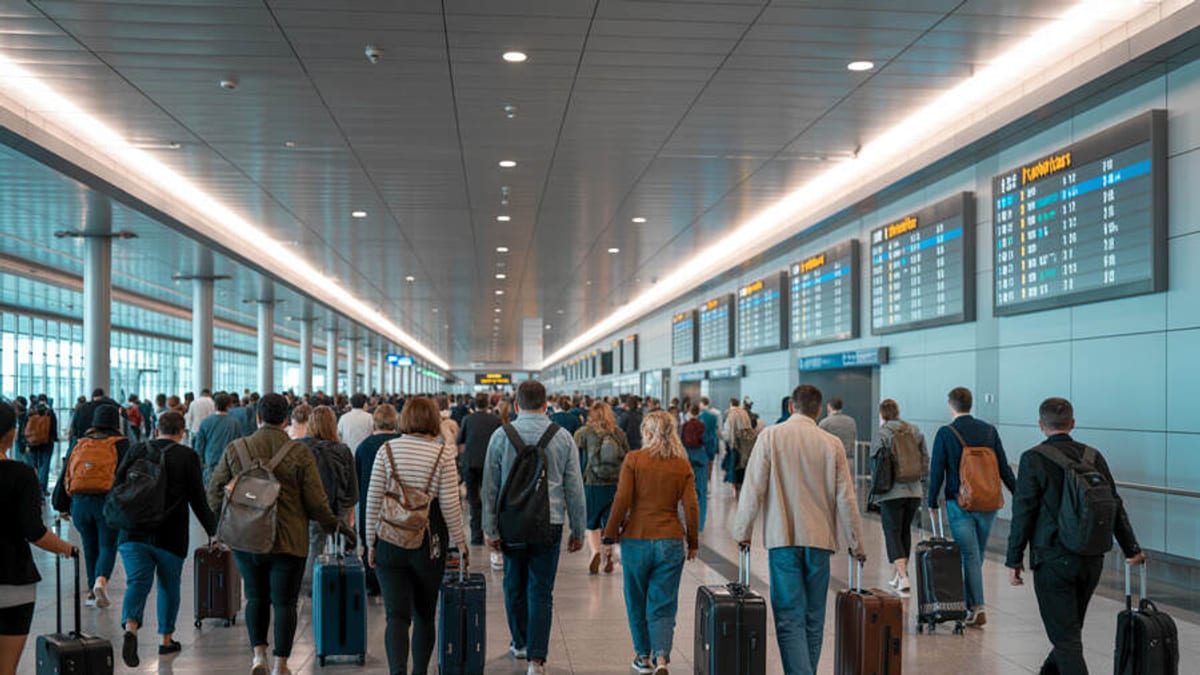
Image by Travel And Tour World
Widespread Disruption Across European Routes
Operational data from Copenhagen Airport on Sunday indicates that at least 13 departures and arrivals have been cancelled, alongside 63 delayed flights, affecting a mix of Scandinavian, European and transatlantic routes. The interruptions are concentrated on services connecting Denmark with key hubs such as Rome Fiumicino, Malaga on Spain’s Costa del Sol, Zurich, Frankfurt and Iceland’s Keflavik, a major transatlantic gateway.
The affected schedule touches multiple carriers, including SAS, Air France, Air Baltic, Lufthansa and Icelandair, as well as additional European airlines sharing codes and feeding into alliance networks. The pattern of disruption means that travelers are not only struggling to leave Copenhagen but may also be stranded at outstations waiting for aircraft and crews that are now out of position.
Published airport information suggests a mix of outbound and inbound cancellations, with some aircraft never departing Denmark and others unable to return from southern and central European destinations. This combination typically leads to a rolling impact over several rotations, prolonging delays well beyond the initial wave of cancellations.
For passengers booked on connecting itineraries through Copenhagen, the cancellations and lengthy delays are particularly acute, since missed onward connections at hubs such as Frankfurt, Zurich and Keflavik can add many hours or even an extra day to overall journey times.
Multiple Airlines, One Bottleneck in Copenhagen
While travelers may see their disruption as tied to a particular airline, the concentration of issues at Copenhagen Airport highlights how a single operational bottleneck can affect numerous carriers at once. SAS, which uses Copenhagen as a primary hub, is prominent among the disrupted services, but publicly available schedules show knock-on effects for Air France, Lufthansa, Air Baltic, Icelandair and other partners sharing passengers and codes.
When a hub airport experiences significant delays and cancellations, aircraft and crews can quickly become misaligned with their planned rotations. A delayed SAS or Lufthansa arrival into Copenhagen, for example, can hold up an onward departure to Frankfurt or Zurich, which then cascades into late arrivals and missed connections at those airports. Airlines are often forced to cancel individual sectors to reset their operations.
Travel data from recent months has already pointed to elevated levels of schedule disruption for several European carriers, particularly during periods of tight capacity and high demand. Copenhagen’s role as a transfer point between Nordic cities and major European and North American destinations makes it especially sensitive to any spike in delays, as travelers often rely on short minimum connection times.
The involvement of airlines based in different countries also illustrates how shared alliances and interline agreements can spread disruption beyond a single national market. Passengers who began their journeys in Italy, Spain, Germany or Iceland may find themselves unexpectedly overnighting in Denmark when onward seats become scarce.
Knock-on Effects at Rome, Malaga, Zurich, Frankfurt and Keflavik
The ripple effects are being felt at several major European airports connected to Copenhagen by high-traffic routes. Rome Fiumicino, a key gateway for both leisure and long haul connections, has seen services to and from Denmark disrupted, which can affect travelers heading onward to North America, the Middle East or other parts of Europe.
Malaga, a core destination for Nordic holidaymakers, is also among the affected airports. Cancelled or delayed Copenhagen flights can leave sunbound passengers stuck in Denmark and returning travelers temporarily stranded on the Costa del Sol, especially when alternative departures are already heavily booked at the tail end of weekend travel peaks.
In central Europe, Zurich and Frankfurt are experiencing their own operational strains as delayed or cancelled Copenhagen legs interfere with tightly timed banked connections. Frankfurt in particular acts as a major hub for long haul flights, meaning a missed arrival from Denmark may force passengers to rebook onto later services across the Atlantic, Africa or Asia.
To the northwest, disruptions on Copenhagen to Keflavik routes can have outsized consequences for transatlantic travelers who use Iceland as a connecting point between Europe and North America. Published route maps and schedules show that missed or cancelled segments between Denmark and Iceland can easily strand travelers mid-journey, especially when onward flights operate only a few times per day.
Passengers Face Long Queues, Rebooking Challenges and EC261 Questions
For stranded passengers, the practical impact often begins with long lines at airport service desks and overloaded call centers, as large numbers of travelers simultaneously seek rebooking and assistance. Reports from recent disruption events in Europe suggest that travelers can wait hours to speak to a representative, particularly when multiple airlines at the same hub are affected at once.
Under European air passenger regulations, including EC261, travelers whose flights are cancelled or heavily delayed may be entitled to care, rerouting and in some cases financial compensation, depending on the cause and length of the disruption and the distance of the journey. Public guidance from regulators and consumer bodies emphasizes that passengers should retain boarding passes, booking confirmations and receipts for any out-of-pocket expenses.
Travel forums and previous cases indicate that airlines may initially cite air traffic control restrictions, weather or other extraordinary circumstances when explaining cancellations or long delays. However, regulators have repeatedly clarified that once the immediate external cause has passed, carriers are expected to resume operations and provide reasonable rerouting, which can include placing passengers on other airlines when necessary and feasible.
Passengers stranded in Denmark or at outstations such as Rome, Malaga, Zurich, Frankfurt or Keflavik are therefore being urged by consumer advocates to document their situation carefully, check their rights under EC261 and similar rules, and follow up in writing with the operating carrier after travel is complete if compensation or refunds appear to be due.
What Travelers Should Do If Booked Through Copenhagen
With dozens of flights delayed and a cluster of cancellations focused on Copenhagen, travelers with upcoming trips routed through Denmark are being advised by travel experts to monitor their bookings closely in the hours before departure. Airline apps, airport departure boards and text or email alerts can change rapidly during periods of operational stress, and early awareness often gives passengers more options.
Passenger advocacy organizations commonly recommend that affected travelers attempt to manage rebookings through both digital tools and in-person help desks where possible. In major disruption events, some travelers have reported that reaching check in counters or transfer desks at the airport can yield faster results than waiting on hold with crowded call centers, while others have found success by using airline websites or apps during late night or early morning lulls in demand.
Those with flexible itineraries might consider proactive changes if their routing involves tight connections in Copenhagen, Frankfurt, Zurich or Keflavik, particularly on busy travel days. In some cases, airlines may allow voluntary rebooking to earlier departures or alternative routings to protect connections when significant disruption is already visible in the schedule.
As Copenhagen Airport works through the backlog of 13 cancellations and 63 delayed flights, the coming days will reveal how quickly carriers such as SAS, Air France, Air Baltic, Lufthansa and Icelandair can restore regular operations on key European and transatlantic corridors. For now, anyone traveling through Denmark’s busiest airport is being reminded to build in extra time, keep documentation on hand and stay alert to rapid changes in flight status.