

More news on this day
Dallas Fort Worth International Airport experienced widespread disruption on Tuesday, with 26 flight cancellations and 288 delays reported, snarling travel plans for passengers heading to and from major cities across the United States, Europe and Asia.
Get the latest news straight to your inbox!
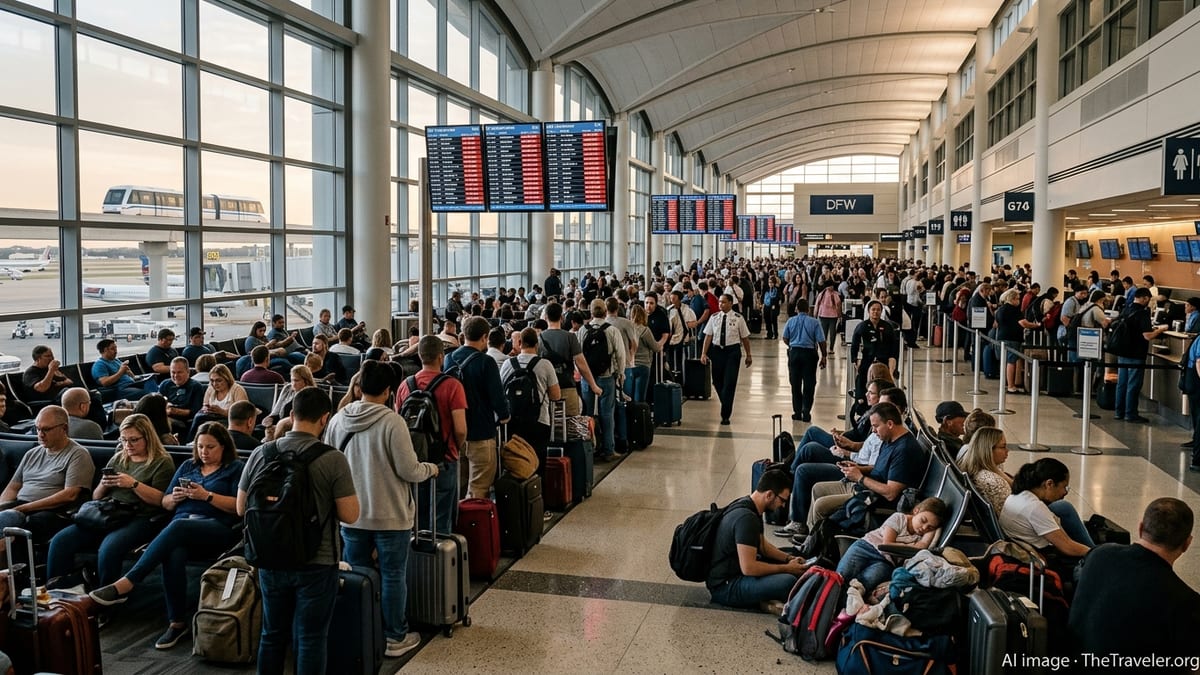
Heavy Delays Hit One of the World’s Busiest Hubs
Publicly available data from flight-tracking services shows that operations at Dallas Fort Worth International Airport came under significant strain, with hundreds of services departing behind schedule or arriving late. The volume of affected flights placed DFW among the more heavily disrupted large hubs in the country on Tuesday, reflecting broader operational pressures in the national air travel system.
The 26 cancellations represent a relatively small share of the day’s total schedule, but the 288 delays indicate extensive knock-on effects across the airport’s complex network of connections. At a major transfer hub, each late arrival or departure can cascade into additional disruptions as aircraft and crew miss planned rotations.
Travel industry monitoring over recent months has highlighted how quickly normal operations at DFW can be unsettled when weather, congestion in other parts of the network or crew availability issues converge. Tuesday’s pattern of delays fits into that broader context, in which even modest schedule changes can ripple through a tightly timed system.
For passengers, the impact was felt most acutely in longer-than-expected waits at gates, extended time on taxiways and missed onward connections, especially for those transiting between domestic and international services.
Domestic Routes to Major U.S. Cities Bear the Brunt
According to flight-status boards and airline advisories, a large share of the delays affected domestic routes that link DFW with major U.S. business and leisure destinations. Services to and from cities such as New York, Chicago, Los Angeles, Atlanta and Denver were among those experiencing late departures or arrivals, compounding congestion during peak travel periods.
Delays on these key routes can be particularly disruptive because many passengers rely on DFW as a connecting point between regional airports and the country’s largest metropolitan areas. When an early-morning feeder flight into Dallas runs late, travelers risk missing mid-morning departures onward to coastal hubs, forcing rebookings and crowding later flights.
Publicly available information on recent performance at large U.S. airports shows that DFW’s on-time record typically compares favorably with other busy hubs. However, periods of intense travel demand and sporadic severe weather across different parts of the country have periodically dragged down punctuality, especially on heavily trafficked business corridors.
Tuesday’s disruptions followed that familiar pattern, with domestic passengers facing an uneven experience. Some flights departed within a few minutes of schedule, while others stacked up in departure queues, reflecting fluctuating air traffic control flow limits and the challenge of repositioning aircraft for subsequent legs.
Transatlantic Services to Europe Experience Knock-on Effects
Long-haul services between DFW and major European gateways were also affected as the day’s delays accumulated. Flight-status information indicated schedule disruptions on routes connecting Dallas with cities such as London, Frankfurt, Paris and Madrid, where tightly coordinated arrival and departure banks are designed to feed wider regional networks.
Even modest departure delays from Texas can have outsized effects once aircraft reach Europe, where slot-controlled airports and overnight curfews restrict operational flexibility. When an inbound U.S. service lands behind schedule, it can compress ground times for returning flights and reduce options for re-accommodating passengers whose onward connections have been missed.
Published coverage of recent seasons has underscored how long-haul operations remain sensitive to upstream disruptions, particularly during winter and early spring when weather systems across North America and the North Atlantic can add unpredictability. In this environment, a day of significant delays at a hub like DFW can quickly be felt on both sides of the ocean.
For travelers, the result on Tuesday included extended layovers, reissued boarding passes and in some cases overnight stays in connecting cities when onward European services could not be met. Airlines operating these routes often attempt to prioritize long-haul departures once aircraft and crews are in position, but their ability to recover depends on how quickly earlier domestic segments can be stabilized.
Asia-bound Flights Face Tight Turnarounds and Crew Constraints
Public data showed that routes linking Dallas to major Asian destinations, including Tokyo, Seoul and other key hubs, were not immune to Tuesday’s disruption. These flights typically operate on tight turnarounds with long duty periods for crews, meaning significant delays can quickly run into regulatory limits on working hours.
When aircraft scheduled for transpacific departures arrive late into DFW from prior segments, airlines must decide whether they can safely and legally operate the full long-haul leg with the assigned crew or whether substitutions and re-crewing are required. Recent reports from travelers passing through DFW have highlighted how these operational choices can lead to rolling delays, gate changes and, in some instances, last-minute cancellations.
Because many Asia-bound services leave in afternoon or evening departure waves, earlier disruptions on domestic feeder routes can compress the window available for rebooking and baggage transfer. Passengers connecting from smaller U.S. cities into these long-haul flights on Tuesday faced a heightened risk of misconnection as the day’s delays accumulated.
Industry analysts note that recovery from such events on transpacific routes can take several days, as limited frequencies and high load factors leave relatively few open seats for displaced travelers. That dynamic increases the importance for passengers of monitoring flight status updates and considering contingency plans when significant delays begin to appear across a hub’s schedule.
Advice for Travelers Navigating DFW During Disruptions
Travel experts reviewing the latest disruption at DFW emphasize the value of real-time monitoring and flexible planning when flying through a large connecting hub. Publicly available performance data from recent months shows that while most flights eventually operate, irregular operations can produce long queues at customer-service desks and tight margins for making connections.
Passengers are encouraged by consumer travel advocates to use airline mobile apps and airport display boards to track gate changes and departure times rather than relying solely on original itineraries. When significant delays become apparent, same-day change options, standby lists or alternate routings through other hubs can sometimes reduce total travel time.
Reports from prior disruption events at DFW also suggest that travelers with long-haul connections, particularly to Europe and Asia, benefit from leaving additional buffer time between domestic arrivals and international departures. Even in normal conditions, large airports require extra time for terminal transfers, security checks and, for some flights, secondary document screening.
As Tuesday’s 26 cancellations and 288 delays demonstrated, Dallas Fort Worth International Airport remains a critical but vulnerable node in the global air travel network. When operations at such a hub come under pressure, the effects are quickly felt not only across the United States but also along key transatlantic and transpacific corridors.