

More news on this day
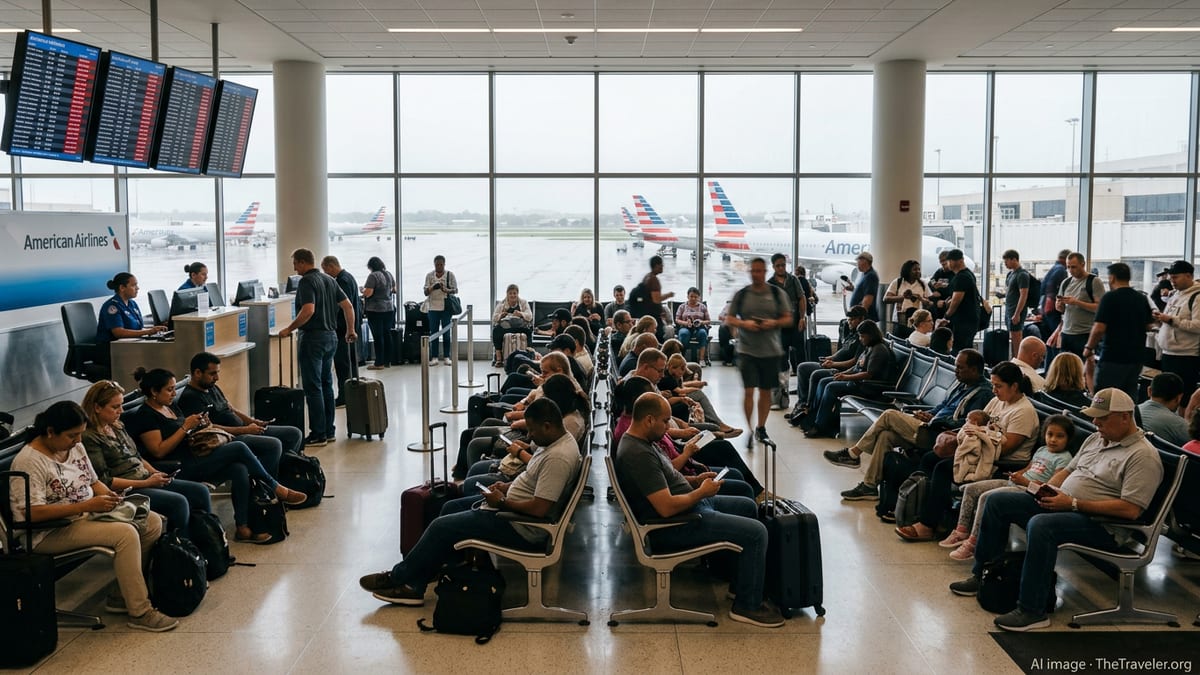
Hundreds of travelers were stranded across Texas on Sunday as severe weather and an hours-long ground stop at Dallas–Fort Worth International Airport triggered 78 flight cancellations and 489 delays, snarling operations for American Airlines, Qatar Airways, SkyWest, United and several other carriers at one of the nation’s busiest hubs.
Storms, Ground Stops and a Network in Turmoil
The disruption unfolded through the morning and early afternoon on March 8, as fast-moving thunderstorms swept across North Texas and the Federal Aviation Administration imposed a ground stop at Dallas–Fort Worth International Airport. For several hours, flights bound for DFW were held at their departure airports or slowed under a ground delay program, sharply reducing the number of arrivals the airport could safely handle at any given time.
While the FAA later downgraded the ground stop to a ground delay program, the early halt created a cascading backlog of aircraft, crews and passengers. By midafternoon, operational data showed at least 78 cancellations and 489 delays affecting DFW departures and arrivals, a figure that continued to fluctuate as airlines adjusted schedules and repositioned aircraft.
The disruption at DFW followed a turbulent Saturday across the national air network, when severe storms and late-winter snow led to hundreds of cancellations and thousands of delays from Chicago to Atlanta and beyond. That earlier chaos left many aircraft and crews out of position even before the North Texas thunderstorms arrived on Sunday, compounding the impact on travelers.
Airport officials urged passengers to check flight status before leaving home and to anticipate longer waits at check-in counters, security lines and boarding gates. On social media, DFW staff cited weather and air traffic control constraints as the primary drivers of the delays, noting that safety regulations require wider spacing between aircraft in low-visibility and stormy conditions.
American, Qatar, SkyWest and United Bear the Brunt
As DFW’s largest tenant, American Airlines experienced the most significant operational hit. Many of the 78 cancellations were tied to American’s dense schedule of regional and mainline departures, while the carrier also logged waves of rolling delays as it attempted to thread departures through limited takeoff slots. Passengers reported multiple schedule changes, with flights repeatedly pushed back in 30 to 60 minute increments before either departing or finally being canceled.
Regional operator SkyWest, which flies under the banners of several major US carriers, also saw substantial disruption in and out of DFW. Its short-haul routes to smaller Texas and neighboring-state cities were especially vulnerable, with some aircraft unable to depart their outstations due to the ground stop and others arriving late into DFW, missing their next scheduled turns.
International services were not spared. Qatar Airways’ long-haul flights connecting DFW with Doha faced knock-on delays as departure and arrival windows narrowed. Even modest schedule changes at a tightly timed global hub can ripple outward, and travelers reported concerns about missed onward connections to the Middle East, Africa and Asia.
United Airlines, which operates a smaller schedule at DFW compared with its own hubs, nevertheless encountered delays on key domestic links. Some United passengers arriving from Houston, Denver and Chicago faced extended taxi times and gate holds at DFW as ramp congestion intensified, while others saw their connections to regional partners disappear as the day’s timetable unraveled.
Stranded Travelers Scramble for Alternatives
For passengers, the statistics translated into hours spent in crowded terminals, long customer service queues and a scramble for scarce rebooking options. Families returning from spring break trips, business travelers heading to Monday meetings and international visitors transiting through DFW all found themselves competing for limited seats on remaining flights.
Some travelers opted to abandon their flights altogether in favor of rental cars or intercity buses to reach destinations within Texas and neighboring states. Routes between Dallas, Austin, San Antonio and Houston saw a surge in last-minute demand as stranded passengers sought any overland alternative to waiting out the delays at the airport.
Inside the terminals, gate areas and concourses were packed as airlines worked through rebooking lines. Passengers described scenes of impromptu picnic spots on the floor near power outlets, with families charging devices and trying to keep children entertained as estimated departure times shifted repeatedly across departure boards.
Hotels near the airport reported a rise in day-use and overnight bookings as travelers reluctantly accepted that they would not be leaving North Texas on Sunday. With nearby rooms filling up, some passengers turned to outlying suburbs for accommodation, while others prepared to spend the night in the terminal if rebooked flights were not available until Monday.
Knock-On Effects Across Texas and Beyond
Because DFW serves as a critical connecting hub for services across the South and Midwest, the day’s problems quickly spread beyond North Texas. Flights between smaller cities such as Oklahoma City, Lubbock and Midland and their onward connections through Dallas saw mounting delays and sporadic cancellations, leaving passengers stranded far from the main storm zone.
In Oklahoma City, for example, at least 15 flights were canceled on Sunday amid broader national disruption tied to weather and air traffic control constraints. Many of those routes connected through DFW, illustrating how bottlenecks at a single major hub can ripple out across an airline’s network and strand travelers in secondary markets.
Elsewhere in Texas, airports in Austin, Houston and San Antonio reported delays on services to and from DFW as crews and aircraft failed to arrive on schedule. Some departures were held on the ramp awaiting updated flow times into the North Texas airspace, while others left late with onward passengers already resigned to missed connections.
These second-order effects are likely to persist into Monday, as airlines work through aircraft repositioning and crew duty limits triggered by the extended delays. Travelers with early-week departures that touch DFW were advised to monitor their bookings closely and allow extra time for connections, even if local weather appears benign.
What Passengers Can Expect Next
Meteorologists forecast improving conditions across much of North Texas by late Sunday and into Monday, which should help DFW ramp up operations and clear part of the backlog. However, the combination of disrupted aircraft rotations, crew rest requirements and tight schedules means that some residual cancellations and delays are probable at least through the morning peak.
Airlines are waiving change fees on select routes affected by the storm system and associated air traffic programs, giving passengers more flexibility to move trips to later in the week. Same-day confirmed changes remained difficult on the most popular DFW routes, but agents encouraged travelers with flexible plans to consider off-peak or midweek departures where spare capacity is more likely.
For those still attempting to fly on Sunday night or early Monday, travel experts recommend arriving at the airport earlier than usual, traveling with carry-on baggage only where possible, and proactively rebooking via airline apps or call centers rather than relying solely on airport counters. With multiple carriers still working through the disruption, seats on alternative routings via other hubs may open and close quickly.
While flight operations should gradually stabilize as the weather improves, Sunday’s turbulence at DFW underscores how vulnerable tightly wound airline schedules remain to a few hours of severe storms at a key hub. For hundreds of travelers stuck across Texas and beyond, the experience has been a pointed reminder that, even in early spring, the weather can still upend the best-laid travel plans.