

More news on this day
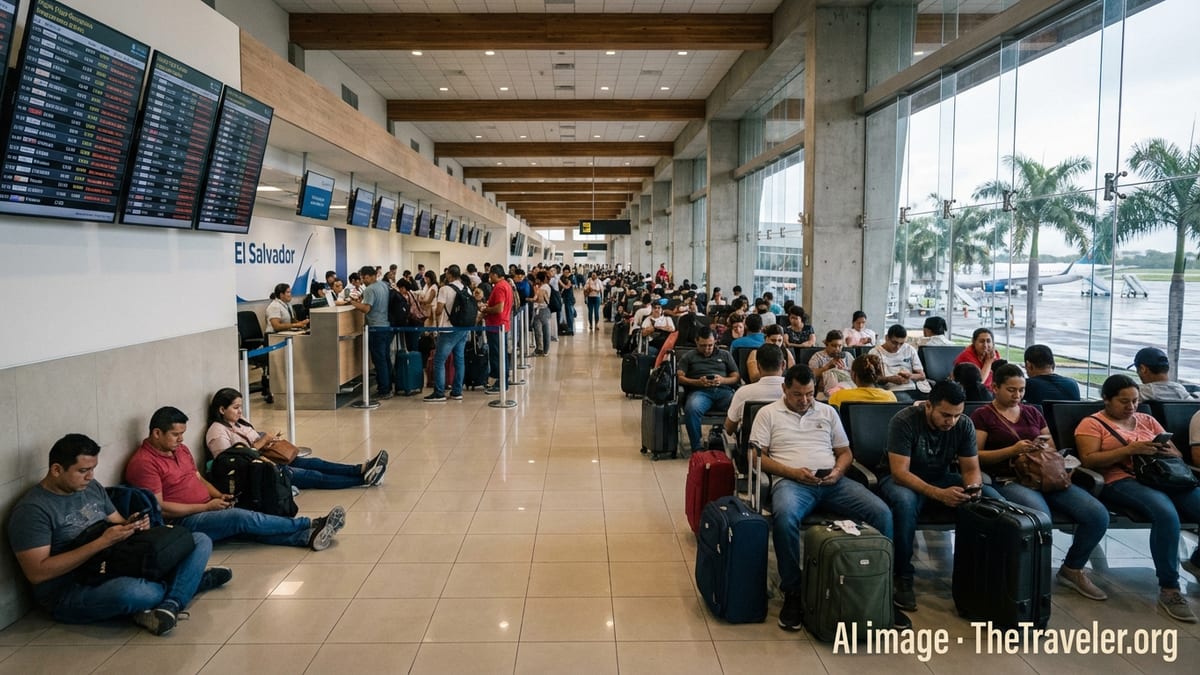
Travelers moving through El Salvador International Airport today faced a cascade of cancellations and delays, as 14 flights were scrubbed and six held up across key routes linking San Salvador with major cities such as Los Angeles, Boston and Washington, snarling operations for Avianca El Salvador, Avianca Costa Rica, Amerijet International and other regional carriers.
Disruptions Hit a Key Central American Hub
Monseñor Óscar Arnulfo Romero y Galdámez International Airport, better known to travelers simply as El Salvador International Airport, is one of Central America’s most important connecting hubs. On February 23, 2026, its role as a regional crossroads was tested as a spike in irregular operations led to 14 flight cancellations and six delays, stranding passengers and complicating airline schedules.
While the terminal remained open and security levels normal, departure boards through the afternoon and evening showed a growing list of scrubbed departures and late arrivals. The affected services connected San Salvador to major North and Central American gateways, including Los Angeles, Boston and Washington, along with several intra–Central America links that are vital for business and migrant travel.
Airport staff moved quickly to redirect travelers toward customer service desks and airline counters, but bottlenecks formed as multiple carriers tried to rebook passengers on already busy services. Families returning home after holidays, migrant workers in transit and business travelers on tight schedules all found themselves unexpectedly grounded as the day wore on.
Authorities did not report any structural or security issue at the airport itself, and the runways remained active. The disruption, instead, reflected a wider pattern of strain on airline operations in the region, with carriers contending simultaneously with aircraft rotations, crew positioning challenges and volatile conditions on nearby routes.
Avianca and Regional Carriers Bear the Brunt
Avianca El Salvador and Avianca Costa Rica shouldered much of the disruption, reflecting their dense schedules through San Salvador and their network of spokes to North America and neighboring Central American capitals. Several Avianca departures to and from major U.S. cities were either scrubbed outright or forced into extended ground holds as operational buffers collapsed.
Services linking San Salvador with U.S. East Coast gateways such as Boston and Washington, as well as West Coast hubs including Los Angeles, featured prominently on the day’s list of problem flights. For many travelers, these routes form the long-haul backbone of itineraries connecting smaller Central American and Caribbean cities with North America, meaning a single cancellation had knock-on effects for dozens of onward journeys.
Amerijet International, known primarily for cargo but also carrying time-sensitive consignments crucial to the region’s trade, also experienced interruptions. Grounded freighters meant delays for everything from fresh agricultural exports to just-in-time industrial components, adding a commercial dimension to the passenger frustration seen inside the terminal.
Smaller regional carriers operating between El Salvador and neighboring countries, including Costa Rica and Guatemala, were not immune either. Even where flights showed as officially “delayed” rather than canceled, the uncertainty surrounding crew availability and aircraft positioning left passengers unsure whether their services would ultimately depart.
Knock-On Effects Across Los Angeles, Boston, Washington and More
The disruption in San Salvador rippled quickly across North American cities that rely on the airport as a key Central American connection point. In Los Angeles, Boston and Washington, passengers waiting to board Avianca-operated return flights to El Salvador were informed of late inbound aircraft, rolling departure times or last-minute cancellations tied to the situation at the hub.
Los Angeles, with its large Central American diaspora, saw particularly visible impacts. Crowded gate areas and long lines at transfer desks underscored how reliant migrant communities are on a relatively small number of daily flights to San Salvador to reach family in El Salvador and onward destinations in Honduras and Nicaragua.
In Boston and Washington, where Avianca and partner airlines have been working to grow traffic to Latin America, the service interruptions highlighted the fragility of long, thin routes that depend heavily on tight aircraft utilization. A delay or cancellation at a Central American hub can leave an aircraft and crew out of place for the entire day’s rotation, compounding delays for passengers at both ends of the route.
Secondary U.S. gateways and intra–Latin America routes were also touched by the turbulence. Some passengers reported missed connections onto flights bound for Mexico, Colombia and the Caribbean, as well as onward links within Central America that typically depend on El Salvador as a convenient transfer point.
Stranded Passengers Face Long Lines and Limited Options
Inside El Salvador International Airport, the human impact of the day’s disruptions was quickly apparent. Queues at check-in counters and transfer desks snaked through the terminal as passengers sought rebookings, meal vouchers and basic information about when they might be able to travel.
Families traveling with young children and elderly passengers faced some of the toughest conditions, with limited seating around service desks and few quiet spaces to wait out long delays. Travelers reported that announcements were made primarily in Spanish, with English-language updates sometimes lagging, adding to confusion among international visitors who were unfamiliar with the airport.
For many stranded passengers, hotel options near the airport were thin by mid-afternoon as airlines scrambled to arrange overnight accommodation for those who had missed the last feasible connections of the day. Others opted to remain airside or in public areas of the terminal, wary of venturing far from the airport in case of sudden schedule changes.
Travelers who had booked separate tickets for connecting flights, rather than a single through-ticket, found themselves particularly vulnerable. With no obligation for airlines to protect those independent segments, some passengers faced the prospect of paying out of pocket for new tickets or extended stays until their travel plans could be reconstructed.
Operational Pressures and a Region Under Strain
The irregular operations in El Salvador unfolded against the backdrop of a difficult week for aviation across the broader region. In neighboring Mexico, cartel-related violence in states such as Jalisco and Quintana Roo has triggered mass cancellations and diversions at key airports, including Guadalajara and Cancún, placing additional pressure on carriers that also operate through Central American hubs.
Airlines with complex networks in the Americas have been juggling aircraft and crews to cover gaps created by sudden airport shutdowns, security-related delays and changing travel advisories. That has left little slack in the system to absorb even routine disruptions, such as weather or mechanical issues, at airports like San Salvador that normally function as reliable connectors.
Avianca and its regional affiliates have in recent years repositioned San Salvador as an important north–south bridge between North and South America, using the airport as a hub for passengers traveling between the United States, Central America, Colombia and beyond. While that strategy has boosted connectivity and offered travelers more nonstop options, it also means that any disruption at the hub can reverberate widely across the network.
Industry analysts note that today’s pattern of cancellations and delays at El Salvador International Airport fits a global trend of thinner operational margins. Airlines are flying fuller schedules with fewer spare aircraft and limited standby crews, so an unexpected shock in one part of the network can trigger cascading problems thousands of kilometers away.
How Airlines Responded on the Ground
As cancellations mounted, airlines operating in San Salvador activated irregular-operations protocols, deploying extra staff to customer service counters and prioritizing passengers with tight onward connections or essential travel needs. Avianca representatives worked to rebook travelers on later flights within their own network, as well as onto partner airlines where spare seats existed.
Amerijet International and other cargo-focused operators coordinated closely with ground handlers and customs authorities to minimize spoilage and delays for perishable goods. In some cases, cargo was offloaded and rerouted via alternative hubs or held temporarily in cold storage facilities until aircraft could be dispatched.
Airport officials emphasized that safety remained the paramount concern and that no departures would be rushed to meet schedule targets. Crews approaching duty-hour limits were reassigned or flights were canceled before departure rather than risk in-air duty violations, a move that improved safety margins but also contributed to the visible spike in cancellations.
Despite the strain, there were no reports of serious incidents or confrontations inside the terminals, suggesting that most passengers accepted the reality of the disruption even as they voiced frustration about limited information and long waits.
Advice for Travelers Using El Salvador as a Transit Hub
Today’s events offer several practical lessons for travelers who rely on El Salvador International Airport as a transit point. Travel specialists recommend booking itineraries on a single ticket with one airline group wherever possible, ensuring that carriers are obliged to provide protection and rebooking options in the event of cancellations or missed connections.
Allowing longer connection times at regional hubs such as San Salvador can also provide a valuable buffer when operational irregularities arise. While short layovers may look attractive on paper, additional time between flights can make the difference between a stressful scramble and a manageable delay when schedules begin to unravel.
Passengers are also urged to monitor flight status directly through airline apps or customer service channels rather than relying solely on airport departure boards, which may lag behind real-time operational decisions. Enrolling in notification services can provide early warning of changes and help travelers adjust plans before arriving at the airport.
Finally, those transiting through Central American hubs during periods of regional instability should remain attentive to travel advisories and local news. Even when an airport remains technically open, events in neighboring countries or on key feeder routes can have rapid and far-reaching impacts on flight reliability.
What Today’s Disruption Signals for Future Travel
For El Salvador, the wave of cancellations and delays underscores both the strategic importance and vulnerability of its main international gateway. As the country seeks to grow its profile as a tourism destination and aviation hub, maintaining resilient operations at San Salvador will remain central to long-term plans.
Airlines are expected to review today’s events in detail, examining whether additional buffers in aircraft rotations, crew planning and ground operations could help absorb similar shocks in the future. However, introducing more slack into the system often carries financial trade-offs, and carriers must balance reliability against the pressure to maximize aircraft utilization.
For travelers, the experience of being grounded at a critical hub like El Salvador International Airport is a reminder that modern air travel, while remarkably efficient in normal times, remains vulnerable to sudden disruption. As networks grow more interconnected, the effects of events in one country or region can be felt quickly in another.
In the short term, passengers booked on services to and from San Salvador in the coming days are being advised to keep a close eye on schedules and remain flexible. While operations are expected to normalize, the aftershocks of today’s cancellations and delays may continue to echo through timetables as airlines work to reposition aircraft and crews and restore their networks to full strength.