

More news on this day
Passengers at Southwest Florida International Airport in Fort Myers faced mounting frustration on February 22 as 69 delays and 54 cancellations rippled through schedules, snarling travel plans across Florida and disrupting connections to Miami, Orlando, Tampa and other hubs just as a powerful winter storm and nationwide operational strains squeezed airline networks.
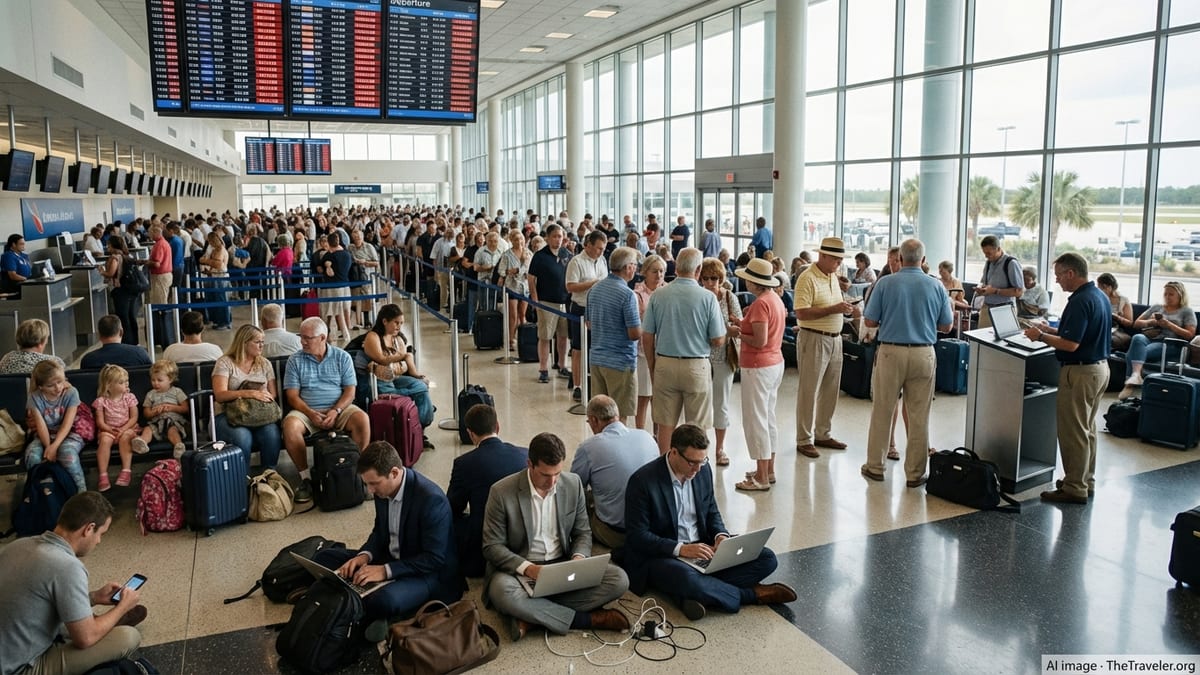
Fort Myers Disruptions Ripple Across the Florida Network
Operational data from flight tracking services on February 22 show Southwest Florida International Airport, the main commercial gateway for Fort Myers, experiencing a sharp spike in irregular operations, with 69 flights delayed and 54 cancelled across the day. The disruption affected both departures and arrivals, overwhelming gate areas and customer service desks as travelers scrambled to rebook itineraries, secure overnight accommodation or salvage missed connections.
While the headline numbers were concentrated at Fort Myers, the impact radiated quickly to other parts of Florida’s tightly connected air network. Downline schedules at Miami, Orlando and Tampa absorbed the knock-on effects as aircraft and crew that were meant to position through Fort Myers arrived late or not at all. This created rolling delays on otherwise clear-weather routes, catching many passengers off guard.
Southwest Florida International itself was reporting only moderate weather and manageable winds around midday, but the on-the-ground picture for passengers told a different story. Long queues formed at check in and ticket counters, with some travelers reporting waits of over an hour just to speak to an agent. Airport staff distributed basic information about rebooking options while reminding passengers that many decisions ultimately rested with individual airlines.
With Fort Myers handling close to 300 flights on an average day, the loss and delay of more than a third of scheduled movements represented a significant operational shock. For a region heavily reliant on airlift for both tourism and seasonal residents, the timing, during a busy winter travel period, added to the strain on local hotels, car rental agencies and ground transport providers.
Southwest, American and Delta Among Hardest Hit Carriers
The day’s irregular operations touched a broad swath of carriers, but several major airlines emerged as the most visibly affected at Fort Myers. Southwest Airlines, which has grown its footprint in Florida in recent years, saw clusters of cancellations and late departures on routes linking Fort Myers with Tampa, Orlando and the carrier’s northern and Midwestern gateways, complicating same day connections across its network.
American Airlines, with its extensive hub operations in Miami, also faced a difficult balancing act. Aircraft and crews scheduled to flow through Fort Myers into the Miami hub found themselves out of position, forcing the airline to consolidate services, retime flights and in some cases cancel rotations. Passengers connecting through Miami to Latin America and transatlantic destinations were among those who faced missed onward flights and overnight delays.
Delta Air Lines, which relies on Florida spokes feeding into hubs such as Atlanta and Detroit, similarly recorded a series of late running flights and selected cancellations. Industry analysts noted that Delta had already endured a bruising start to the month due to earlier winter storms, leaving the airline with limited slack in aircraft and crew availability when Fort Myers disruptions flared.
Other carriers, including low cost and ultra low cost airlines, were not spared. With leaner operations and fewer spare aircraft, these airlines often have less flexibility to recover from sudden schedule shocks. Several point to point services from Fort Myers to secondary Midwestern and Northeast cities were cancelled outright, leaving travelers with fewer same day alternatives and forcing rerouting through busier hubs.
Weather in the North, Bottlenecks in the South
Paradoxically, the most immediate weather impact behind the Fort Myers disruptions was unfolding far from the sunny Gulf Coast. A powerful nor’easter, informally tagged Winter Storm Hernando, was bearing down on the Northeast on February 22 and 23, prompting thousands of flight cancellations and delays at major hubs such as New York, Boston and Philadelphia, according to national flight statistics. Even though skies over Fort Myers were largely clear, the ripple effects of that storm were felt in Florida’s terminals.
Airlines began trimming schedules into the Northeast corridor as the storm intensified, grounding aircraft that would normally cycle through Florida markets earlier in the day. With aircraft and crews effectively trapped on the wrong side of the weather system, Fort Myers, Miami, Orlando and Tampa all saw their available capacity tighten, and smaller spoke airports like Fort Myers often bore the brunt when airlines prioritized larger hubs for the limited flights that could still operate.
At the same time, the Federal Aviation Administration implemented a series of traffic management initiatives at affected northern airports, reducing arrival and departure rates to preserve safety in deteriorating conditions. These flow restrictions propagated south through the network, meaning flights bound from Florida to storm hit cities were held at gates or on the tarmac, contributing to the 69 delays logged at Southwest Florida International and causing additional delays on return legs.
Industry observers pointed out that the Fort Myers situation underscored how modern air travel is vulnerable to problems far beyond a passenger’s immediate departure point. A traveler stepping into the terminal in warm, breezy southwest Florida might not see any sign of a blizzard hundreds of miles away, yet their flight could still be grounded because its destination runway is closed or its inbound aircraft is stuck overnight in a snowbound hub.
Miami, Orlando and Tampa Grapple With Secondary Disruptions
As Fort Myers fought to steady its schedule, larger Florida airports were working through their own sets of challenges. Miami International, a critical gateway for Latin America and the Caribbean, faced rolling delays as inbound aircraft from the Northeast and Midwest arrived late or not at all. The congestion pushed some narrow time banks of transatlantic and regional departures behind schedule, creating crowded gate areas and forcing airlines to reshuffle aircraft assignments.
Orlando International, one of the country’s busiest leisure airports, had to manage a complex mix of vacationers, cruise passengers and theme park visitors whose travel plans depend on tight coordination between flights, hotel check-ins and ground transfers. Even small shifts in arrival times for flights from Fort Myers and other Florida points made it more difficult for tour operators and shuttle companies to maintain their normal cadence of pickups and drop offs.
In Tampa, where operations are also heavily leisure driven, delays to and from Fort Myers blended with broader national disruptions to create a patchwork of patchy service. Some passengers arriving from Fort Myers found that their onward flights out of Tampa were cancelled due to the Northeast nor’easter, forcing them into airport hotels or onto long waiting lists for standby seats.
Across all three major Florida hubs, airport authorities urged travelers to arrive early, monitor flight status continuously and stay in close contact with their airlines. While local weather in most of Florida remained relatively benign, operations teams were effectively managing a rolling problem imported from other parts of the country, with limited tools at their disposal beyond adjusting gate assignments and helping airlines cope with crowded concourses.
Stranded Passengers Face Long Lines and Limited Options
For many travelers in Fort Myers, the numbers translated into hours of uncertainty. Families returning from beach vacations, retirees heading back north and business travelers trying to make Monday meetings described snaking lines at customer service desks as cancellations stacked up through the afternoon and evening. With 54 flights removed from the schedule, same day rebooking options quickly diminished.
Hotels near the airport reported a sudden influx of walk in guests, some arriving with little notice after learning at the gate that their flight would not depart. Car rental lines lengthened as stranded passengers weighed the cost and practicality of driving to Miami, Orlando or Tampa to catch alternative flights the following day. Others opted to remain in Fort Myers longer, accepting rebooked departures two or three days later.
Airlines activated standard irregular operations protocols, offering meal vouchers where required and working to re accommodate customers on later services or partner airlines. However, with airlines across the country already stretched by the impact of Winter Storm Hernando and lingering effects of earlier winter systems, spare seat capacity was tight, particularly on popular weekend departures.
Travel advocates noted that passengers were once again confronted with complex rules around compensation and duty of care. While severe weather can exempt airlines from some cash compensation obligations under many regimes, carriers are still expected to provide reasonable assistance, including refreshments and hotel support in certain circumstances. The precise offerings varied by airline and fare type, adding to confusion at the terminal.
Operational Strain Follows a Difficult Winter for Airlines
The Fort Myers disruption did not happen in isolation. It landed in the middle of an already turbulent winter for the US aviation industry, marked by multiple large scale storms, persistent staffing challenges and tight aircraft availability. Earlier in February, separate systems such as Winter Storm Fern had forced American Airlines and other carriers to cancel thousands of flights nationwide, eroding schedule resilience and increasing fatigue among crews and ground staff.
Airlines have been under pressure to keep up with robust demand for leisure travel to Florida and other sunbelt destinations while also respecting tighter safety margins imposed by regulators and internal risk teams during severe weather. That combination leaves little buffer when an event like the February 22 nor’easter interacts with peak season traffic flows and already stretched networks.
Southwest, American, Delta and their competitors have all signaled plans to add more reserve aircraft and cross trained staff to help absorb shocks, but implementation has lagged behind the pace of weather related disruptions. When a mid sized airport such as Fort Myers suddenly registers dozens of delays and cancellations in a single day, it exposes remaining vulnerabilities in how carriers distribute resources between hubs and smaller spokes.
Industry analysts argue that Florida’s reliance on inbound tourism and seasonal residents makes it particularly exposed to cascading operational crises. When visitors are stranded unexpectedly, the economic impact reaches beyond airlines to hotels, restaurants, attractions and local transport providers, who must react quickly to shifts in demand that can change by the hour.
What Travelers Can Do When Schedules Collapse
The events at Southwest Florida International offered another real time case study in how individual travelers can best navigate sudden disruptions. Aviation experts consistently advise booking early morning departures where possible, as these flights are generally less exposed to the cumulative effect of the day’s delays. On February 22, some of the least affected flights out of Fort Myers were those that left before ripples from the nor’easter had fully propagated through the network.
Once delays or cancellations become likely, digital tools often provide the fastest route to a solution. Airline apps and websites typically update seat availability and rebooking options before information trickles down to airport staff handling long queues. Passengers in Fort Myers who used mobile channels to secure alternative flights or virtual customer service often reported quicker outcomes than those who relied solely on in person counters.
Travel planners also suggest building buffer time into itineraries that rely on connections through weather sensitive hubs, particularly during peak winter months. For Florida bound trips that connect through cities in the Northeast or Midwest, adding extra hours between flights can provide crucial breathing room if storms emerge. The February 22 disruptions showed that even flights between Florida cities can be affected when aircraft routes thread through storm hit regions earlier in the day.
Finally, experts recommend that travelers understand the basics of their airline’s contract of carriage and any applicable passenger rights frameworks. While complex, these documents spell out what assistance passengers can expect during extraordinary events and can guide discussions with airline representatives when emotions are running high at the gate.
Florida Airports Brace for Continuing Knock on Effects
As operations teams at Fort Myers, Miami, Orlando and Tampa worked through the immediate backlog of delayed and cancelled flights, attention shifted to the coming days. Airlines warned that even after the nor’easter weakens and flight totals move back toward normal, the network may take time to fully recover. Aircraft and crews displaced by the February 22 disruptions will have to be repositioned, and some routes may continue to operate on reduced frequencies until rotations are realigned.
Airport authorities across Florida said they were coordinating closely with airlines and the Federal Aviation Administration to manage gate assignments, runway usage and passenger flows as schedules stabilize. At Southwest Florida International, operations managers were preparing for the possibility of additional late running flights and irregular arrival waves as carriers slotted in extra services to clear the backlog of stranded passengers.
Local tourism bodies expressed cautious optimism that the episode would not deter visitors from traveling to southwest Florida in the weeks ahead, noting that winter weather volatility is a recurring feature of long haul travel from northern markets. Even so, they acknowledged that the stories of families and retirees stuck in terminals for hours or days underline the need for robust contingency planning and clear communication whenever the national aviation system comes under strain.
For now, travelers departing from or connecting through Fort Myers have been urged to keep a close eye on flight status updates and to maintain flexible plans. With winter storm season still in full swing across much of North America, the events of February 22 served as a reminder that sunny skies over Florida do not always guarantee smooth flying.