

More news on this day
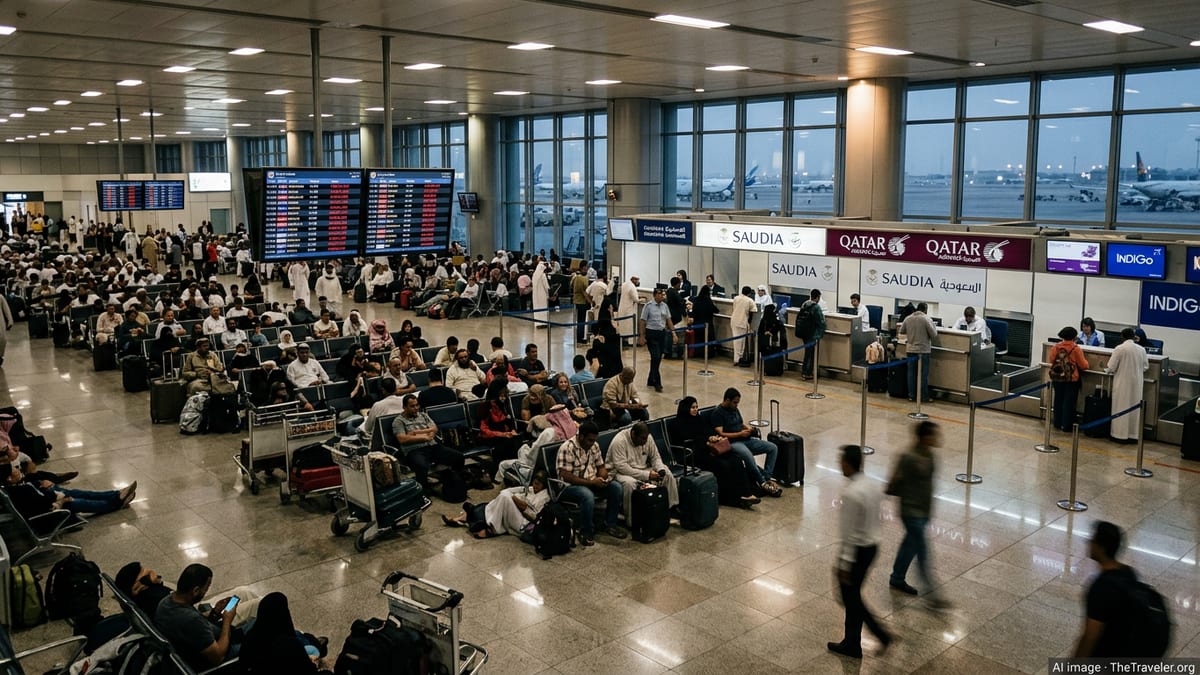
Hundreds of travelers were stranded at Jeddah’s King Abdulaziz International Airport on Saturday as at least 39 flights were cancelled and many more delayed, with services on Qatar Airways, IndiGo, FlyDubai, Gulf Air, Saudia and other carriers disrupted amid a volatile Middle East airspace situation.
Regional Airspace Turmoil Hits a Key Saudi Gateway
The disruption at King Abdulaziz International Airport in Jeddah comes as airlines across the Gulf continue to grapple with a fast-changing security crisis that has upended scheduled flying across parts of the Middle East. While Saudi airspace remains open, rolling closures and rerouted corridors over neighboring states have created a knock-on effect for carriers routing through Jeddah, one of the kingdom’s busiest international gateways.
Operational data from airline and airport sources on Saturday pointed to at least 39 cancellations touching Jeddah alone over a 24-hour period, alongside a wave of late departures and diversions. Many of the affected flights were bound for or arriving from regional hubs including Doha, Dubai, Bahrain and Dammam, compounding an already fragile recovery in schedules across the Gulf.
Although authorities have stressed that Saudi airports are technically open and safe, the interdependence of regional airspace has meant that closures in one jurisdiction can quickly reverberate elsewhere. Jeddah’s role as a transfer point for religious pilgrims, labor traffic and long-haul connections has intensified the impact, concentrating stranded passengers in crowded terminals.
Saudia, the national carrier, has already extended a suspension of flights on several regional routes, reflecting the continuing uncertainty. The latest wave of cancellations at Jeddah suggests that, even as some routes reopen on a limited basis, widespread normality remains some way off for travelers using the airport.
Carriers From Qatar to India Forced to Cut and Reroute
The disruption has hit a broad mix of full-service and low-cost airlines that normally connect Jeddah with major Gulf and South Asian cities. Qatar Airways, which relies heavily on feed from regional points such as Jeddah into its Doha hub, has been operating only a skeleton schedule and a series of ad hoc relief flights, leaving many ticketed passengers waiting for rebooking or refunds.
Indian budget giant IndiGo has also been affected, with multiple Jeddah services to Indian metros facing cancellation or significant delays as the airline adjusts its network around restricted Middle East corridors. For many passengers, particularly migrant workers and families traveling between Saudi Arabia and India, the sudden schedule changes have meant missed connections, unexpected overnight stays and uncertainty over when they can travel.
FlyDubai and Gulf Air, key connectors between Jeddah and Dubai and Bahrain respectively, have likewise pared back operations amid regional airspace limitations and ongoing safety assessments. Industry trackers show those hubs among the worst affected by cancellations this week, amplifying the disruption felt on Jeddah-bound and outbound services.
Saudia has continued to operate selected flights but with an adjusted timetable and suspended routes to some neighboring capitals. The combination of partial resumptions, last-minute schedule tweaks and ad hoc repatriation flights has left passengers trying to navigate a constantly shifting patchwork of options across multiple carriers.
Passengers Face Long Queues, Confusion and Limited Options
Inside King Abdulaziz International Airport, the operational challenges have translated into long check-in lines, crowded seating areas and anxious travelers scanning departure boards for updates. With delays often announced in short increments rather than outright cancellations, many passengers have chosen to stay in the terminal for hours, wary of missing a sudden window of opportunity if their flight is cleared to depart.
Several travelers reported difficulty reaching airline call centers or securing clear information about rebooking and accommodation. Staff on the ground have been tasked with handling high volumes of distressed passengers while themselves receiving rapidly changing operational instructions, adding to the tension at airline counters and boarding gates.
For some visitors, the timing could not be worse. Pilgrims finishing religious trips, overseas workers returning from leave, and families traveling for school holidays have all been caught up in the disruption. With hotel availability in Jeddah tightening and last-minute room rates rising, many stranded passengers have opted to remain at the airport overnight, sleeping in chairs or on terminal floors as they wait for confirmation of new travel plans.
Travel agents in Saudi Arabia and abroad have also been inundated with requests to reroute journeys around Doha, Bahrain or Dubai. However, with those hubs simultaneously under strain and operating limited schedules, alternative itineraries have been difficult and often expensive to secure, especially on short notice.
Major Gulf Hubs Struggle to Stabilize Schedules
The bottlenecks in Jeddah are closely tied to severe disruption at neighboring hubs. Flight analytics for recent days show cancellation rates at or near total shutdown levels at Doha’s Hamad International Airport and Bahrain International Airport, while Dubai has experienced heavy disruption followed by a gradual but uneven resumption of service.
These conditions have effectively broken many of the region’s usual connection patterns. Travelers who would ordinarily fly Jeddah to Doha, then on to Europe, Asia or North America, have found themselves stranded mid-journey or forced to rebook on routes that bypass the Gulf entirely. The suspension or reduction of services by carriers such as Qatar Airways, FlyDubai, Gulf Air and others has made the recovery of normal transfer flows into and out of Jeddah significantly more complex.
Dammam, on Saudi Arabia’s eastern coast, has also experienced cancellations and delays, further constraining options for passengers prepared to travel overland between Saudi cities in search of a working international connection. While Riyadh’s King Khalid International Airport and some secondary hubs remain more stable, capacity on remaining long-haul services is tight.
Airlines continue to add limited extra services and special repatriation flights where airspace and crew availability allow, but these measures have only partially offset the backlog. With many aircraft and crews out of position, carriers face a multi-day task to realign fleets even as security conditions remain fluid.
Authorities Urge Patience as Recovery Timelines Remain Unclear
Aviation and government officials across the region have urged travelers to monitor their bookings closely, avoid unnecessary journeys to airports without confirmed flights, and expect continued disruption in the coming days. Consumer rights frameworks differ by country and carrier, but airlines have generally offered affected customers options including full refunds, free date changes or rerouting where feasible.
However, the sheer scale of cancellations and the concentration of demand at a few remaining operational routes means that many passengers will still face long waits for available seats. Some carriers have warned that it could take several days to clear the congestion even if regional airspace constraints begin to ease.
At King Abdulaziz International Airport, operational teams are working with airlines to prioritize departures, manage crowding and coordinate with immigration and security authorities to handle fluctuating passenger volumes. Ground handlers have also been tasked with ensuring that essential services, including food, water and medical assistance, remain available for those stuck in the terminals for extended periods.
For now, travelers with flexible plans are being advised to postpone nonessential trips through Jeddah and other Gulf hubs, while those already en route are urged to stay in touch with their airlines and travel providers for the latest updates. With the situation in flux, the experience of those stranded at Jeddah on Saturday underlines how quickly a regional airspace shock can cascade into global travel disruption.