

More news on this day
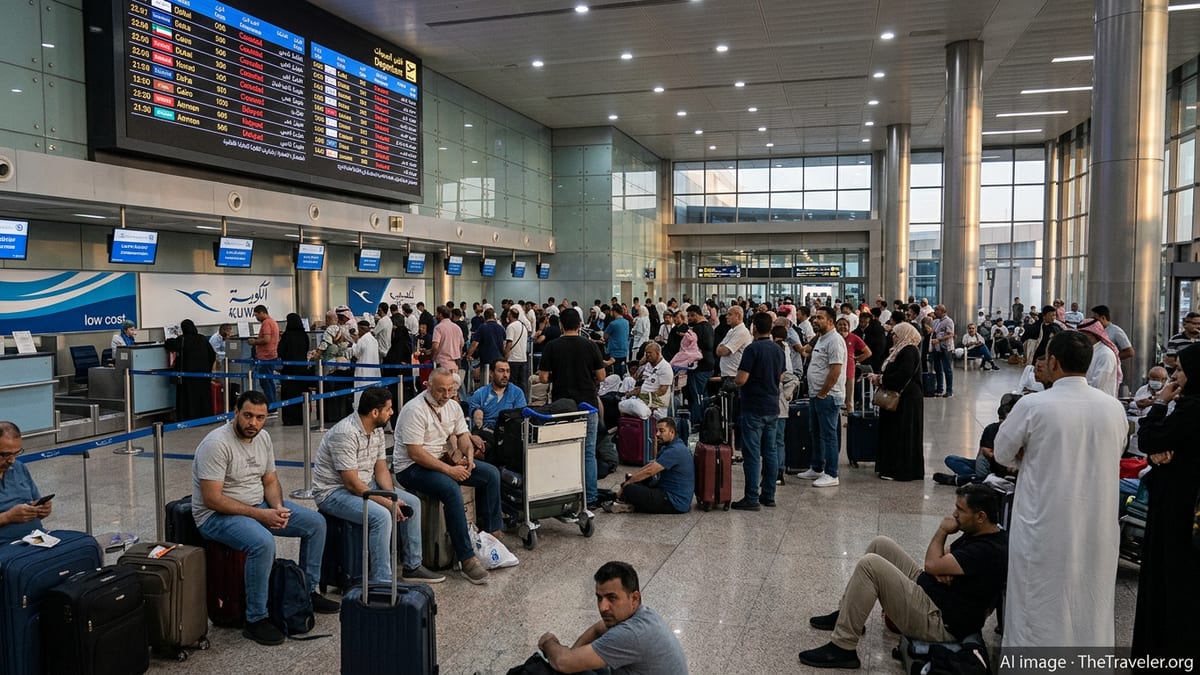
Passengers at Kuwait International Airport faced major disruption this week as a sudden wave of 36 flight cancellations and several delays rippled across key routes to Dubai, Doha, Cairo and Amman, snarling travel plans for Gulf residents, transit passengers and long-haul travelers alike.
Get the latest news straight to your inbox!
Gulf Airspace Shutdown Triggers Disruptions
The latest disruption at Kuwait International Airport is closely linked to an ongoing shutdown and restriction of airspace across parts of the Gulf, introduced amid heightened regional security concerns. Kuwait is among several countries enforcing tighter controls on civilian overflights, which has forced airlines to trim schedules, reroute aircraft and suspend certain services altogether.
According to regional aviation briefings, Kuwait International Airport has seen at least 36 flights canceled and several more delayed in a short window, as carriers grapple with a shortage of approved corridors in and out of the country. Gulf Air, Kuwait Airways and other regional and international airlines have been adjusting operations day by day, with limited visibility on how long the restrictions will last.
The impact has been particularly acute on popular short-haul links connecting Kuwait City with regional hubs such as Dubai, Doha, Cairo and Amman. Flights that normally shuttle business travelers, migrant workers and tourists around the Gulf and wider Middle East have been thinned out or scrapped, leaving departure boards at Kuwait International Airport showing rows of cancellations.
Airport officials have reiterated that safety remains the overriding priority while airspace constraints are in effect. However, with airlines required to submit revised flight plans and seek new permissions, even services that do operate are vulnerable to last-minute timing changes or extended ground holds.
Airlines from IndiGo to Gulf Air Cut Kuwait Services
The disruption has affected a broad mix of carriers serving Kuwait, from regional full-service airlines to major low-cost operators. Gulf Air has already suspended regular operations to and from its Bahrain hub on several days, while Kuwait Airways has been forced to cancel a string of outbound and inbound services as its home base remains constrained by the airspace situation.
Indian low-cost carrier IndiGo has also been hit, with travelers reporting scrubbed or heavily delayed departures on Kuwait routes that connect onward to destinations across India. The airline has been offering rebooking and refunds in line with its disruption policy, but limited alternatives via Kuwait have made same-day recovery options scarce.
Other affected airlines include carriers linking Kuwait to broader Middle Eastern and European networks, adding pressure to already stretched schedules at nearby hubs such as Dubai and Doha. Some airlines have opted to consolidate flights or upgauge aircraft on remaining services in an attempt to accommodate stranded passengers, but capacity remains well below normal levels.
Industry analysts note that the concentration of cancellations at Kuwait International Airport is part of a wider pattern across the region, where carriers including Gulf Air, Qatar Airways and others are navigating a patchwork of temporary restrictions and operational uncertainties. Each adjustment can cascade through the network, turning a single airspace constraint into multi-day disruption for travelers.
Passengers to Dubai, Doha, Cairo and Amman Left in Limbo
For passengers heading to major regional destinations, the disruption has been felt in hours spent in terminal queues and on the phone with airline call centers. Travelers bound for Dubai have reported long waits for rebooking as Kuwait flights that normally connect to the United Arab Emirates remain suspended or oversubscribed, with alternative routings via Bahrain, Riyadh or Jeddah often involving lengthy detours.
Those traveling to and from Doha have encountered similar uncertainty. With limited operating corridors in Qatari airspace, a reduced schedule has left many Kuwait-based passengers uncertain whether they can rely on existing bookings for business trips, family visits or onward long-haul flights from Hamad International Airport.
On the heavily traveled routes to Cairo and Amman, cancellations have particularly affected migrant workers and families traveling for medical appointments or education. Many had chosen Kuwait as a convenient and relatively affordable jumping-off point, only to find themselves stuck in waiting areas with little clarity on when replacement flights might depart.
Social media posts from stranded passengers at Kuwait International Airport describe overcrowded check-in halls, limited seating near departure gates and growing frustration over sparse or changing information on flight status. While some airlines have provided hotel accommodation or meal vouchers where possible, others have struggled to secure enough rooms in Kuwait City, especially for travelers without entry visas.
Kuwait International Airport Strains Under Pressure
The wave of cancellations has highlighted existing capacity and resilience challenges at Kuwait International Airport, which has been undergoing a multi-year expansion program. While construction of the new Terminal 2 is intended to boost overall capacity and improve passenger flow, current operations still rely heavily on older infrastructure designed for smaller volumes and more predictable schedules.
With dozens of flights withdrawn from the schedule at short notice, ground staff and airport authorities have had to focus on crowd management and on-the-spot problem solving. Check-in counters for affected airlines have seen long lines form as passengers seek written confirmation of cancellations, essential for insurance claims or for proving eligibility for hotel and meal support.
The disruptions have also put pressure on baggage handling and transit processing. Some passengers transiting through Kuwait have found themselves stuck airside for extended periods, uncertain whether they can leave the airport or retrieve checked luggage from canceled flights. Volunteers from local expatriate communities have reportedly stepped in to help with translation and practical advice for those unfamiliar with Kuwait’s entry rules.
Amid the strain, airport authorities have encouraged travelers to avoid arriving at the terminal without confirmed flight status, warning that walk-up rebooking options are extremely limited while airspace restrictions remain in flux. Nonetheless, many passengers continue to come to the airport in hopes of securing a last-minute seat out of Kuwait, adding to congestion in public areas.
What Travelers Should Do If Their Flight Is Affected
With the situation at Kuwait International Airport changing day by day, travel experts are advising passengers to treat existing itineraries through Kuwait as provisional rather than guaranteed. Travelers booked on IndiGo, Gulf Air, Kuwait Airways and other affected carriers are urged to monitor airline apps and official channels frequently, as schedules can be updated or canceled with limited notice.
Passengers whose flights are among the 36 cancellations or multiple delays are generally being offered a choice of date changes, rerouting where feasible, or refunds, depending on fare rules and airline policies. However, with many surrounding hubs also operating reduced schedules, alternative routings may involve extended layovers and circuitous paths to reach destinations such as Dubai, Doha, Cairo or Amman.
Travel planners recommend that anyone with time-sensitive commitments, such as medical appointments or onward long-haul departures, build in extra buffer days or consider alternative gateways in the region that may have more stable operations. Additionally, travelers are being reminded to keep documentation of cancellations, receipts for unexpected accommodation and meals, and any written communication from airlines, which may be useful when filing insurance or compensation claims later.
For now, Kuwait International Airport remains a focal point of the broader Gulf aviation disruption, with airlines, regulators and passengers all watching closely for signs that airspace constraints might be eased. Until then, travelers passing through Kuwait are being urged to stay flexible, informed and prepared for last-minute changes to their plans.