

More news on this day
Spring breakers and convention travelers faced a turbulent day at Las Vegas Harry Reid International Airport as flight-tracking data showed 124 delays and seven cancellations, snarling connections across the United States.
Get the latest news straight to your inbox!
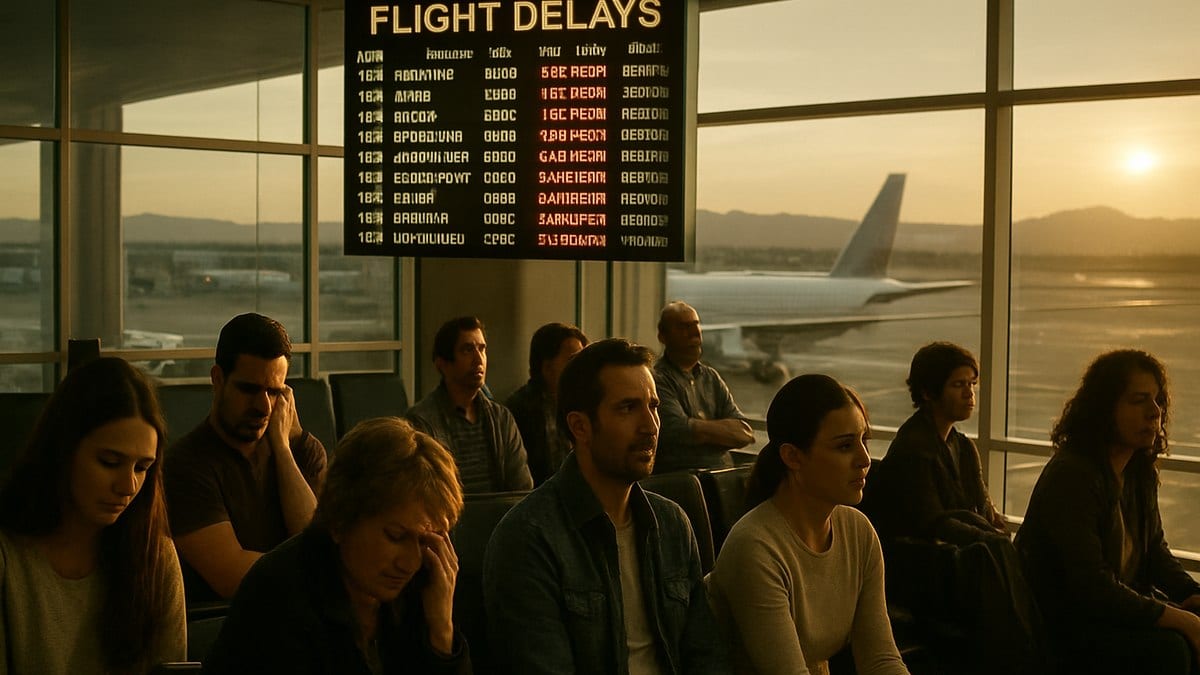
Busy Spring Travel Day Turns Turbulent
The disruptions at Las Vegas came amid an already crowded spring travel period, when visitor numbers typically rise on the back of major events, conferences and weekend leisure trips. Publicly available aviation dashboards showed delays building steadily through the late morning and afternoon, with departure banks particularly hard hit as congestion compounded earlier schedule slippage.
Most flights were reported as delayed by less than two hours, but even shorter hold-ups created ripple effects across connecting hubs. Travelers heading to and from popular destinations such as Los Angeles, Denver, Dallas and Chicago faced missed onward connections, tight rebookings and extended time in terminal queues.
While seven cancellations may appear modest compared with larger national disruption days, the combination of high passenger loads and strong demand for seats meant that re-accommodating affected travelers was challenging. Seats on alternative flights were limited, and some travelers were reported to have been offered next-day departures or circuitous routings through secondary hubs.
Data from previous travel days this season shows that Las Vegas is no stranger to congestion, with the airport ranking among the busiest in the country by passenger volume. On peak days, even a relatively small number of cancellations can test the flexibility of airline operations and airport infrastructure.
Weather, Congestion and Operational Strain
Published coverage of nationwide aviation conditions points to a mix of weather and operational pressures behind the latest round of disruptions. Storm systems in parts of the United States have recently triggered ground delay programs at multiple hubs, forcing aircraft to depart later than scheduled and compressing arrival and departure windows at downstream airports such as Las Vegas.
When major hubs experience weather constraints, Las Vegas often feels the knock-on impact in the form of late inbound aircraft and crew, which then delay departures. Industry analyses of delay propagation note that highly connected airports spread disruptions quickly across the network, and Las Vegas sits on a dense web of domestic point-to-point routes serving both leisure and business travelers.
Operational strain at individual airlines has also been a factor in recent disruption patterns. Publicly available reports have highlighted crew availability issues, high aircraft utilization and tight turn times as contributing to fragile schedules. At a high-demand airport like Las Vegas, where late-night and early-morning departures are common, minor schedule slips can snowball into missed crew duty windows and, ultimately, cancellations.
Analysts who track on-time performance note that the airport’s desert setting brings its own challenges. High winds, turbulence in the approach path and intense summer heat can periodically constrain operations, requiring spacing between landings and departures or temporarily limiting use of certain runways. While such conditions are not present every day, they add another layer of complexity to daily planning.
Impact on Airlines and Key Routes
The 124 delays and seven cancellations in Las Vegas affected a broad mix of domestic carriers serving short and medium-haul routes. Flights to West Coast gateways such as Los Angeles, San Francisco and Seattle, as well as key inland hubs like Denver and Dallas, were among those experiencing schedule disruptions according to live tracking boards.
Low-cost carriers that operate dense schedules into Las Vegas, often with rapid turnarounds to maximize aircraft utilization, appeared particularly exposed to cascading knock-on delays. When an inbound aircraft arrives late, the outbound service is likely to depart behind schedule as well, especially in crowded evening departure banks that are popular with leisure travelers returning home after weekend stays.
Network airlines connecting Las Vegas to their hub airports also faced challenges. A delayed arrival into Las Vegas can translate into a missed connecting bank at a hub on the next leg, leading to larger pools of displaced passengers downstream. Publicly available reports from other major U.S. airports in recent days highlight that those hubs are already managing elevated levels of delays and cancellations, leaving fewer options for quick re-accommodation.
International services, which typically operate less frequently and with fewer backup aircraft, are especially sensitive to day-of-operation disruptions. When a long-haul or cross-border flight from Las Vegas is delayed or canceled, passengers may need hotel accommodation and alternative routings that can extend journeys by many hours.
Passenger Experience: Long Lines and Tight Options
Travelers caught in the latest wave of disruptions at Harry Reid International Airport faced familiar challenges: long customer-service lines, busy gate areas and limited alternative flights. Social media posts and public message boards described queues at airline counters as passengers sought seat reassignments, meal vouchers and information about overnight arrangements.
With only seven cancellations recorded, many passengers were still able to depart on the same day, albeit hours later than planned. However, those holding separate tickets or complex itineraries involving multiple carriers were more likely to experience missed connections and extended layovers. Travel forums frequently warn that Las Vegas’s status as a high-demand leisure destination can make same-day rebooking difficult during busy seasons.
The disruptions also highlighted the importance of proactive communication tools. Many airlines now encourage passengers to manage rebookings through mobile apps rather than waiting in airport lines. Publicly available guidance from consumer groups emphasizes that travelers should monitor flight status closely, enroll in carrier alerts and consider day-of-travel flexibility, especially when flying through congestion-prone hubs.
For those with fixed plans, such as cruise departures, event tickets or nonrefundable hotel stays, even a short delay out of Las Vegas can have outsized consequences. Travel advisers often recommend scheduling critical connections with generous buffers and, where possible, arriving at key destinations a day early to mitigate the risk of missed events.
What This Means for Upcoming Las Vegas Trips
The latest disturbance at Harry Reid International Airport serves as a reminder that Las Vegas, despite its reputation for around-the-clock connectivity, is not immune to wider strains in the U.S. aviation system. With national statistics indicating elevated levels of delays and cancellations across multiple hubs this season, travelers planning upcoming trips to or from Las Vegas should factor in greater schedule uncertainty.
Experts who study air traffic trends note that early-morning departures are statistically less vulnerable to knock-on delays, as aircraft and crews are more likely to be in position from overnight stays. Public discussions among frequent flyers regularly highlight this pattern at Las Vegas, where later departures can become entangled in the cumulative impact of weather systems and upstream congestion.
Travel planners also suggest that visitors consider flexible ticket options, travel insurance that covers disruption-related expenses and contingency plans for critical journeys. For those connecting through Las Vegas on the way to another destination, allowing additional layover time can significantly reduce the risk of missed onward flights.
As airlines and airport operators continue to adjust schedules, staffing and infrastructure, Harry Reid International Airport is expected to remain a key test case for how major leisure-focused hubs cope with periods of elevated disruption. The day that produced 124 delays and seven cancellations is the latest example of how quickly conditions can deteriorate, even when the number of outright cancellations appears limited on the departure board.