

More news on this day
Travelers moving through Los Angeles International Airport on March 7 faced mounting frustration as a fresh wave of cancellations and delays rippled across domestic and long haul routes, with at least 21 flights suspended and more than 100 delayed by a mix of regional airspace closures and nationwide congestion.
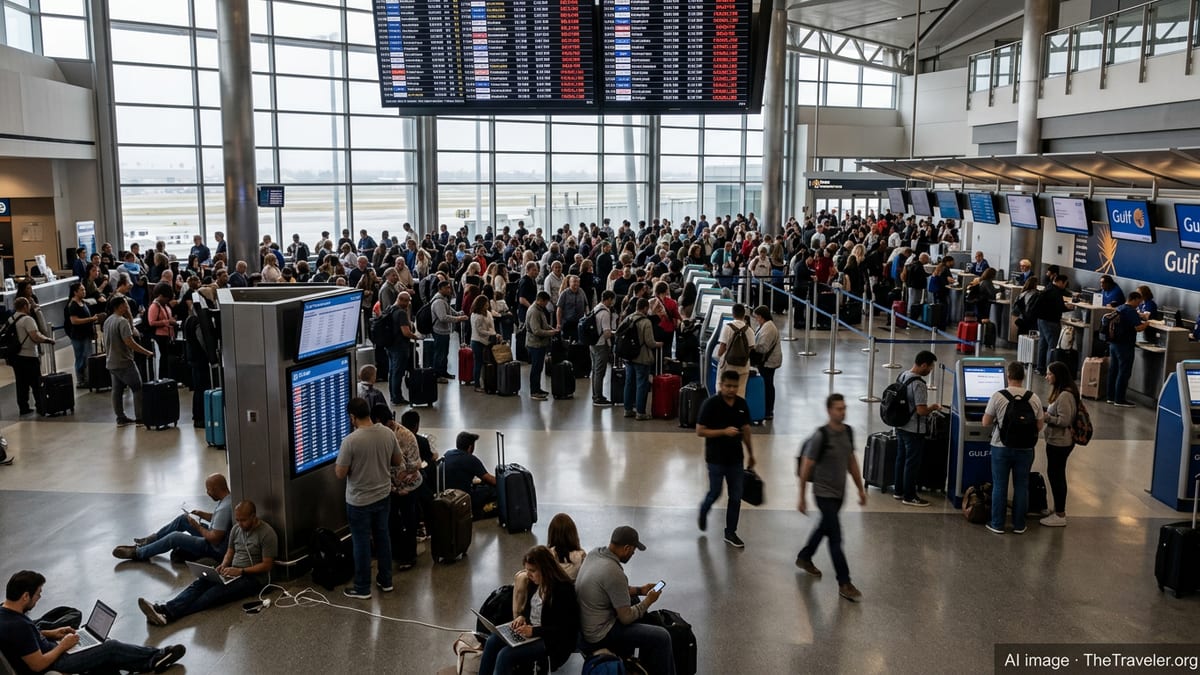
Los Angeles Passengers Caught in Mounting Flight Disruptions
Los Angeles International Airport reported at least 21 flight cancellations and more than 100 delays on Saturday, affecting tens of thousands of passengers at one of the world’s busiest gateways. The disruption, concentrated in the morning and early afternoon banks, involved services operated by Delta Air Lines, SkyWest Airlines, Qatar Airways, United Airlines, Emirates and several smaller domestic carriers, according to real time operational data and airline advisories.
While most of the affected flights were domestic routes to West Coast and Mountain West cities, long haul services linking LAX with Dubai and Doha were among the most high profile cancellations. Passengers bound for onward connections across Africa, Asia and the Indian Ocean region found themselves unexpectedly stranded in Los Angeles, joining already crowded customer service lines as they tried to secure scarce alternative seats.
Inside LAX’s international terminals, departure boards showed rows of delayed and cancelled services, as operations teams worked to resequence aircraft and crew assignments amid fast changing conditions. Loudspeaker announcements urged travelers not to proceed to the airport without confirmed rebookings, a message echoing guidance issued this week at major hubs across the Middle East and Europe as airspace disruptions persisted.
Global Airspace Tensions Collide With US Weather and Congestion
The latest round of turbulence for travelers at LAX comes against the backdrop of a wider aviation crisis triggered by airspace restrictions and intermittent closures across parts of the Middle East. Temporary suspensions and reroutings affecting skies over Iran, Iraq, Israel, Jordan, Qatar, Bahrain, Kuwait and the United Arab Emirates have forced major carriers to cancel or heavily curtail services into Dubai and Doha in recent days, with knock on effects across their global networks.
Emirates and Qatar Airways, which normally funnel large volumes of long haul traffic via Dubai International Airport and Hamad International Airport in Doha, have been operating reduced and highly variable schedules, focusing on limited repatriation and essential services. That has left aircraft and crews out of position and disrupted connection banks that feed US routes, including services to and from Los Angeles, San Francisco and other key North American gateways.
At the same time, US domestic operations are under strain from a separate but compounding set of issues, including bouts of adverse weather and a series of ground delay and ground stop programs at major hubs such as Chicago, Denver and Boston. On Saturday alone, carriers including SkyWest, Southwest, American, United and Delta canceled hundreds of flights and logged more than 5,000 delays nationwide, underscoring the fragile state of the recovery even on routes far from the conflict zones.
Knock On Effects for San Francisco, Las Vegas, Manzanillo and Beyond
The bottlenecks at LAX did not remain a local problem. Flights linking Los Angeles with San Francisco, Las Vegas and several popular leisure destinations in Mexico, including Manzanillo on the Pacific coast, experienced rolling delays as aircraft and crews failed to arrive on time from earlier disrupted sectors. Short haul services were repeatedly pushed back as airlines prioritized long haul departures where passenger reaccommodation options are more limited.
At San Francisco International Airport, operations teams reported a measurable uptick in late running arrivals and departures tied to West Coast network disruptions, even as local weather remained largely favorable. Las Vegas, a key point for weekend leisure traffic, also saw a growing tally of delayed flights, particularly on regional services operated on behalf of the major network airlines.
Farther afield, the constrained schedules into Dubai and Doha meant that passengers traveling from LAX and other US cities to South Asia, Southeast Asia and parts of Africa faced complex rebookings. Some travelers were rerouted via European hubs where capacity is also tight, while others accepted multi day delays as airlines worked to rebuild their timetables around changing airspace permissions.
Airlines Struggle With Crew, Aircraft Imbalances
Behind the disruption visible on departure boards lies a web of operational challenges that carriers are struggling to untangle. Prolonged airspace restrictions have forced long detours on some transcontinental and transoceanic routes, increasing block times and pushing aircraft and crew rotations past their scheduled limits. That has led to last minute cancellations when flight and duty time regulations leave no margin to complete a rotation safely.
Regional operators such as SkyWest, which fly under major airline brands and connect smaller cities to hubs like Los Angeles, have been particularly exposed. Even a modest disruption in one part of their network can propagate quickly, as a single aircraft might be scheduled to complete several short segments in a day. When earlier legs encounter weather or ground delay programs, later flights to cities such as Las Vegas or regional California and Nevada destinations are pushed into severe delays or dropped altogether.
Long haul carriers including Qatar Airways and Emirates have simultaneously been juggling aircraft stranded outside their home hubs and crew who have reached the end of their legal duty windows in hotels across multiple continents. With only limited slots available as Gulf airports cautiously reopen to selected traffic, airlines have been forced to make difficult choices about which routes to prioritize and which to keep suspended, leaving some West Coast services sidelined for the day.
What Travelers Through LAX and Major Hubs Should Expect
Airports and airlines continue to urge passengers with upcoming departures from Los Angeles, San Francisco, Las Vegas and other major hubs to treat flight status checks as essential rather than optional. Same day and even hour by hour schedule changes have become common as carriers receive updated airspace guidance and attempt to consolidate lightly booked services, meaning that a flight listed as on time in the morning may be retimed or canceled by afternoon.
Travel advisors are recommending that passengers headed to or transiting through Dubai, Doha and other affected Middle Eastern cities build in extra flexibility, avoid tight connections and consider travel insurance that covers disruption related costs. In some cases, airlines are offering waivers that allow customers to rebook or reroute without change fees, though seat availability during peak travel periods remains constrained.
At LAX itself, terminal crowds on Saturday reflected a mix of weary long haul passengers and domestic travelers trying to salvage weekend plans. Airport staff and volunteer teams circulated through check in halls and gate areas, offering water and basic information as lines swelled at ticket counters and customer service desks. For many, the immediate priority was simply securing a seat out of Los Angeles, even if it meant accepting detours and overnight layovers far from their original itineraries.