

More news on this day
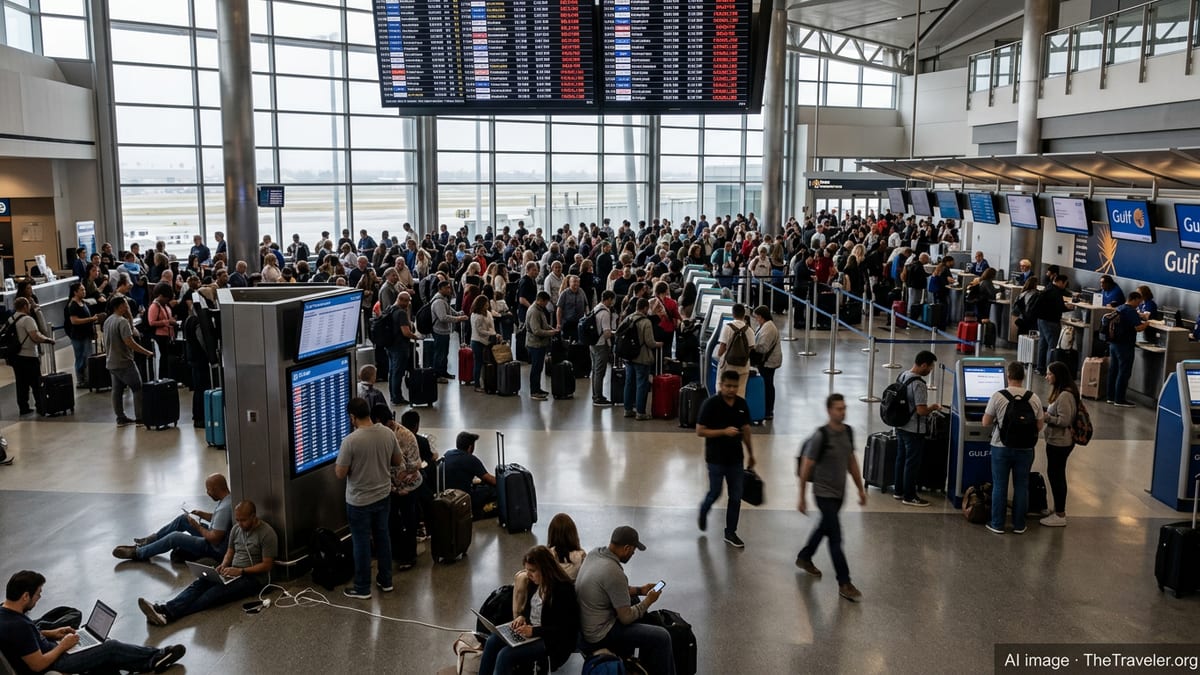
Travelers at Los Angeles International Airport faced mounting frustration on March 7 as at least 21 flights operated by Delta, SkyWest, Qatar Airways, United, Emirates and other carriers were suspended, with more than 100 additional services delayed amid a cascading wave of global airspace disruptions.
Regional Airspace Crisis Reaches Los Angeles
The troubles at Los Angeles International Airport are the latest symptom of a fast‑moving aviation crisis that began with airspace closures across the Middle East earlier this month. Authorities in the Gulf region restricted or shut key corridors following a sharp escalation in regional tensions, forcing airlines to cancel or divert hundreds of long‑haul services that typically connect through hubs such as Dubai and Doha.
Emirates, Etihad and Qatar Airways were among the first major Gulf carriers to suspend most passenger operations as airspace over parts of the region closed, before gradually restarting limited services in recent days. While Dubai International Airport and Abu Dhabi have begun easing back into operation with partial schedules, carriers are still running significantly fewer flights than normal and are prioritizing repatriation and relief services over routine passenger traffic.
Even as some Middle Eastern hubs report improving conditions and falling cancellation rates, the impact of the days‑long shutdown is now rippling through long‑haul networks worldwide. West Coast gateways such as Los Angeles, San Francisco and Las Vegas are experiencing fresh disruption as aircraft and crews remain out of position, connecting itineraries are broken and airlines work through large backlogs of displaced passengers.
Los Angeles International Airport, one of the primary North American gateways for transpacific and transatlantic traffic, is particularly exposed to these shocks because many of its international routes rely on connections through the Gulf. The suspension of dozens of services across the region has disrupted not only nonstop links but also multi‑segment journeys that funnel through hubs like Dubai and Doha before continuing to Asia, Africa or Europe.
Major Carriers Scramble to Rebuild Schedules
At LAX, the most visible impact has been concentrated among airlines with deep ties to the affected region or with extensive codeshare arrangements on Gulf routes. Emirates, which normally operates multiple daily departures between Los Angeles and Dubai, has drastically scaled back capacity as it rebuilds its global schedule out of the United Arab Emirates. Qatar Airways, still constrained by the closure of Qatari airspace for most routine traffic, has suspended regular departures and is instead focusing on a narrow set of repatriation flights from alternative gateways.
Legacy US carriers are also feeling the strain. Delta Air Lines and United Airlines, which do not operate their own flights into the Gulf hubs at the scale of Emirates or Qatar Airways, are nonetheless experiencing knock‑on effects as partner airlines cancel onward connections and shared passengers require rebooking. SkyWest, a key regional operator that flies under the Delta and United brands on domestic routes, has been forced to pull some feeder services at short notice as mainline schedules are reworked.
Delta has already issued travel waivers for customers booked on services touching the Gulf and nearby countries, allowing free changes as the carrier reroutes passengers around blocked skies and constrained hubs. United is taking similar measures, encouraging customers whose itineraries include Dubai, Doha or other impacted airports to push travel into later March where possible, to ease pressure on near‑term flights while aircraft and crews are rotated back into regular patterns.
For many travelers passing through Los Angeles, the disruption is arriving with little warning. Airline websites and mobile apps have at times lagged behind real‑time gate activity during the crisis, leaving some passengers to discover cancellations only upon reaching the terminal. Check‑in lines at LAX’s international facilities grew throughout Saturday as agents worked case by case to find alternative routings via European or Asian hubs still operating near normal levels.
Domestic Gridlock as San Francisco and Las Vegas Feel the Strain
Inside the United States, the disruption is not limited to Los Angeles. San Francisco International Airport and Harry Reid International Airport in Las Vegas, both key West Coast hubs, reported elevated levels of delays and short‑notice cancellations on flights that either feed into or connect from long‑haul services affected by the Middle East constraints.
At San Francisco, United’s global hub operations have been strained by the need to reassign wide‑body aircraft that would normally rotate through the Gulf, instead sending some to Europe or Asia to accommodate rerouted traffic. That knock‑on effect has contributed to a cluster of delayed departures and arrivals, particularly on transcontinental services that rely on tightly timed aircraft turns and crew schedules.
Las Vegas, a major leisure destination that normally sees strong demand for connections from the Middle East, has also been hit. With airlines reducing or suspending flights from Dubai and Doha that typically feed tourists and convention travelers into Nevada, carriers have pulled back some domestic frequencies or swapped larger aircraft for smaller jets, complicating rebooking efforts for passengers who originated in the Gulf region.
Regional operators such as SkyWest are bearing much of the visible burden of these schedule adjustments. As partner airlines adjust their long‑haul plans day by day, regional flights that connect smaller cities to the big West Coast hubs are being trimmed or rescheduled, often with only a few hours’ notice, triggering a cascade of missed connections and overnight stays for travelers far removed from the original Middle East airspace issues.
Global Shockwaves Reach Manzanillo, Dubai and Doha
The disruption is not only a transpacific problem. Popular resort gateways and secondary international airports are also experiencing fallout from the continuing turbulence in airline networks. In Mexico, flights linking Los Angeles and coastal destinations such as Manzanillo are among those affected, as carriers reassign aircraft to higher‑priority long‑haul routes and consolidate lightly booked services to protect capacity on the most congested corridors.
In the Gulf itself, Dubai and Doha remain the epicenters of the crisis. Dubai International Airport has reopened to a limited but growing number of Emirates and partner flights after several days of near‑total shutdown, with airlines urging passengers not to travel to the airport unless they have received direct confirmation that their flights are operating. While the number of daily cancellations is gradually falling, the backlog of travelers stranded across multiple continents means seats on operating flights are in high demand.
Doha’s Hamad International Airport faces an even steeper path to normalcy. Qatar Airways has kept regular passenger operations largely suspended in and out of its home hub, focusing instead on a patchwork of relief and repatriation flights operated from alternative cities where airspace corridors remain open. The airline has repeatedly advised customers not to proceed to the airport unless they have been contacted with a confirmed new itinerary.
These constraints are feeding directly into the difficulties now facing passengers at Los Angeles and other North American gateways. With neither Dubai nor Doha yet able to function at full capacity, travelers who would normally rely on the Gulf super‑connectors to reach destinations in Africa, South Asia and Australasia are forced onto circuitous routings via Europe or East Asia, placing additional strain on carriers that were not directly affected by the original airspace closures.
Airlines Urge Passengers to Check Status and Expect Lingering Disruptions
Across the industry, airlines are advising customers to treat flight status information as fluid and to verify their bookings repeatedly in the hours before departure. Many carriers are updating schedules in rolling waves as airspace authorities revise restrictions and as crew and aircraft availability gradually recovers from the week‑long shock.
At LAX, airport officials are urging travelers to arrive early, prepare for long lines at check‑in desks and rebooking counters, and consider carrying additional essentials in hand luggage in case of unexpected overnight stays. Information screens across the international terminals on Saturday showed a patchwork of cancellations, delayed departures and flights listed as “time to be confirmed,” underscoring the uncertainty still gripping the system.
Travel analysts caution that while middle‑of‑the‑day cancellation numbers in the Gulf are beginning to ease, it could take several more days before long‑haul networks settle into a new, more predictable pattern. Aircraft displaced to operate repatriation flights may not return to their normal routes immediately, and some city pairs could remain without nonstop service until carriers are confident that key airspace corridors will stay reliably open.
For travelers bound to or from Los Angeles and other major West Coast airports, that means the coming week is likely to remain challenging. Even as some flights resume and additional frequencies are restored, pent‑up demand from stranded passengers and limited spare capacity will keep loads high and options limited. Airlines are encouraging flexible travel dates wherever possible and warning that, for now, the safest assumption is that any itinerary touching the Gulf region could still be subject to last‑minute change.