

More news on this day
Spring break travel plans for dozens of passengers at Omaha’s Eppley Airfield were thrown into disarray as ten flights were delayed and three canceled, leaving families, students, and business travelers stranded amid cascading disruptions tied to major hubs including New York, Chicago, and Denver.
Get the latest news straight to your inbox!
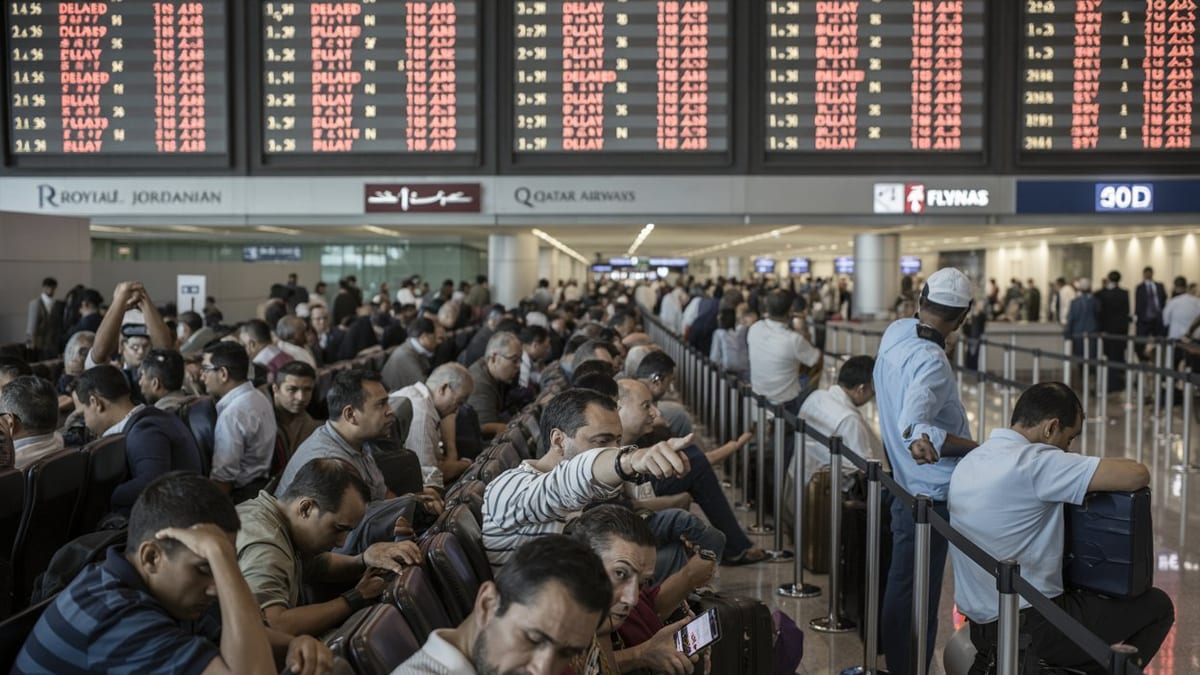
Image by Travel And Tour World
Weather Turbulence and Congested Hubs Ripple Into Omaha
Publicly available flight-tracking data and airline operations updates for late March 2026 indicate that a series of severe weather systems and operational slowdowns at major U.S. hubs have been pushing delays and cancellations deep into the national network. Airlines with a strong presence at Omaha’s Eppley Airfield, particularly American Airlines, Delta Air Lines, and United Airlines, have been contending with storms, power issues, and congestion at connecting airports such as New York, Chicago, and Denver.
Recent travel waivers and disruption summaries show repeated pressure points at Chicago O’Hare, New York area airports, and Denver International, where thunderstorms, winter weather, and infrastructure challenges have combined with heavy spring break demand. As schedules tightened and recovery windows shrank, smaller spokes like Omaha began to experience secondary impacts, with late arrivals turning into delayed departures and, in some cases, scrubbed flights.
In Omaha, these upstream problems translated into a difficult day for travelers as ten departures and arrivals were significantly delayed while three services were canceled outright. The affected flights were primarily operated by American, Delta, and United, carriers that link Eppley to major domestic hubs and onward spring break destinations.
For passengers, the result was a familiar pattern for peak-season travel: crowded gate areas, rolling departure times, and uncertainty over when, or if, they would reach beaches, ski slopes, or family gatherings on schedule.
Disruptions Hit Routes to New York, Chicago, and Denver
The heaviest impacts for Omaha-centered travelers were concentrated on routes tied to key hubs in New York, Chicago, and Denver. According to schedule data and live boards, delays stacked up on services feeding into Chicago O’Hare and Denver International, both of which have been repeatedly highlighted in recent days for weather-related congestion and knock-on operational issues.
Flights linking Omaha with these hubs serve as vital connectors for spring break itineraries to the East and West Coasts, as well as to mountain resorts in Colorado. When storms and high winds limited arrivals and departures in Chicago and Denver, Omaha-bound and Omaha-originating flights were held on the ground or rescheduled, compressing already tight turnaround windows.
New York connections were also affected, particularly itineraries routed via LaGuardia and other New York area airports. Travel advisories and waivers for East Coast thunderstorms earlier in March had already forced many travelers to rebook or reroute, and the lingering effects of disrupted aircraft positioning continued to appear in Midwest gateways like Omaha.
As a result, some passengers departing Eppley for destinations such as New York, Chicago, and Denver faced missed onward connections, overnight stays, and significant changes to their planned arrival times, complicating vacation rentals, hotel bookings, and event schedules.
American, Delta, and United Confront Peak-Season Strain
American Airlines, Delta Air Lines, and United Airlines, which collectively handle a large share of Eppley’s traffic through their hub-and-spoke networks, were at the center of the day’s disruptions. Publicly available airline communications and traveler reports show that all three carriers have been juggling heavy spring break loads with volatile late-season weather across the Midwest and East Coast.
United’s operations have been particularly affected by storms and strong winds in Chicago and along the East Coast this month, leading to multiple travel waivers and widespread schedule adjustments. Because United funnels many Omaha passengers through O’Hare and Denver, problems at those hubs quickly translated into delayed or canceled segments touching Eppley.
American Airlines has faced its own strains at major bases such as Dallas Fort Worth and Chicago, with travelers sharing accounts of missed connections and long waits as crews and aircraft fell out of place. Delta, which uses hubs like Minneapolis and other northern gateways to connect Omaha with the broader network, has also been responding to winter weather and high demand, sometimes resulting in tight aircraft rotations and delay-prone turnarounds.
At Eppley, the combined effect for these three carriers was a day in which a relatively small number of cancellations and a cluster of lengthy delays had an outsized impact, particularly for passengers on multi-leg spring break journeys relying on narrow connection windows.
Stranded Passengers Navigate Rebooking and Limited Options
For the travelers caught in Omaha during the disruption, the immediate challenge was simply finding a way to continue their trips. With spring break demand keeping many flights near capacity, same-day rebooking options for canceled services were limited, especially on popular routes to major hubs and leisure destinations.
Publicly shared traveler experiences from similar recent disruptions highlight common strategies: monitoring airline apps for automatic rebooking, seeking alternate routings through less congested hubs, or, in some cases, opting to delay travel by a full day or more to secure a confirmed seat. At Eppley, passengers confronting canceled flights to Chicago or Denver often had to consider connections through different cities or even different carriers, sometimes at additional cost.
Families and student groups were among those most affected, as tightly scheduled vacations and pre-paid accommodations left little room for lengthy delays. Some travelers chose to remain overnight in Omaha rather than risk uncertain standby lists, while others accepted later arrivals at their destinations, potentially sacrificing valuable days of their spring break plans.
With airport concessions and seating areas filling up, the experience underscored how quickly a manageable number of schedule changes can transform a routine travel day into a prolonged wait, especially at a mid-sized airport where alternative flight choices are more limited than at major coastal hubs.
What Spring Break Travelers Can Expect in the Coming Days
Looking ahead, publicly available forecasts and airline advisories suggest that conditions at the major hubs linked to Omaha will continue to fluctuate as late-season storms intersect with one of the busiest leisure travel periods of the year. Weather systems affecting the Midwest, Rockies, and Northeast are likely to keep Chicago, Denver, and New York area airports under intermittent operational pressure.
Industry data and recent patterns indicate that even modest disruptions at those hubs can quickly ripple outward to spoke airports such as Omaha, particularly on morning and evening bank flights operated by American, Delta, and United. Tight turn times, high load factors, and limited spare aircraft make rapid recovery challenging once delays begin to stack.
Travel experts and consumer advocates generally recommend that passengers traveling through Eppley during the remainder of the spring break period build in longer connection times, monitor airline and airport notifications closely, and consider earlier departures when possible. While not all disruptions can be avoided, greater flexibility in schedules tends to improve the chances of reaching destinations on the intended day.
For now, the stranded passengers at Omaha’s Eppley Airfield serve as a reminder that in a tightly interconnected air travel system, a storm or slowdown hundreds of miles away in New York, Chicago, or Denver can abruptly reshape the course of a vacation before travelers ever leave the gate.