

More news on this day
Passengers at Philadelphia International Airport faced a day of mounting frustration as 32 flight cancellations and 286 delays involving American Airlines, Southwest Airlines, and Spirit Airlines triggered a fresh wave of travel chaos across Philadelphia, New York, Chicago, Miami, and other major U.S. cities.
Get the latest news straight to your inbox!
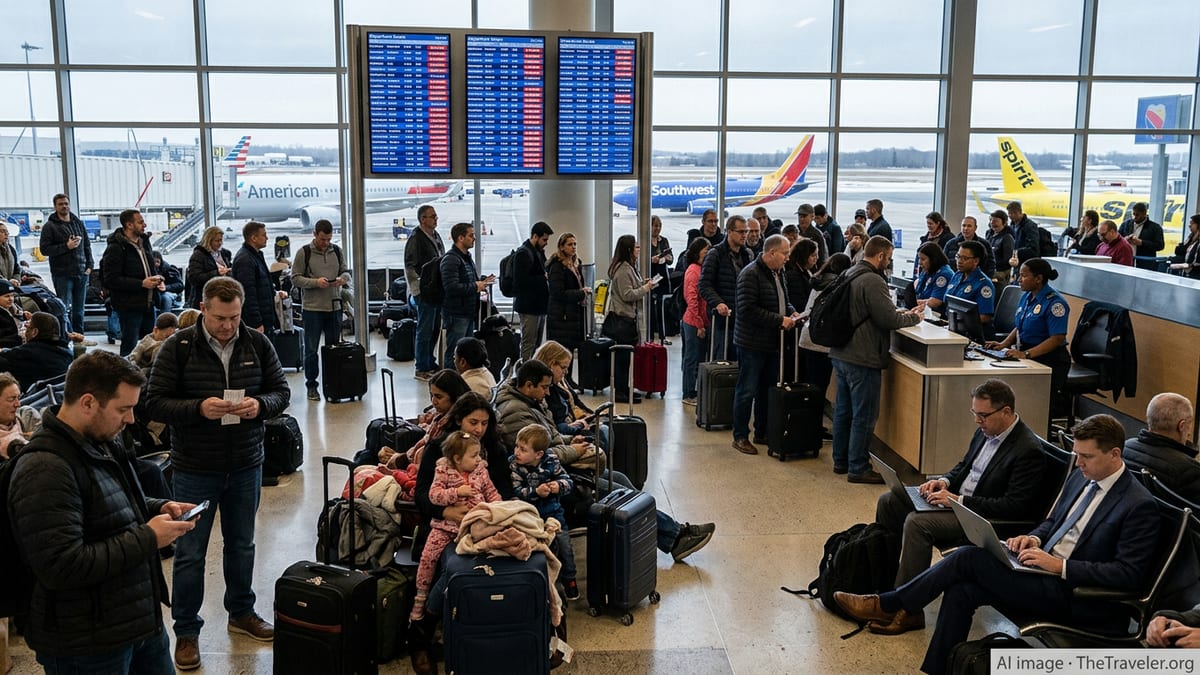
Operational Turmoil at a Key East Coast Hub
The disruption unfolded at one of the East Coast’s most important connecting hubs, where American Airlines maintains a dominant presence alongside significant operations from Southwest and Spirit. By mid-afternoon, departure boards across multiple concourses were awash in red and yellow, as rolling delays moved from minutes into hours and a growing list of services was scrubbed entirely.
Airport staff and airline agents worked to manage long lines at check in and customer service counters as travelers sought alternative routes, overnight accommodation, or refunds. Many passengers reported receiving multiple schedule changes in the space of a few hours as aircraft and crews fell out of position, compounding the initial wave of problems and forcing airlines to continually revise their operations plans.
While the raw numbers at Philadelphia tell part of the story, the broader impact stems from the airport’s role as a connector to major metropolitan areas nationwide. A single canceled or heavily delayed departure from Philadelphia can translate into missed onward flights in New York, Chicago, Miami, Dallas, and Los Angeles, magnifying the disruption for passengers who might never set foot in the city itself.
Behind the scenes, airline operations control centers faced an intricate puzzle, juggling crew duty limits, aircraft rotations, and gate availability. Industry experts note that once delays reach a certain threshold at a hub airport, the risk of knock on cancellations increases sharply as schedules lose their built in flexibility.
Ripple Effects From Philadelphia to New York, Chicago, and Miami
The disruptions at Philadelphia quickly rippled through some of the country’s busiest air corridors. Morning and midday flights linking Philadelphia with New York area airports, Chicago O’Hare, and Miami International saw some of the heaviest knock on impacts as airlines prioritized limited aircraft for routes with the highest concentration of connecting passengers.
Travelers on popular shuttle style runs to New York reported last minute gate changes and creeping departure times, with some services ultimately canceled after repeated delays. The short flight time between the two regions offers little room to recover lost minutes, so even modest ground holds in Philadelphia can lead to missed slots at already congested New York terminals.
In Chicago, delays cascaded through the afternoon and early evening bank of arrivals and departures, forcing tight connections onto later flights and leaving some passengers facing unexpected overnight stays. Miami bound leisure travelers, including families heading for cruises or Caribbean connections, were among those most acutely affected, as a missed arrival into South Florida often means forfeiting nonrefundable onward arrangements.
Smaller and mid sized cities also felt the strain as aircraft and crews were diverted to protect trunk routes. Flights to secondary markets in the Midwest and Southeast were disproportionately vulnerable to cancellation or consolidation, a common strategy airlines use when seeking to preserve capacity on their most commercially critical services during widespread disruption.
American, Southwest, and Spirit Grapple With Passenger Backlogs
For American Airlines, which operates the largest share of flights at Philadelphia, the day’s turmoil translated into extensive rebooking efforts and mounting customer service queues. With many of its aircraft and crews tightly scheduled across a national network, any extended hold at one hub can upset carefully timed rotations that feed into key centers such as Dallas Fort Worth, Charlotte, and Chicago.
Southwest Airlines, which runs a point to point model rather than a traditional hub and spoke system, faced a different set of operational headaches. Delays and cancellations at Philadelphia rippled along its linear routes connecting cities across the Northeast, Midwest, and Sun Belt, meaning a disruption on a single early flight could echo through multiple downstream departures and arrivals.
Spirit Airlines, known for its dense schedules and high aircraft utilization, had limited slack to absorb extended delays. Even a small cluster of cancellations at Philadelphia can prove challenging for an ultra low cost carrier that has fewer spare aircraft and narrower margins for repositioning crews. Passengers on Spirit services reported being offered next day options in some cases, reflecting the difficulty of slotting disrupted customers into already busy flights.
All three carriers urged passengers to use airline apps and text alerts to track real time updates and rebooking options. However, many travelers at the airport said that digital notifications lagged behind announcements at the gate, leading to confusion about whether to remain in line at customer service counters or return to departure areas in the hope of an on time boarding.
Stranded Travelers Confront Long Lines and Limited Options
Inside the terminals, the human impact of the disruption was visible in snaking security queues, crowded seating areas, and families clustered on the floor around power outlets. With many flights operating at or near capacity, same day rebooking options were heavily constrained, particularly for groups traveling together or passengers needing specific seat types.
Some travelers opted to abandon air travel altogether, renting cars to reach New York, Washington, or Boston rather than wait out uncertain departure times. Others scrambled to adjust hotel reservations, car rentals, and event tickets in downstream cities as the likelihood of same day arrival diminished. For business travelers working against tight schedules, even a short delay could mean missing critical meetings or conferences.
Airport concessions and lounges grew busier as the day went on, with food outlets reporting brisk trade from passengers facing multi hour waits. Staff on the concourses fielded questions about compensation and vouchers, often having to direct customers back to their airlines, since rules around reimbursement and meal support vary widely between carriers and depend on the underlying cause of disruption.
Travel advocates urged passengers to keep every receipt linked to unexpected expenses such as meals, ground transport, or overnight stays, noting that some costs may be recoverable through airline policies or travel insurance. They also advised documenting delays and cancellations with screenshots or photos of departure boards, which can be useful when disputing claims later.
What Passengers Can Do When Disruption Hits
Industry analysts say that while travelers cannot prevent large scale scheduling problems, there are steps they can take to improve their chances of staying mobile when an airport like Philadelphia experiences a sudden spike in cancellations and delays. One key recommendation is to proactively check flight status before leaving for the airport and to sign up for notifications from both the airline and third party flight tracking services.
When cancellations strike, passengers are often better served by using an airline’s app or website to seek alternative flights rather than waiting in long lines at service desks. In many cases, carriers allow same day changes at reduced or waived fees during widespread disruption, and digital tools can present options across an airline’s full network faster than in person agents can manually search.
Experts also suggest that travelers consider routing through alternate hubs if their plans are flexible. For example, passengers bound for Chicago or Miami from the Northeast may find more reliable options via other East Coast or Midwest airports if Philadelphia experiences an extended operational crunch. Booking earlier departures can also provide a buffer, as the first flights of the day are statistically more likely to leave on time and give travelers multiple fallback options later.
With the latest disruption at Philadelphia underscoring how quickly conditions can deteriorate, consumer groups continue to call for clearer communications and more robust contingency plans from airlines. For now, though, passengers caught up in the chaos are left juggling rebookings, refunds, and rearranged plans as they wait for operations at the busy hub to stabilize.