

More news on this day
Travelers at Philadelphia International Airport faced a fresh wave of disruption today as Jazz Airlines grounded two flights, triggering a chain of delays across major transatlantic and North American routes and adding strain to an already fragile travel environment.
Get the latest news straight to your inbox!
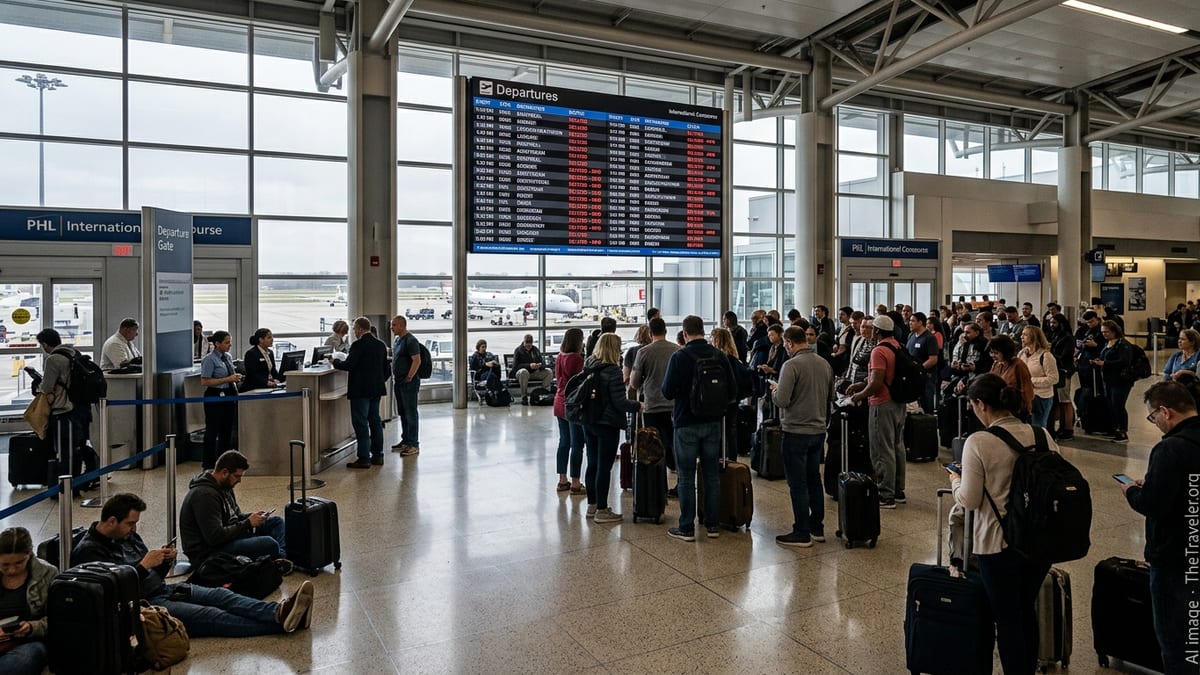
Grounded Jazz Flights Ripple Across Key International Routes
Publicly available flight-tracking data and operational reports indicate that two Jazz-operated services at Philadelphia International Airport were grounded on Tuesday, setting off knock-on delays for connecting passengers heading to and from Montreal and other Canadian gateways. Jazz operates regional flights for Air Canada under the Air Canada Express brand, feeding larger transatlantic departures via major hubs.
The grounded aircraft affected timing-sensitive connections for travelers booked onward to London, Amsterdam and Dublin, where many itineraries involve same-day transfers from Canadian hubs. Disruptions on regional feeders often cascade through long-haul schedules, leaving passengers facing missed connections, rebookings and unscheduled overnight stays.
While the immediate cause of the groundings had not been detailed in initial reporting, recent coverage of Jazz Airlines has highlighted operational strains, including prior episodes of delays and cancellations at other North American airports. Those earlier disruptions, combined with today’s events at Philadelphia, underscore how quickly regional schedule issues can reverberate through international networks.
For many travelers at Philadelphia, the impact was felt not only on flights with direct Jazz involvement, such as services tied to Montreal connections, but also on itineraries involving partner carriers and code-share agreements that rely on tightly timed transfers through shared terminals.
Philadelphia’s Broader Disruption Picture
The turmoil involving Jazz comes as Philadelphia International Airport contends with a period of heightened operational stress. Recent days have seen longer security lines and intermittent checkpoint closures, according to local coverage and traveler accounts, as staffing challenges and federal-level budget uncertainty weigh on airport operations nationwide.
Any disruption at a major connecting point like Philadelphia quickly compounds the effects of an individual airline issue. Grounded regional flights can leave aircraft and crews out of position, while passengers miss onward departures to cities such as Atlanta, London, Amsterdam and Dublin, where schedules are built around specific banked departure waves.
Travel industry analysis shows that Philadelphia functions as a critical bridge between domestic and international networks, particularly for eastbound transatlantic traffic. When regional partners such as Jazz experience irregular operations, that bridge weakens, forcing airlines to scramble for spare seats on later departures and to adjust aircraft assignments on short notice.
As today’s problems unfolded, some passengers reported extended waiting times at departure gates and service counters as airlines worked through rebookings. Others faced the prospect of reroutes through alternate hubs, adding further pressure to already busy corridors along the U.S. East Coast and into Canada.
Impact on Passengers Bound for Montreal, London, Amsterdam and Dublin
Montreal-bound travelers were among the first to feel the impact of Jazz’s grounded flights at Philadelphia, with some itineraries requiring a critical connection to reach the Canadian city. From Montreal, many passengers continue onward to major European destinations, meaning a missed regional leg can jeopardize entire long-haul journeys.
Routes linking Philadelphia and Montreal to London, Amsterdam and Dublin are especially sensitive to timing because they often operate as overnight flights, with limited same-day alternatives. When early feeder services from Philadelphia are delayed or canceled, passengers may be forced to accept significantly later departures or travel the following day, affecting business schedules, tour departures and personal plans.
Travel pattern data suggests that even when long-haul flights themselves depart on schedule, upstream disruptions can leave aircraft flying with unoccupied seats while affected travelers are stranded at origin airports. This mismatch can increase costs for airlines while adding frustration for passengers who see their planned seats departing without them.
For those aiming to reach U.S. hubs such as Atlanta from Philadelphia, today’s irregular operations added another layer of uncertainty. While Jazz does not operate directly between Philadelphia and Atlanta, delays affecting shared gates, crew rotations and baggage handling can spill over across airlines, contributing to missed domestic connections and longer ground times between flights.
Operational Strain on Regional Carriers Like Jazz
Regional airlines such as Jazz typically operate intense schedules with high aircraft utilization and tight turnaround times, leaving limited margin for error when unexpected technical, weather or staffing issues arise. Industry profiles of Jazz describe a carrier that plays a central role in Air Canada’s network, operating under a capacity purchase agreement that links smaller markets to major hubs.
Recent published coverage involving Jazz Airlines at other airports has pointed to clusters of delays and cancellations, illustrating the vulnerability of regional operations to any disruption in crew availability, maintenance planning or air traffic constraints. When two aircraft are grounded at a hub like Philadelphia, the knock-on effects can ripple across multiple routes for the remainder of the day.
Analysts note that regional carriers are also navigating broader industry pressures, including high demand for pilots and technicians, rising operating costs and lingering weather-related backlogs from earlier in the travel season. These factors can reduce the flexibility to substitute aircraft or crews at short notice when problems arise at a single airport.
For passengers, the result is a travel environment where even seemingly minor schedule changes can escalate into substantial delays. Today’s events at Philadelphia highlight how quickly that escalation can happen when a regional partner faces unexpected constraints in a critical connecting market.
What Travelers Through Philadelphia Should Expect Next
With Jazz Airlines working to stabilize its operation at Philadelphia, travel observers expect residual delays to continue through the day on itineraries involving Montreal and other Canadian connections. Passengers booked on later departures could still encounter retimed flights or aircraft swaps as the airline repositions equipment and crews.
Publicly available guidance from airlines and travel advisers generally encourages passengers passing through disruption-prone hubs to monitor their flight status frequently on the day of travel and to build in additional connection time where possible, particularly when linking a regional segment to an international long-haul service. Same-day rebooking options may be more limited on transatlantic routes to London, Amsterdam and Dublin during peak evening departure windows.
Travel data from recent weeks suggests that Philadelphia has seen periods of both smooth processing and sudden congestion, making it difficult for passengers to predict their exact experience. Against this backdrop, today’s Jazz-related disruptions serve as a reminder that regional carriers remain a critical but sometimes fragile link in the global travel chain.
As airlines adjust schedules and travelers reconsider tight connections through Philadelphia, the situation at the airport will likely remain fluid. For now, the grounding of two Jazz flights has once again shown how quickly operational challenges on a handful of aircraft can radiate outward, affecting journeys across North America and the Atlantic.