

More news on this day
Hundreds of travelers at Phoenix Sky Harbor International Airport faced sudden itinerary upheaval this week as a wave of cancellations disrupted major routes to New York, Miami and Los Angeles, compounding a broader spell of weather-related air travel chaos across the United States.
Get the latest news straight to your inbox!
Major Coastal Gateways Cut Off From Phoenix
Flights linking Phoenix with key coastal hubs including New York, Miami and Los Angeles were among the hardest hit, according to real-time tracking boards and airline advisories. Many departures from Phoenix to John F. Kennedy International, LaGuardia, Miami International and Los Angeles International were marked as cancelled or severely delayed across multiple carriers.
Publicly available operations data indicates that the disruption at Phoenix coincided with a surge of weather-related interruptions nationwide, as storms and volatile temperatures snarled flight paths into the Northeast and parts of the Southeast. With New York and Miami sitting within regions affected by heavy precipitation, gusting winds and ground-stop programs, ripple effects reached well into the desert Southwest.
For travelers in Phoenix, the impact was immediate. Cancellations on trunk routes to New York and Los Angeles not only halted direct journeys but also severed onward international connections that typically rely on those coastal hubs. Miami-bound flights, frequently used as gateways to the Caribbean and Latin America, were similarly curtailed, limiting options for both leisure and business passengers.
Airlines responded by trimming frequencies, consolidating lightly booked services and, in some cases, suspending specific rotations for parts of the day while crews and aircraft were repositioned. The resulting gaps on departure boards left many long-haul passengers scrambling to rebuild complex itineraries at short notice.
Nationwide Weather Turbulence Fuels Disruptions
The Phoenix cancellations came against the backdrop of an exceptionally turbulent late-winter and early-spring weather pattern across the country. Recent storms have alternated between heavy snow, high winds and unseasonable heat, creating difficult conditions along major flight corridors and at some of the nation’s busiest airports.
Published meteorological summaries for February and March describe large, slow-moving systems sweeping across multiple regions, triggering blizzard warnings in parts of the Northeast and severe weather alerts in the Mid-Atlantic and Midwest. These events have repeatedly disrupted traffic flows into and out of New York-area airports, where airspace congestion quickly cascades into delays and cancellations nationwide.
In parallel, stormy conditions and convective weather over the Southeast have periodically complicated operations into Florida, including Miami. When combined with capacity restrictions at East Coast hubs, even localized thunderstorms or low visibility can prompt airlines to proactively cancel flights from distant origins such as Phoenix, rather than risk extended ground holds and crews timing out far from base.
Observers note that the latest round of cancellations fits a broader pattern seen throughout the 2025–26 winter season, during which several major systems have driven some of the highest single-day totals of weather-related cancellations in recent years. Phoenix, typically viewed as a relatively resilient desert hub, has not been immune to these knock-on effects when coastal gateways are constrained.
Passengers Face Long Queues and Limited Alternatives
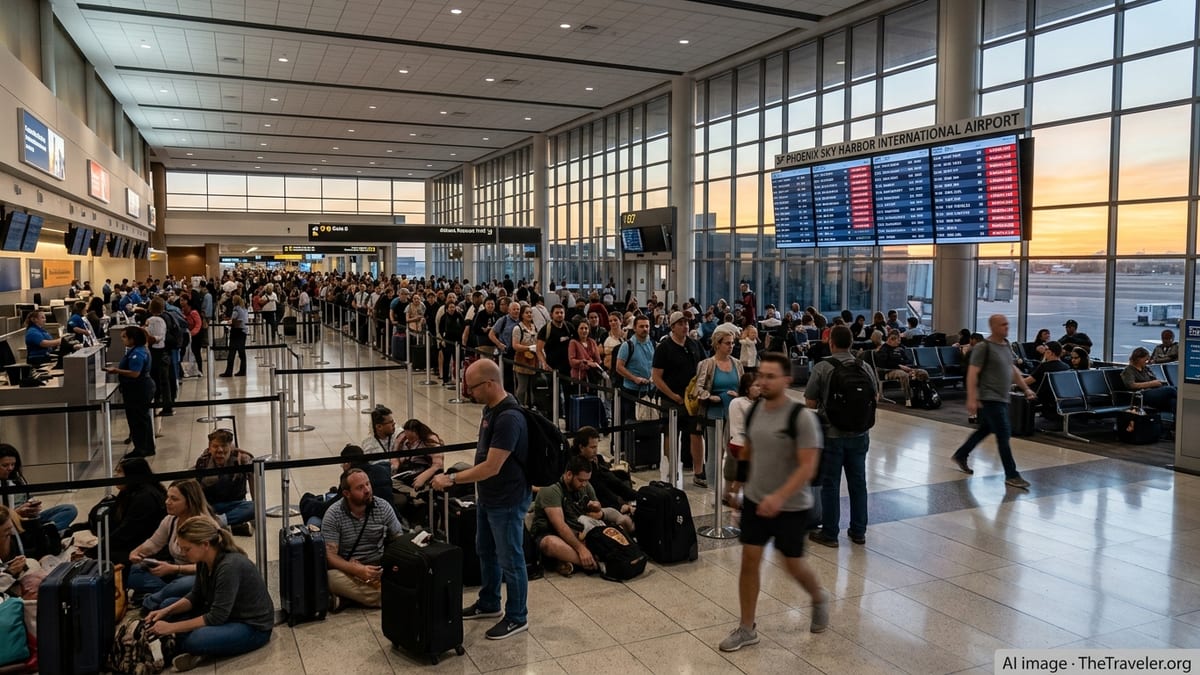
Inside Phoenix Sky Harbor’s terminals, travelers bound for New York, Miami and Los Angeles encountered long lines at ticket counters and customer service desks as cancellations accumulated. With multiple carriers reducing or suspending departures on the same city pairs, rebooking options quickly narrowed, particularly for those needing same-day or next-day travel.
Publicly available airport information and traveler reports describe scenes of crowded concourses, with departure screens cycling through red "cancelled" notices and gate agents redirecting passengers to centralized service points. Some travelers were reportedly offered routings via secondary hubs in the Midwest or Texas, only to encounter rolling delays further along their journeys as the weather system shifted eastward.
Hotel availability near the airport also came under pressure, as airlines and travelers independently sought overnight accommodation when connections were no longer viable. Higher-than-usual demand for rideshare and ground transportation into central Phoenix and nearby suburbs added another layer of congestion during peak cancellation periods.
For international passengers connecting through New York, Miami or Los Angeles, missed long-haul departures raised concerns about visa constraints, onward rail and ferry connections, and prepaid tours. Travel advisers monitoring the situation have urged affected passengers to keep digital copies of all updated itineraries and receipts, as documentation may be required later for any claims submitted to airlines or travel insurance providers.
Operational Strain on Airlines and Airport Systems
The disruption at Phoenix also highlighted how quickly airline and airport systems can come under strain when multiple major hubs are affected simultaneously. Cancellations on long-haul domestic routes to New York and Los Angeles tie up large aircraft types that are central to carrier scheduling, while crew duty limits constrain how flexibly staff can be moved to cover revised rotations.
Operational updates published by several airlines in recent days describe a mix of factors behind the wider national disruption, including weather, air traffic control constraints and earlier maintenance-related delays that left limited slack in the system. Once New York or South Florida hubs reached saturation, Phoenix-originating flights to those destinations became prime candidates for early cancellation, as carriers sought to stabilize schedules closer to core bases.
Airport-side services also felt the impact. Baggage systems faced surges of unaccompanied luggage when travelers rebooked on alternative routings, while catering and fueling operations adjusted to sudden shifts in aircraft gate assignments. Ground handling teams had to reposition equipment and staff to accommodate aircraft returning to gates after aborted departures or extended ground stops.
Despite the challenges, publicly accessible airport performance dashboards suggested that some shorter regional and intra-Western routes from Phoenix continued to operate, providing limited relief for travelers willing to connect through secondary hubs. However, these options often involved longer travel times and increased exposure to further weather-related disruptions in other regions.
What Travelers Through Phoenix Should Do Next
With conditions and schedules still subject to change, travel planners recommend that anyone transiting Phoenix in the coming days build extra time into itineraries, particularly when connecting to or from New York, Miami or Los Angeles. Same-day cross-country connections may be riskier than usual while airlines work through backlogs of displaced passengers.
Passengers are being encouraged, through airline and airport advisories, to monitor their flight status frequently via official mobile apps and departure boards rather than relying solely on early-morning confirmations. In recent episodes of disruption, large numbers of flights have shifted from on time to cancelled within a few hours of departure as updated weather and airspace information reached operations centers.
Those with flexible plans may find it advantageous to route through alternative hubs less exposed to the current weather pattern, even if it requires an extra stop. Travelers with fixed commitments, such as cruises departing from Miami or international flights from New York and Los Angeles, may wish to consider arriving at the coastal gateway a day earlier than originally planned.
While the latest wave of cancellations underscores the vulnerability of long-haul domestic routes to extreme and fast-changing conditions, it has also reinforced the importance of contingency planning for travelers using Phoenix as a launching point to the nation’s busiest coastal airports. As weather systems continue to move across the country, the stability of these high-demand corridors is likely to remain a critical factor in U.S. air travel reliability.