

More news on this day
Travelers moving through Pittsburgh International Airport on March 26 faced mounting disruption as regional carriers Republic and Endeavor Air temporarily suspended a combined 10 flights, triggering cascading delays on routes linking Pittsburgh with major cities including New York, Austin, Nashville, Charlotte and Washington.
Get the latest news straight to your inbox!
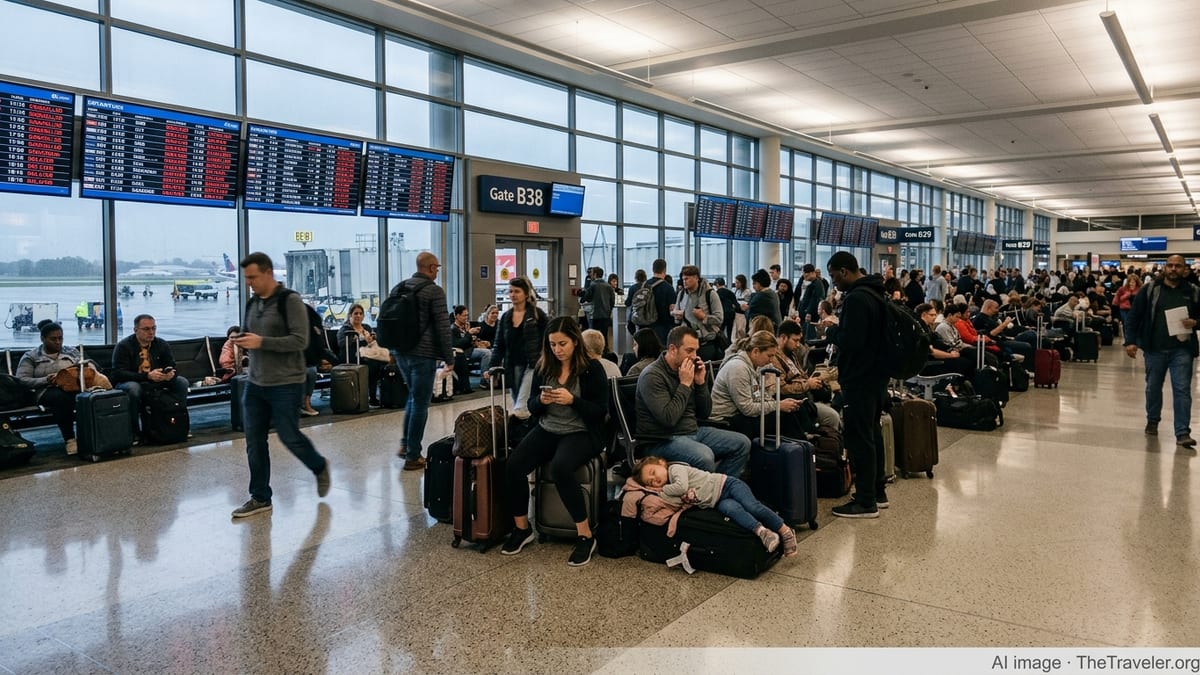
Regional Cancellations Snarl a Key Mid‑Atlantic Hub
Public flight-tracking boards and airport status dashboards on Thursday showed a cluster of cancellations attributed to Republic-operated and Endeavor-operated services, both of which fly under major airline brands as regional affiliates. The suspended flights included morning and afternoon departures as well as inbound services, sharply reducing frequency on several high-demand business and leisure routes.
The affected schedule centered on short and medium haul connections, a role Pittsburgh International Airport has regained in recent years as carriers rebuilt networks after the pandemic. With multiple Republic and Endeavor flights removed from the timetable, remaining services to cities such as New York, Washington and Charlotte quickly filled, leaving many passengers with limited same-day options.
Disruption at a regional level can ripple widely because Republic and Endeavor operate flights on behalf of larger network airlines. When several regional legs are canceled at once, travelers may find that rebooking requires rerouting through other hubs in the Northeast or Midwest, extending total journey times by many hours or pushing trips into the following day.
By midday, publicly available data indicated that knock-on delays were affecting both departing and arriving flights at Pittsburgh, as ground operations and airline teams worked through aircraft and crew rotations that had been thrown off by the suspensions.
Major City Links Hit: New York, Austin, Nashville, Charlotte and Washington
The suspended flights had an outsized impact because they linked Pittsburgh with some of the country’s most in-demand urban destinations. Routes touching the New York area, Washington, and Charlotte are heavily used by corporate travelers and government-related traffic, while Austin and Nashville have become prominent tech and entertainment centers with growing visitor volumes.
On the East Coast, the loss of several frequencies to New York and Washington limited same-day connectivity to international services and onward domestic links. Travelers connecting via New York area airports and Washington-area hubs reported on social platforms that missed connections and rebookings were common, with some itineraries split across multiple carriers or shifted to late-night departures.
Farther afield, disruption on Pittsburgh’s link to Austin raised concerns for travelers connecting to the rapidly expanding Central Texas region, which has seen notable increases in nonstop offerings and passenger volumes. With at least one Austin-bound flight removed from the schedule, passengers faced longer itineraries via other connecting hubs or were offered itinerary changes to alternative days.
In the Southeast, routes to Nashville and Charlotte experienced both outright cancellations and significant delays. These cities function as important hubs and focus cities for several U.S. airlines, so any gap in regional feed from Pittsburgh can reduce onward options to secondary markets in the region, compounding frustration for travelers with complex, multi-leg journeys.
Delays Layered onto a Month of Weather and Systems Strain
The latest disruptions arrived in the wake of a turbulent March for U.S. aviation. A powerful mid-March winter storm and related severe weather outbreaks had already led to thousands of cancellations and delays across the country, putting additional strain on airline crews, aircraft rotations and airport infrastructure throughout the network.
In recent days, travelers have also reported localized technology and network issues at several airports, including Pittsburgh, where an apparent computer or network outage temporarily slowed operations and check-in processes. Although that outage was reported resolved, the cumulative effect of weather, infrastructure glitches and staffing pressures has left little margin for error when new problems emerge.
Regional carriers such as Republic and Endeavor operate dense schedules with tight aircraft utilization, meaning that any disruption can be challenging to absorb. When multiple flights in a single city are taken out of service in quick succession, the result can be acute, localized chaos as passengers, bags and crews all need to be rerouted in real time.
Travelers caught in Thursday’s disruption described, through public posts and messages on social platforms, long lines at customer service desks, crowded gate areas and uncertainty about when updated departure times would stabilize. Some opted to abandon air travel plans altogether in favor of rail or car journeys to destinations within a day’s drive of Pittsburgh.
What Travelers Can Expect at Pittsburgh in the Short Term
With 10 regional flights removed from the day’s schedule and additional services delayed, passengers passing through Pittsburgh in the short term can expect fuller flights, tighter seat availability and a higher likelihood of missed connections, especially for those traveling onward from major hubs. Same-day rebooking options may be limited on popular routes where remaining flights are already near capacity.
Publicly available industry guidance suggests that travelers facing cancellations or significant delays should monitor their airline’s app or website closely, as many rebookings are processed digitally before gate agents or call centers become available. Passengers are also advised to build in more time at the airport for check-in and security, particularly at peak early-morning and late-afternoon departure waves.
For those yet to begin their journeys, some travel planners recommend evaluating alternative routings that use different hubs less affected by regional carrier cuts, even if that adds a stop or shifts a departure by several hours. In other cases, especially for trips to cities such as Washington, New York or Nashville, ground transportation may be a viable back-up for travelers who cannot afford the risk of a protracted delay.
Operational data and historical performance metrics indicate that both Republic and Endeavor generally run relatively high completion factors compared with some regional peers, which may offer some reassurance that Thursday’s disruption reflects an acute operational challenge rather than a long-term pattern. Nonetheless, for passengers at Pittsburgh, the immediate experience is one of crowded terminals, changing departure boards and uncertain arrival times.
Broader Questions About Regional Connectivity and Resilience
The turbulence at Pittsburgh underscores broader concerns about the resilience of regional air service in the United States. As major airlines continue to adjust fleets and networks, a growing share of connectivity between mid-sized cities depends on regional operators flying under partner brands, often with thin buffers for equipment or crew shortfalls.
Industry data released over the past year has shown that regional carriers can face higher cancellation percentages than their mainline counterparts, in part because smaller aircraft fleets and tight staffing make it harder to recover from irregular operations. When storms, technology outages or air traffic control constraints occur, regional routes are frequently among the first to be trimmed or consolidated.
For airports such as Pittsburgh, which serve as important spokes in national networks rather than large-scale hubs in their own right, this dynamic can leave local travelers vulnerable. A cluster of cancellations in a single morning can substantially reduce connectivity for an entire day, particularly to critical cities like New York, Charlotte, Washington and fast-growing tech markets such as Austin and Nashville.
As airlines and airports review the day’s events, attention is likely to focus on how quickly normal schedules can be restored and what measures might bolster resilience ahead of the busy spring and summer travel seasons. For now, travelers at Pittsburgh International Airport are navigating another day of uncertainty, watching departure boards and hoping that the network stabilizes before their next planned trip.