

More news on this day
Days of mounting disruption at São Paulo’s Guarulhos International Airport are rippling across South America, as a mix of air traffic control failures and a high-profile emergency landing snarls one of the region’s busiest hubs.
Get the latest news straight to your inbox!
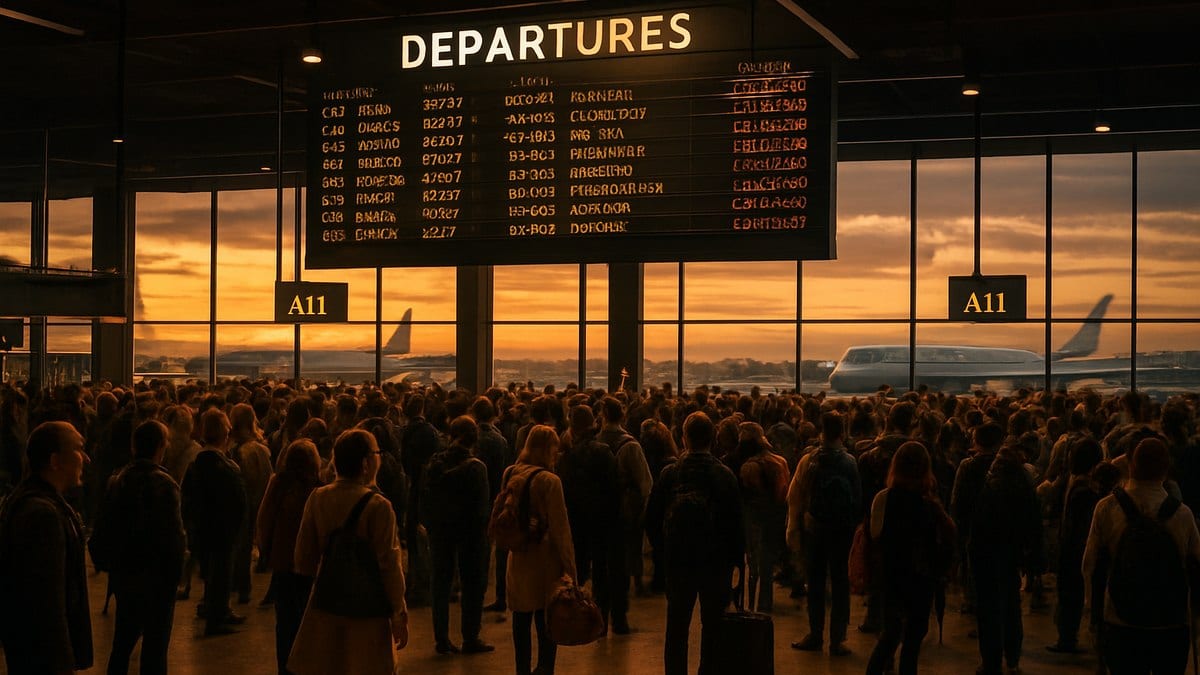
Control Center Fault Triggers Ground Stop at Brazil’s Busiest Hub
Publicly available aviation reports indicate that a technical breakdown at the São Paulo Area Control Centre on April 9 led to a sweeping temporary suspension of air traffic over the metropolitan region. The interruption affected Guarulhos International Airport, the main international gateway, and nearby Congonhas Airport, a key domestic hub, forcing dozens of aircraft to halt departures and divert arrivals while systems were brought back online.
Data compiled by flight-tracking services and summarized in specialist industry coverage show that the outage lasted a little over an hour but pushed Guarulhos off its tightly choreographed schedule for the rest of the day. As morning bank departures missed their slots, aircraft and crews found themselves out of position for onward journeys, a familiar pattern in highly utilized short-haul networks.
Operational analyses published since the fault highlight that Guarulhos sits at the center of Brazil’s densest air corridor, linking major business cities such as Rio de Janeiro, Belo Horizonte and Brasília with long haul connections to North America and Europe. When that corridor slows, subsequent flights have limited slack to recover, and airports across the country begin to accumulate rolling delays.
Travel-focused outlets tracking the fallout on April 10 and April 11 describe hundreds of late or canceled services nationwide, with São Paulo repeatedly listed among the top contributors to disruption. Brazil’s three largest carriers, LATAM, Gol and Azul, all feature heavily in the lists of affected airlines, underscoring the centrality of Guarulhos to domestic and regional connectivity.
Engine Incident Adds Pressure to an Already Strained Operation
The disruption has been compounded by a dramatic engine failure involving a Delta Air Lines Airbus A330 operating Flight 104 from São Paulo to Atlanta on the night of March 29. According to news coverage and passenger accounts, the jet suffered a serious problem with its left engine shortly after takeoff and returned safely to Guarulhos for an emergency landing after circling to burn fuel.
The episode, widely shared on social media and international news sites, prompted a temporary pause in departures while emergency services cleared the runway and airport operations reassessed the situation. Although the incident took place days before the April 9 control center fault, its operational and psychological aftershocks appear to have lingered into early April, with some travelers reporting heightened anxiety around long haul night departures from the airport.
Public information from airline statements suggests that the aircraft involved remained out of service for inspection and maintenance, removing at least one widebody from regular rotation at a time when long haul capacity remains tight. Analysts point out that when a single large aircraft is grounded on a transcontinental route, replacement is rarely immediate, and subsequent rotations often need to be rescheduled or consolidated.
Combined with the later air traffic control failure, the result has been a stop start pattern at Guarulhos in which brief periods of normality are followed by renewed congestion as banks of delayed aircraft try to depart within compressed time windows.
Cascading Delays Across Brazil and Neighboring Countries
Disruption data from April 10 and 11 published by travel-industry monitoring sites show Brazil leading regional statistics for delays and cancellations, with Guarulhos frequently cited alongside Brasília, Rio de Janeiro and Belo Horizonte. One widely circulated tally for April 10 reported more than 800 delayed flights and over 200 cancellations across Brazilian airports, with LATAM emerging as the most affected airline and São Paulo among the hardest-hit cities.
Separate coverage focused on Rio de Janeiro, São Paulo and Florianópolis on April 11 described at least 227 delayed flights and dozens of cancellations in a single day, again affecting the country’s largest carriers. While not all of these disruptions are directly attributed to the Guarulhos control-center failure, the concentration of problems around São Paulo in the days following the outage suggests a lingering knock-on effect.
Conditions have not remained confined to Brazil. Reports from Colombia on April 10 detailed an unusual spike in delays and cancellations at Bogotá and Bucaramanga, with Avianca and LATAM among the impacted airlines. Commentators note that these carriers rely heavily on cross-border rotations that feed through Brazilian hubs, including Guarulhos, meaning a late inbound from São Paulo can easily cascade into missed connections in neighboring countries.
Regional schedule data compiled by airline and airport observers further show that several South American hubs, from Lima to Santiago, recorded elevated levels of late arrivals in the second week of April. Many of those late flights were tagged as originating from or routing through Brazilian cities, reinforcing the perception that turbulence at Guarulhos has helped destabilize punctuality across the broader South American network.
Travelers Face Long Queues, Missed Connections and Limited Options
Passenger accounts posted on forums and social media describe crowded departure halls and extended check in and security lines at Guarulhos in recent days, particularly during morning and late night peaks. Some travelers report being offered rebookings one or two days later when onward connections fell apart, especially on popular international routes where remaining seats were already heavily sold for the Southern Hemisphere autumn travel period.
Travel and consumer advocacy articles circulating in Brazilian media outline the main options available to affected passengers under existing regulations, including the right to assistance, refunds and rebooking when cancellations or severe delays occur. Commentators emphasize that exact entitlements can depend on whether the disruption is considered within the airline’s control, such as crew or fleet planning, or relates to external constraints like air traffic control outages.
In practice, however, the combination of a congested hub, tight aircraft utilization and limited spare capacity has left little room for quick fixes. Publicly accessible flight statistics indicate that airlines have resorted to consolidating some departures and adjusting schedules in the days after the April 9 stoppage, moves that may help restore operational stability but can extend wait times for individual travelers.
For those currently planning trips through São Paulo and other Brazilian hubs, aviation tracking tools and travel advisories are recommending early airport arrival and close monitoring of flight status on the day of departure. With Guarulhos likely to remain under pressure as the country moves toward the mid year peak and prepares for major events later in 2026, regular flyers across South America may need to build extra buffers into their itineraries for some time to come.