

More news on this day
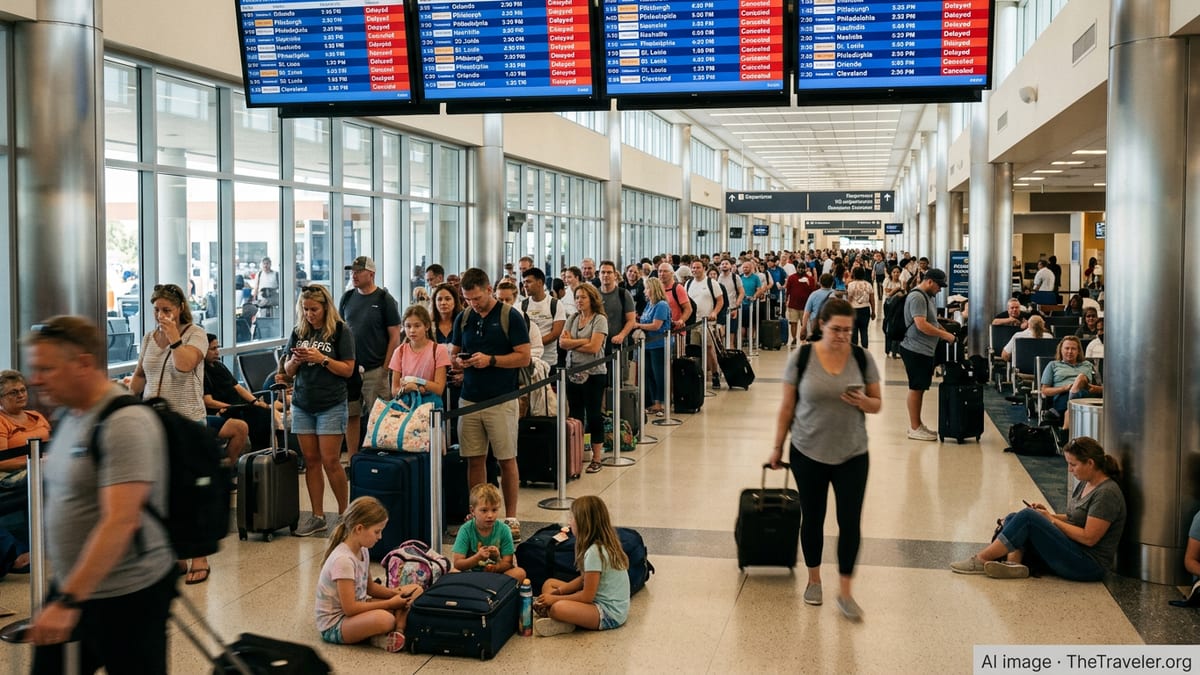
Spring travel plans unraveled for hundreds of passengers on Monday as Southwest Florida International Airport recorded more than 160 new flight delays and over 100 cancellations, sending disruption ripples through key domestic routes linking Fort Myers with Orlando, Pittsburgh, Philadelphia, Nashville, St. Louis, Cleveland, and other major cities.
Get the latest news straight to your inbox!
Major Operational Disruption at a Peak Travel Moment
The latest wave of disruption at Southwest Florida International Airport comes at the height of a busy spring travel period, when flights in and out of Florida are heavily booked with vacationers, visiting families, and seasonal residents. Publicly available tracking data for March 16 indicates that roughly 164 newly reported delays and 112 fresh cancellations affected departures and arrivals, abruptly upending itineraries for travelers connecting through Fort Myers.
The concentrated impact on routes linking Fort Myers with Orlando, Pittsburgh, Philadelphia, Nashville, St. Louis, and Cleveland has proved especially challenging. Many of these city pairs are heavily used by leisure travelers and snowbirds, leaving limited spare capacity for same-day rebooking. With aircraft and crews already tightly scheduled, each cancellation at Southwest Florida International has triggered a cascading effect along the network, particularly on point-to-point routes into the Midwest and Northeast.
Airport advisories and airline schedule updates show that the disruption is not confined to a single carrier or route. Instead, it reflects a broader operational strain affecting multiple flights serving Florida as a whole, where strong seasonal demand, lingering weather systems, and air traffic control constraints have combined to stretch the system close to its limits.
Weather Systems, Air Traffic Control Strain, and Network Knock-On Effects
The immediate causes behind the spike in delays and cancellations are multifaceted. Recent winter weather across parts of the Midwest and Northeast has repeatedly affected airports in Pittsburgh, Cleveland, Philadelphia, and St. Louis, where snow, low visibility, and deicing requirements have slowed operations. When those hubs and focus cities experience disruptions, tightly timed rotations struggle to stay on schedule, and aircraft slotted to operate into or out of Fort Myers often arrive late or not at all.
In parallel, reports emerging from travelers and industry observers highlight continuing pressure on air traffic control capacity in and around Florida airspace. Accounts shared on public forums describe metering programs that restrict the number of flights allowed to depart for or arrive in Florida during peak congestion or adverse weather. These flow-control measures can be implemented at short notice, leaving airlines to decide between accepting lengthy ground delays or preemptively canceling flights and attempting to consolidate passengers on later services.
The result is a volatile operating environment in which a localized thunderstorm near Orlando or a band of wintry precipitation near Cleveland can have outsized consequences for travelers many states away. With Fort Myers serving a diverse mix of domestic destinations, each delay or cancellation on a single leg can quickly ripple out across multiple city pairs, multiplying the total number of affected passengers.
Florida’s Seasonal Surge Magnifies Passenger Frustration
Florida’s airports have long featured prominently in on-time performance analyses, with several of the nation’s most delay-prone major hubs located in the state. During peak leisure periods such as spring break, that baseline vulnerability is magnified by surging demand as vacationers flock to Orlando’s theme parks, Gulf Coast beaches, and central Florida resorts. This March is no exception, with crowds filling terminals and load factors running high on routes to and from Fort Myers.
At Southwest Florida International, that seasonal surge leaves little slack in the system when disruption strikes. Heavily booked flights mean that rebooking options are limited, even when airlines add extra staff or open up additional inventory on later departures. Travelers aiming for Orlando connections, or onward journeys via cities such as Philadelphia or Nashville, often find that same-day alternatives are scarce and longer routings through secondary hubs are the only available options.
For passengers departing from or arriving into smaller markets such as Pittsburgh, St. Louis, or Cleveland, the stakes can be even higher. Many of these city pairs have a relatively small number of nonstop frequencies, particularly on seasonal or limited-service routes, so a single cancellation can effectively erase an entire day’s worth of direct options, forcing travelers into multi-stop itineraries or overnight stays.
Networks Under Scrutiny as Past Disruptions Linger in Memory
The latest turmoil at Southwest Florida International is unfolding against a backdrop of heightened public sensitivity to airline reliability. In recent years, travelers have witnessed several high-profile operational meltdowns, including mass cancellations driven by winter storms and holiday traffic surges. Analyses of federal data have highlighted Florida as a recurring pressure point, with Orlando and other major airports in the state frequently ranking among the most delay-affected in the country.
Industry commentators note that while airlines have made efforts to improve staffing, adjust schedules, and refine recovery playbooks since those earlier crises, structural challenges remain. High dependence on leisure travel, a concentration of flights in weather-sensitive regions, and continued air traffic control staffing constraints mean that even modest disruptions can snowball into widespread delays and cancellations, particularly at peak times.
In this context, the figures emerging from Fort Myers on March 16 reinforce concerns about the resilience of the domestic air travel system. Travelers encountering long hold times on customer service lines, crowded rebooking desks, and limited alternative flights are voicing familiar frustrations, underscoring how quickly confidence can erode when operational stress flares during already busy travel windows.
What Travelers Can Expect in the Coming Days
While the worst of the same-day disruption is typically concentrated within a single 24 to 48 hour window, the aftershocks often linger. When flights are canceled en masse, aircraft and crews can end up out of position for subsequent rotations, and some of the knock-on effects may still be visible in the days immediately following a major disruption. Schedules involving Orlando, Pittsburgh, Philadelphia, Nashville, St. Louis, and Cleveland are especially likely to see residual timing adjustments as operations at Southwest Florida International stabilize.
Publicly available guidance from airlines and airports continues to emphasize the importance of monitoring flight status frequently, particularly for early morning and late evening departures that are more vulnerable to downstream delays. With capacity already tight across many Florida routes during March, travelers are being encouraged by consumer advocates to build in extra buffer time for connections, consider flexible travel dates when possible, and remain prepared for last-minute gate or schedule changes.
For now, the scene at Southwest Florida International reflects many of the broader challenges facing U.S. air travel in 2026. A confluence of intense seasonal traffic, weather volatility, and system-wide operational constraints has combined to turn an ordinary spring Monday into a prolonged ordeal for hundreds of passengers, offering a stark reminder of how quickly the nation’s air transport network can shift from routine to strained.