

More news on this day
Passengers across Canada, the United States, Europe and the Middle East are facing a fresh wave of disruption at Toronto Pearson International Airport, where at least 15 flights have been cancelled and 145 delayed, affecting services operated by Air Canada, WestJet, American Airlines, Icelandair and several other global carriers.
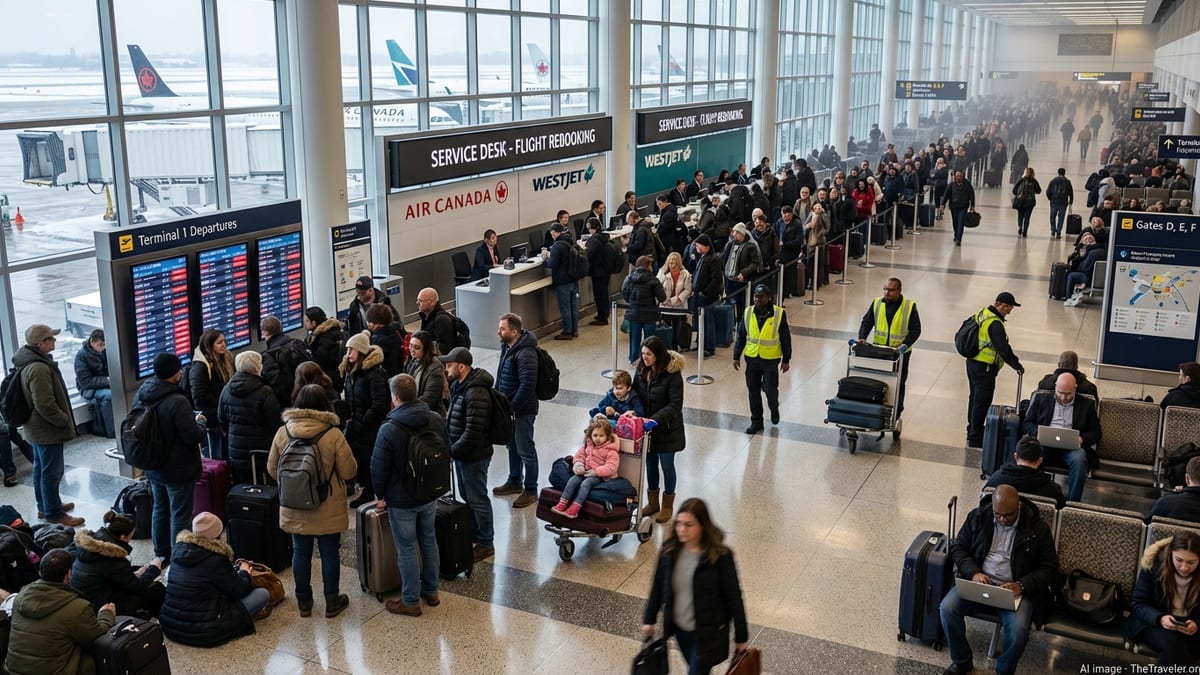
Major Hub Under Strain as Disruptions Mount
The latest operational turmoil at Toronto Pearson comes on the heels of a difficult winter for North American aviation, with severe weather and knock-on scheduling issues leaving airlines struggling to maintain reliable service. As of Thursday afternoon, flight boards at Canada’s busiest airport showed clusters of delayed departures and late-arriving inbound aircraft, underscoring the challenge of resetting tightly wound global networks.
For travelers, the numbers translate into missed connections, curtailed business trips and abruptly altered vacation plans. Departures bound for key Canadian cities such as Vancouver, Calgary, Montreal and Halifax, as well as major U.S. gateways including New York, Chicago and Dallas, faced rolling delays. Long-haul flights to European and Middle Eastern hubs were similarly affected, amplifying the ripple effect across time zones.
Airport staff reported unusually heavy crowds in both Terminals 1 and 3 as passengers attempted to rebook, seek compensation or rearrange ground transportation and accommodation. Many arrivals areas were lined with trolleys loaded with luggage, while at departure gates, queues formed at service counters as agents worked through complex re-routing requests.
Toronto Pearson, which regularly handles more than 1,000 flights per day at peak periods, has little spare capacity when irregular operations take hold. Even when only a portion of services are cancelled, the volume of late-running flights can strain everything from de-icing operations and gate availability to baggage handling and customs processing.
Air Canada and WestJet Lead Canadian Disruptions
Air Canada and WestJet, the two largest Canadian carriers at Toronto Pearson, accounted for a substantial share of the affected services. Short-haul routes to Ottawa, Montreal and Atlantic Canada saw schedule changes cascade throughout the day as crews and aircraft arrived late from other parts of the network. Medium-haul leisure routes to sun destinations, already running near capacity during the winter high season, were particularly vulnerable to disruption.
Industry analysts note that carriers are operating with tighter fleet utilization following a series of winter storms and lingering maintenance backlogs. That leaves limited margin to absorb further irregular operations, meaning that even modest disruption at a key hub can take days to unwind. In practical terms, a delayed early-morning departure from Toronto can jeopardize same-aircraft rotations later in the day to U.S. or Caribbean destinations, triggering a chain of subsequent delays.
WestJet’s Toronto operations, which link the country’s largest city to western Canadian gateways such as Calgary and Edmonton as well as seasonal transborder and sun routes, were also hit by the latest wave of disruption. Passengers reported last-minute gate changes and extended waits on board as aircraft queued for departure slots and de-icing clearance.
Both carriers activated their irregular-operations playbooks, encouraging customers to use mobile apps and online tools to rebook, monitor live flight status and change itineraries without service fees where eligible. However, high call-centre volumes and limited seat availability on alternative departures meant many travelers still had to navigate long queues in the terminal.
International Carriers Feel Knock-On Effects
The turmoil at Toronto Pearson extended well beyond Canada’s borders, as international partners found their schedules squeezed by delays on both inbound and outbound legs. American Airlines, which operates multiple daily services between Toronto and its hubs in cities such as Charlotte, Philadelphia and Dallas, saw departure times pushed back as aircraft and crews arrived late from weather-affected regions of the United States.
For European carriers including Icelandair, schedule disruptions at Toronto can quickly reverberate through their tightly timed transatlantic operations. Flights connecting via Reykjavik to destinations across Scandinavia, continental Europe and the United Kingdom rely on precise arrival windows to feed onward departures. When an inbound Toronto flight is delayed, passengers risk missing those onward connections, forcing airlines to arrange hotel stays, meal vouchers and rebookings on later services.
Routes linking Toronto to Middle Eastern hubs were similarly impacted. With many of these long-haul flights departing late in the evening and arriving the following day, even modest delays can disrupt work and family schedules for travelers across multiple time zones. Airlines were working to minimize missed onward connections to destinations in the Gulf, North Africa and South Asia by reserving seats on subsequent flights and, where possible, holding some departures to accommodate late-arriving transfer passengers.
Airport observers noted that global carriers are still operating under tight crew-availability constraints after a difficult series of winter storms across North America and the North Atlantic. Mandatory crew rest requirements can force last-minute substitutions or overnight delays when schedules slip, further complicating recovery efforts.
Passengers Confront Long Queues and Limited Options
Inside the terminal, the most visible impact of the disruption was borne by passengers facing long waits and uncertain timelines. Check-in halls grew increasingly congested as travelers arrived to find their flights delayed or cancelled, sometimes with limited advance notice. Families bound for school holidays and business travelers on tight schedules were among those scrambling to secure alternatives.
At many gates, airline staff used public address announcements to manage expectations, advising that boarding would begin once final crew members arrived or once de-icing positions became available. Some passengers reported spending several hours in the gate area as departure estimates were repeatedly adjusted in small increments.
Hotel capacity near the airport tightened quickly as airlines issued accommodation vouchers for those whose connections had been severed or whose flights had been re-scheduled for the following day. Ride-share pickup zones and taxi queues were similarly busy, as travelers opted to abandon their original plans and return home or to downtown hotels to wait out the disruption.
Consumer advocates urged passengers to carefully review their rights under Canadian air passenger protection regulations, which set out compensation and care standards for delays and cancellations that are within an airline’s control. However, where disruptions are linked to severe weather or air traffic control restrictions, entitlements can be more limited, underscoring the importance of travel insurance and flexible booking policies during the winter season.
Airlines and Airport Work to Stabilize Operations
By late afternoon, operational teams at Toronto Pearson were focused on restoring predictability to the schedule, prioritizing long-haul departures and key domestic trunk routes. Ground crews worked to clear backlogs in baggage handling and de-icing, while air traffic controllers coordinated departure flows to ease congestion on taxiways and in the terminal airspace.
Airlines adjusted aircraft assignments and swapped equipment where possible, aiming to consolidate lightly booked flights and free up capacity on heavily affected routes. Some carriers introduced temporary embargoes on same-day standby travel in order to preserve seats for disrupted customers, while also tightening minimum connection times for new bookings through Toronto.
Airport officials emphasized that passengers with upcoming departures should arrive early, verify their flight status repeatedly before leaving home, and build additional buffer time into connections through the hub. They also highlighted the value of enrolling in trusted traveler programs and using digital boarding passes to reduce time spent in queues at security and check-in.
With winter still far from over in Canada and across much of the Northern Hemisphere, both airlines and travelers are bracing for the possibility of further weather-related disruption in the weeks ahead. For now, the focus at Toronto Pearson is on clearing the immediate backlog of delays and cancellations so that, by the weekend, one of the world’s busiest international gateways can return to something closer to normal operations.