

More news on this day
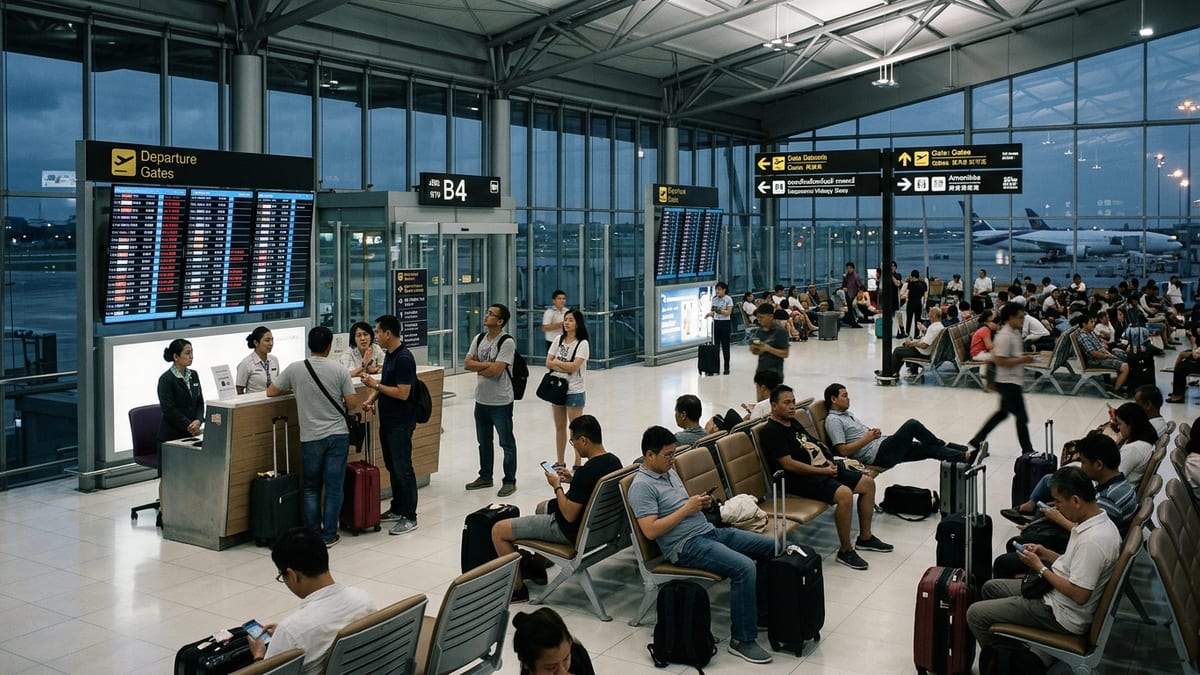
Flight disruption is intensifying across China’s busiest aviation hubs, with thousands of passengers stranded as storms, rerouted traffic and a spike in demand combine to snarl operations at major airports.
Get the latest news straight to your inbox!
Severe Weather Triggers Wave of Cancellations
Recent days have seen a sharp rise in flight cancellations and delays across key Chinese hubs including Guangzhou, Shenzhen, Shanghai and Beijing, as strong storms and poor visibility sweep large parts of the country. Publicly available data and industry summaries indicate that severe weather systems over southern and eastern China have forced airlines to trim schedules, hold aircraft on the ground and divert flights between congested hubs.
One compiled update on March 31 reported more than 500 newly cancelled flights and close to 8,000 delays across carriers such as China Eastern, China Southern, Hainan Airlines, Spring Airlines, Sichuan Airlines and low cost operator 9 Air. Guangzhou Baiyun and Shenzhen Baoan, two of the hardest hit airports, have experienced repeated ground stops and reduced arrival rates as thunderstorms and heavy rain passed through the Pearl River Delta.
Shanghai Pudong and Beijing Capital have also reported mounting disruption, with departure boards showing clusters of multi hour delays on trunk routes linking the country’s main economic centers. The problems follow earlier operational stress in mid March, when separate tallies suggested hundreds of flights were disrupted on a single day across Shanghai, Nanjing, Xi’an and other inland cities.
Weather related disruption is common during China’s spring transition, but the scale and geographic spread of the current pattern are putting unusual strain on airlines and airport infrastructure, particularly at the largest international gateways.
Middle East Airspace Turmoil Ripples Into Chinese Hubs
While local storms have been the immediate trigger, broader network pressures are also feeding into the current wave of disruption. According to aviation analytics cited in Chinese and international coverage, the closure and restriction of key Middle Eastern airspace corridors since late February have led to thousands of flight cancellations worldwide on routes linking Asia, Europe and the Gulf.
Chinese carriers are heavily exposed to this long haul network. Major airlines including Air China, China Eastern and China Southern have issued flexible rebooking and refund options for itineraries touching Gulf hubs such as Dubai, Abu Dhabi and Riyadh, and have adjusted schedules to avoid affected corridors. Those changes are pushing additional traffic and aircraft rotations through mainland hubs, intensifying congestion at Beijing Capital, Beijing Daxing, Shanghai Pudong and Guangzhou Baiyun.
Sector analysts note that long haul disruptions rarely remain isolated. When Europe and Middle East services are retimed or reduced, widebody aircraft and crews are repositioned, and domestic connections that feed those long haul flights are re banked. This can create rolling knock on effects for purely domestic travelers, as flight timings are compressed into narrower operating windows and recovery margins shrink when weather or air traffic control constraints occur.
The result, visible on recent tracking snapshots, is a patchwork of extended delays across both international and domestic routes, with some passengers facing missed connections and overnight stays at hub airports even when their journeys do not leave Chinese territory.
Strain at China’s Mega Hubs as Demand Surges
The disruption is colliding with a period of resurgent demand. Official forecasts ahead of the Qingming Festival holiday from April 4 to 6 point to a strong rebound in cross border travel, with daily border crossings expected to exceed 2.3 million, up more than 10 percent year on year. Traffic through major international airports in Shanghai, Guangzhou, Beijing, Chengdu and Shenzhen is projected to edge higher over the holiday period.
Shanghai Pudong in particular is expected to handle close to 95,000 inbound and outbound passenger movements per day during the short break, placing it among the world’s busiest hubs by international throughput. Guangzhou Baiyun has also been expanding capacity, opening an additional terminal and runway in recent years, but remains vulnerable when storm systems stall over southern China.
Published analysis of on time performance trends shows that the combination of rapid capacity restoration after the pandemic, complex airspace constraints and continued infrastructure works has kept Chinese hubs under pressure throughout the past year. The latest weather disruption, layered on top of holiday demand and global rerouting, is exposing how little slack exists in the system during peak periods.
Travel industry observers suggest that, while overall seat capacity has recovered or even exceeded pre pandemic levels on many domestic corridors, resilience has lagged in some areas such as crew availability, maintenance buffers and ground handling resources, leaving airlines with fewer options when a storm or airspace closure forces rapid changes to downline schedules.
Airlines and Travelers Scramble to Adapt
Carriers are now attempting to dig out from the backlog while managing expectations. According to published guidance, several Chinese airlines are prioritizing rebooking for passengers whose flights were cancelled outright or who missed onward connections because of long delays. Some have opened temporary fee waivers for date and routing changes on affected sectors, particularly on international itineraries involving the Middle East.
However, reports from travel forums and consumer sites describe long queues at service counters, busy call centers and limited availability on near term alternative flights from major hubs. In cities such as Beijing, Shanghai and Guangzhou, same day rebooking on popular routes has often proved difficult, pushing some passengers to accept rerouting via secondary airports or overnight stays before continuing their journeys.
Industry commentators caution that passengers transiting multiple Chinese hubs, or combining domestic and international legs, face a higher risk of misconnection in the current environment. Travelers are being advised by consumer advocates to build in longer connection windows where possible, keep a close watch on airline notifications and flight tracking tools, and have contingency plans for lodging and meals if plans unravel at short notice.
At the same time, airport operators are deploying additional staff and signage to manage crowds in departure halls, while ground transport providers near major hubs are reporting spikes in demand as stranded passengers seek last minute hotels or overland alternatives on busy intercity corridors.
Outlook for the Coming Weeks
Meteorological forecasts suggest that unsettled spring weather could persist over parts of southern and eastern China in the short term, raising the possibility of further intermittent disruption at Guangzhou, Shenzhen, Shanghai and neighboring airports. With the Qingming holiday about to begin and additional travel peaks expected later in April and during the May Day period, pressure on the system is unlikely to ease quickly.
Aviation data providers tracking Asia Pacific performance indicate that the broader region has recorded more than a thousand delays and dozens of cancellations per day on some recent dates, with Chinese hubs featuring prominently among the most affected airports. Ongoing adjustments to long haul schedules via the Middle East may continue to complicate planning for both airlines and passengers.
For now, the picture for travelers is one of heightened uncertainty. Those heading into or through China’s biggest hubs in the coming days are likely to encounter longer lines, more frequent schedule changes and a greater need for flexibility. As airlines work to stabilize their operations, the experience on the ground will offer an early test of how well the country’s rapidly growing aviation network can withstand overlapping shocks from weather, geopolitics and surging demand.