

More news on this day
A new pocket of disruption in the already turbulent April 2026 travel season has left 477 airline passengers delayed across four major U.S. hubs, underscoring how quickly spring storms, staffing strains and tightly timed schedules can snarl national air traffic flows.
Get the latest news straight to your inbox!
Four Hubs, One Day of Cascading Disruption
Publicly available tracking data and operational summaries for early April indicate that a cluster of delays affecting 477 travelers emerged across four large connecting airports, mirroring a broader pattern of instability that has defined this month’s flying conditions. While nationwide totals have run into the thousands of delayed flights on some days, this particular disruption highlights how even a relatively small slice of the schedule can translate into hundreds of affected passengers once missed connections and rolling knock-on effects are taken into account.
Recent coverage of April’s aviation performance points to a familiar lineup of heavily used hubs absorbing the greatest strain, including Chicago O’Hare, Atlanta, key New York–area airports and major Sun Belt gateways. On days when large storm systems or visibility constraints slow arrivals into any one of these fields, ground delay programs and air traffic management initiatives often ripple outward to other hubs, leaving pockets of travelers stranded far from the original weather event.
In the instance involving 477 delayed travelers, the impact was concentrated across four major hubs that collectively handle hundreds of thousands of passengers on a typical April day. Even minor schedule adjustments, such as holding inbound flights for connecting passengers or spacing out arrivals during low-visibility periods, contributed to creeping delays that lengthened turn times and pushed departure banks behind schedule.
For many affected passengers, the result was missed onward connections, unplanned overnight stays and last-minute changes to itineraries. While the overall scale of this particular delay cluster is modest compared with larger national disruption days reported this month, it illustrates how individual travelers experience the broader fragility of the network as hours lost in terminals and uncertainty at the gate.
Storm Systems, Weather Programs and a Fragile Network
April 2026 has already produced several days of acute weather-related stress for U.S. aviation, with travel outlets and data services documenting widespread thunderstorms, low clouds and shifting wind patterns across multiple regions. Reports on federal airspace management bulletins describe how low ceilings and reduced visibility in the Northeast and Great Lakes regions have repeatedly triggered ground delay programs and required increased separation between arriving aircraft.
Once those measures are in place, capacity at major hubs drops, and airlines must decide whether to delay or cancel flights, reroute aircraft or elongate connection windows. On days dominated by delays rather than cancellations, the number of individual travelers affected can be significant, as aircraft and crews arrive late into banks that were built around rapid turnarounds and tight onward connections.
Travel and aviation publications analyzing the first half of April note that this dynamic has surfaced repeatedly. On some days, more than 4,000 flights nationwide have operated behind schedule, with operational data from hubs like Miami and Chicago showing large clusters of late departures tied to local storms and congestion. Against that backdrop, the 477 travelers delayed across four hubs represent one of many smaller but still disruptive episodes embedded within a volatile month.
Observers of the system point out that these patterns are not entirely new, but the combination of strong spring demand, ongoing staffing constraints in parts of the air traffic control system and tight airline scheduling has left less margin for error. When a storm front or visibility issue appears, the network has fewer spare aircraft and crews available to absorb the shock, allowing a localized bottleneck to morph quickly into a multi-hub problem.
Airlines Juggle Crews, Aircraft and Passenger Care
Operational breakdowns this spring have often involved a complex interplay of factors beyond the immediate weather picture. Industry analyses focusing on recent United and American disruptions describe how crew duty-time limits, aircraft maintenance requirements and gate availability can turn a short meteorological slowdown into a day-long operational challenge.
When the four hubs tied to the 477 delayed travelers came under pressure, airlines working through those airports had to balance the need to reposition aircraft for the next day’s schedule against the immediate demands of stranded passengers. In some cases, carriers prioritized long-haul departures or bank structures that would affect the largest number of onward connections, leaving shorter domestic segments to absorb longer waits.
Publicly available commentary from passenger rights advocates notes that, under U.S. rules, compensation for weather-related delays is limited, placing the emphasis instead on rebooking, meal vouchers at an airline’s discretion and overnight accommodation when disruption stretches late into the evening. For travelers, the difference between a delay classified as weather-related and one linked to internal airline issues can determine what assistance is offered, even when the real-world experience of sitting in a crowded terminal feels similar.
Airline performance trackers report that throughout early April, carriers have continued to run dense schedules through the same set of busy hubs, leaving little slack when storms move in or when air traffic control staffing constraints require programs that reduce runway throughput. The cluster of 477 delayed passengers, while numerically small in comparison with national totals, reflects the cumulative impact of these structural choices on individual journeys.
Travelers Face Long Queues and Limited Alternatives
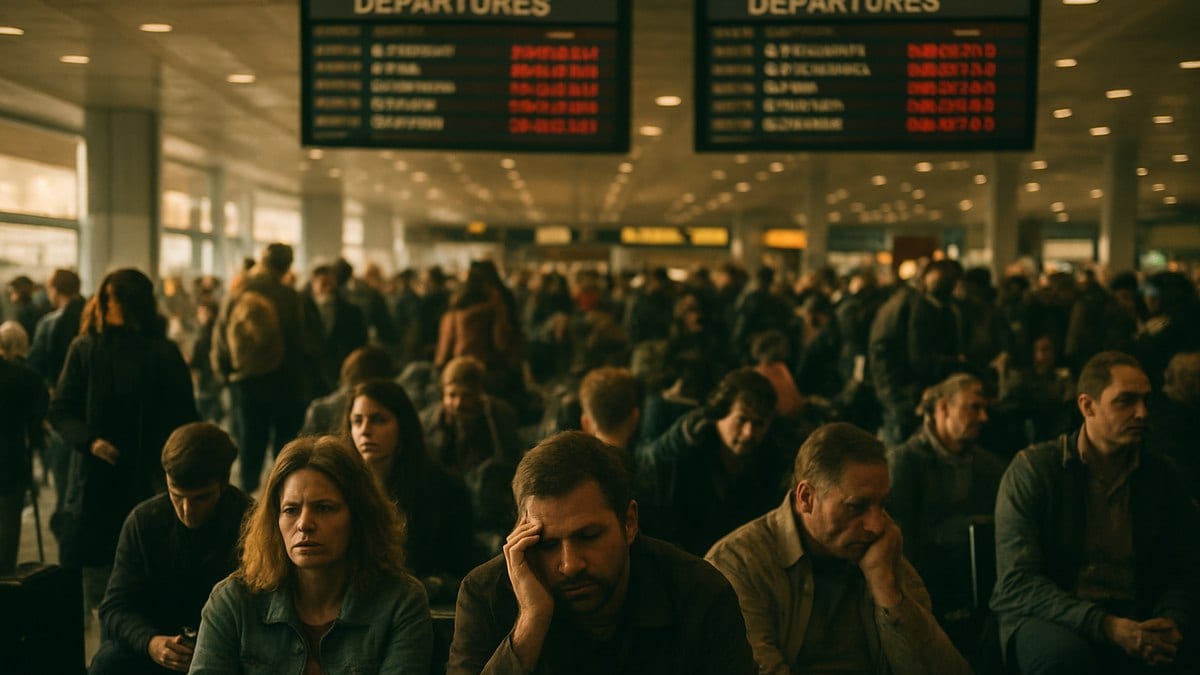
Accounts compiled from April’s disruptions depict familiar scenes for anyone traveling during a major delay event: long lines at check-in and service counters, crowded gate areas and departure boards crowded with flights pushed back by 30, 60 or 90 minutes. For the 477 travelers caught in this latest episode, options were often constrained by already-full alternative flights and limited spare seats on later departures.
Coverage from travel industry outlets notes that certain hubs have become particularly challenging for rebooking during peak April periods, especially when multiple carriers experience delays at the same time. With hotel inventory near airports tightening quickly on heavy disruption days, some travelers have been left weighing whether to pay out of pocket for a room, accept a late-night or early-morning departure, or reroute through secondary hubs that may themselves be facing pressure.
Consumer advocates emphasize that travelers can improve their odds of weathering such episodes by building in longer connection times, favoring earlier departures in the day and keeping essential items in carry-on bags rather than checked luggage. The experiences of those 477 delayed passengers underscore how a missed connection late in the evening can easily translate into 12 to 24 hours of additional travel time when there are limited remaining flights to a final destination.
Even when disruption is limited to a small share of the day’s schedule, the concentration of affected travelers at four major hubs can create crowding and stress that outstrips the raw numbers. As staffing and infrastructure struggle to keep pace with peak demand, each new delay cluster adds to the perception among many passengers that air travel has become more unpredictable and more exhausting.
Persistent Spring Turbulence for U.S. Aviation
April 2026 is shaping up as a stress test for the U.S. aviation system, with the incident involving 477 delayed travelers fitting into a broader tapestry of recurring bottlenecks. Reports tracking national performance show that several consecutive days have seen elevated delay counts, linked variously to storms in the Midwest, low cloud across the Northeast, thunderstorms in Florida and congestion at major hubs that serve as the backbone of domestic connectivity.
Policy analysts and travel commentators observing this pattern argue that it highlights systemic vulnerabilities that predate this spring. Government and industry reports released over recent months have flagged capacity limits at key hubs, air traffic control staffing shortfalls in certain regions and the increasing strain of operating dense schedules through airports that are already running near their practical limits during peak periods.
For travelers planning trips through the rest of April, the experience of those 477 delayed passengers serves as a reminder that even on days without headline-grabbing nationwide chaos, localized disruptions can still derail carefully timed itineraries. With more holiday periods and busy summer travel still ahead, questions remain about how much resilience the network can offer if current patterns of demand, staffing and weather volatility persist.
While there is little indication that the spring’s turbulence will ease immediately, publicly available information suggests that airlines and airports are continuing to refine contingency plans, adjust schedules and expand communication channels with passengers. For now, though, those caught in the latest wave of delays across four major hubs are left tallying lost hours and rearranged plans, emblematic of a travel season where even routine journeys feel increasingly uncertain.