

More news on this day
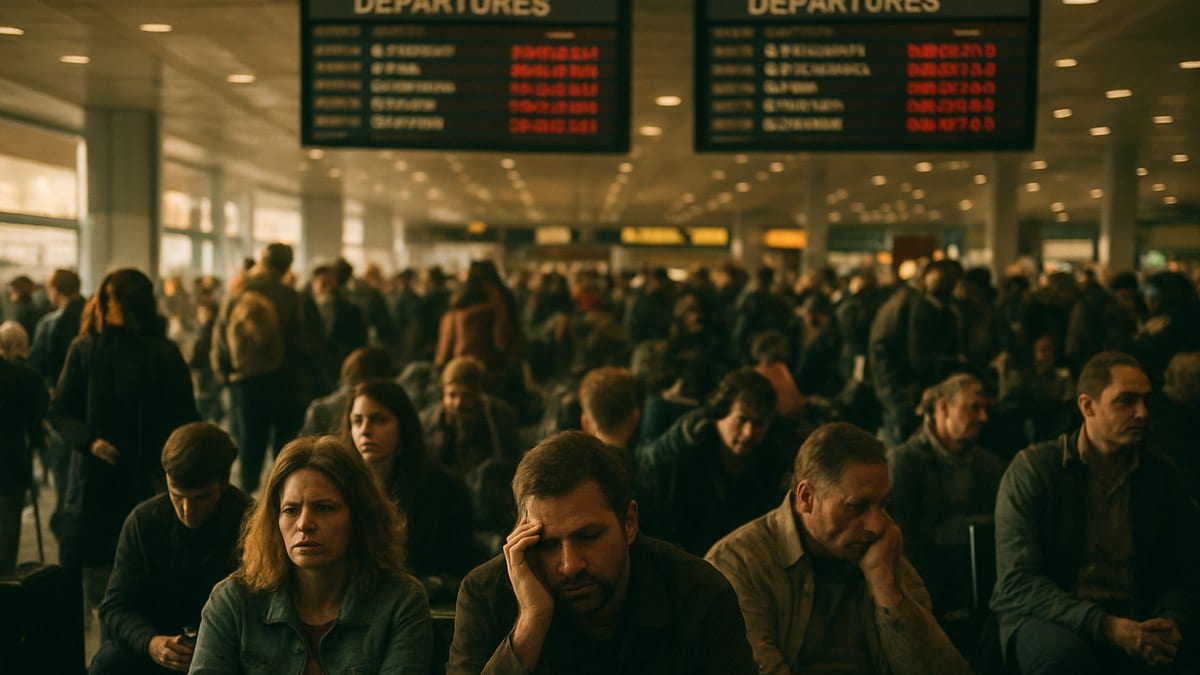
Hundreds of passengers faced prolonged waits across the U.S. aviation network in early April 2026, as a cluster of operational disruptions left 477 travelers delayed at four of the country’s busiest hubs during an already strained spring travel period.
Get the latest news straight to your inbox!
Spring Surge Meets Strained Airline Operations
The disruption affecting 477 travelers unfolded against the backdrop of a broader spike in U.S. air travel demand this spring. Industry forecasts cited in recent coverage projected record passenger volumes for March and April 2026, with airlines adding flights and deploying larger aircraft to capture booming leisure and business demand.
At the same time, multiple analyses of federal performance data show that disruption has increasingly become a feature of U.S. aviation. Passenger rights organizations report that nearly one in four travelers experienced some form of delay or cancellation in the most recent full year of available records, underscoring how fragile schedules can become when weather or staffing problems emerge.
In early April, that fragility was evident as the four impacted hubs, each a major connecting point in at least one airline’s network, struggled to recover from a mix of localized storms and earlier schedule snarls. Publicly available tracking data indicated that flights serving these airports experienced rolling pushbacks, crew reassignments, and missed connections, funneling hundreds of disrupted passengers into already busy terminal concourses.
Reports from aviation data aggregators show that the 477 delayed passengers represented only a fraction of the thousands who encountered disruption nationwide in the same period. However, concentration at four hubs amplified the effect, stranding many travelers far from their final destinations while onward connections departed without them.
Weather Systems and Air Traffic Constraints Compound Delays
Weather remained a central driver of delay patterns during the first half of April 2026. A series of fast-moving storm systems brought high winds, low visibility, and convective activity to parts of the Midwest, Northeast, and South, prompting traffic management initiatives that reduced arrival and departure rates at several large airports.
According to published coverage that draws on flight-tracking platforms, even relatively short-lived ground stops or flow restrictions at key hubs can trigger prolonged knock-on effects. Once early-morning and midday departures are pushed back, crews and aircraft may miss their next planned rotations, compressing the rest of the day’s schedule and creating gaps in staffing and equipment at downline airports.
At the four hubs most closely linked to the 477 delayed travelers, publicly available information points to a combination of weather-related spacing requirements and temporary congestion on departure and arrival corridors. As aircraft waited for new slots, boarding times were repeatedly revised, and some passengers were held on aircraft awaiting release from air traffic control.
Industry observers note that these conditions are not unusual during peak travel seasons, but the scale of current traffic magnifies their impact. With runways and gate space operating close to capacity, each additional minute of airborne or ground delay reduces flexibility for carriers trying to re-route flights and protect connections.
Staffing, Security Bottlenecks and Airport Infrastructure Pressures
Operational pressures behind the scenes also contributed to the chaos experienced by the 477 passengers. Recent reporting on U.S. aviation performance highlights continuing challenges in staffing across security screening, ramp operations, and air traffic control, even as overall demand has surpassed many pre-2020 benchmarks.
Security screening remains a notable pinch point. Earlier in March, data shared by federal security officials and summarized by travel-industry publications highlighted several days of widespread delays as checkpoint staffing and equipment issues produced lines stretching for hours at some major airports. While the April incidents at the four hubs were more localized, the same core vulnerabilities were visible whenever passenger flows spiked at particular times of day.
On the ramp and in the terminals, staffing and infrastructure constraints limited how quickly airlines and airports could reset operations after disruptive events. When storms or airspace restrictions forced irregular gate usage or diversions, ground crews were tasked with turning aircraft, towing equipment, and repositioning vehicles within compressed windows, increasing the risk of further slowdowns.
Airport planning documents and industry commentary indicate that many hubs are investing in expanded gate capacity, improved deicing systems, and upgraded passenger-information tools. However, these projects are unfolding over several years, while high-volume disruption events like those seen in March and April 2026 continue to expose the limits of current infrastructure in real time.
How 477 Passengers Felt the Systemwide Ripple Effect
The 477 travelers counted in recent disruption tallies represent passengers who experienced significant delays tied directly to the operations of four major hubs, rather than those facing minor schedule adjustments. Publicly accessible flight-status data and aggregated reports suggest that many endured missed connections, forced overnight stays, and last-minute rebookings during the April events.
In several instances, long-haul or transcontinental passengers arrived at one of the affected hubs only to find that their onward flight had already departed or been pushed into later banks. With remaining seats limited on alternate services, some travelers were rebooked onto next-day departures, extending what were originally planned as same-day itineraries into multi-day odysseys.
Others were delayed on their first segment, leaving them to navigate packed customer-service desks and call centers alongside thousands of equally disrupted travelers across the country. For those with time-sensitive commitments, including medical appointments, business obligations, or family events, the consequences of missed flights were more than an inconvenience.
Travel consumer advocates point out that, while 477 passengers is a modest number compared with national totals for April delays and cancellations, the figure underscores how disruption clusters around key operational nodes. When a handful of hubs experience simultaneous strain, the impact cascades into smaller spoke airports, leaving individual passengers with limited options even when their local weather appears calm and clear.
What Stranded Passengers Can Do During Large-Scale Disruptions
Recent coverage from travel-industry outlets has emphasized that, in the current environment, U.S. air travelers benefit from preparing for the possibility of major delays, particularly when connecting through busy hubs during high-demand periods such as Easter and spring break.
Publicly available guidance from airlines and consumer advocates suggests that passengers monitor flight status frequently from 24 hours before departure, using carrier apps and airport display systems. When signs of disruption emerge, such as rolling delay notices or cluster cancellations at key hubs, acting early to rebook onto alternative routings can improve the odds of reaching a destination the same day.
Travel rights organizations also recommend that passengers familiarize themselves with airline policies on meal vouchers, hotel accommodation, and refunds. While U.S. regulations provide more limited automatic compensation than some overseas frameworks, many carriers publish customer-service commitments that outline support in cases of extensive delays, missed connections, or overnight disruptions.
For the 477 passengers caught up in early April’s hub-specific chaos, those interventions often marked the difference between sleeping in a terminal and accessing basic assistance. As the spring 2026 travel season continues and demand remains elevated, the incident serves as a reminder that complex aviation systems can produce outsized consequences for individual travelers when even a few critical links in the network falter.