

More news on this day
Hartsfield-Jackson Atlanta International Airport is facing another turbulent travel day as 73 flight cancellations and hundreds of delays disrupt operations at one of the world’s busiest aviation hubs, creating widespread knock-on impacts across the United States and beyond.
Get the latest news straight to your inbox!
Atlanta Hub Strains Under Fresh Wave of Disruptions
Publicly available data from flight-tracking and industry reports indicate that Atlanta is once again near the center of a nationwide disruption pattern, with 73 cancellations concentrated at Hartsfield-Jackson and several hundred additional delayed departures and arrivals. The total places the airport among the hardest-hit hubs in the country on April 7, adding to several days of strained operations across the U.S. network.
Travel and aviation outlets tracking the disruption note that Atlanta’s status as a primary connecting hub for Delta Air Lines and a key stop for multiple U.S. and international carriers amplifies the impact of any operational shock. Even a relatively modest number of cancellations at the airport can cascade through schedules to affect flights far beyond Georgia, from East Coast business corridors to transatlantic routes.
Published coverage shows that today’s flight chaos in Atlanta is occurring alongside broader national disruption, with more than 3,000 delays and close to 200 cancellations recorded across the United States. Within that landscape, Atlanta’s 70-plus cancellations underscore how fragile schedules remain in the early spring peak, particularly where high traffic volumes converge on a single, heavily banked hub.
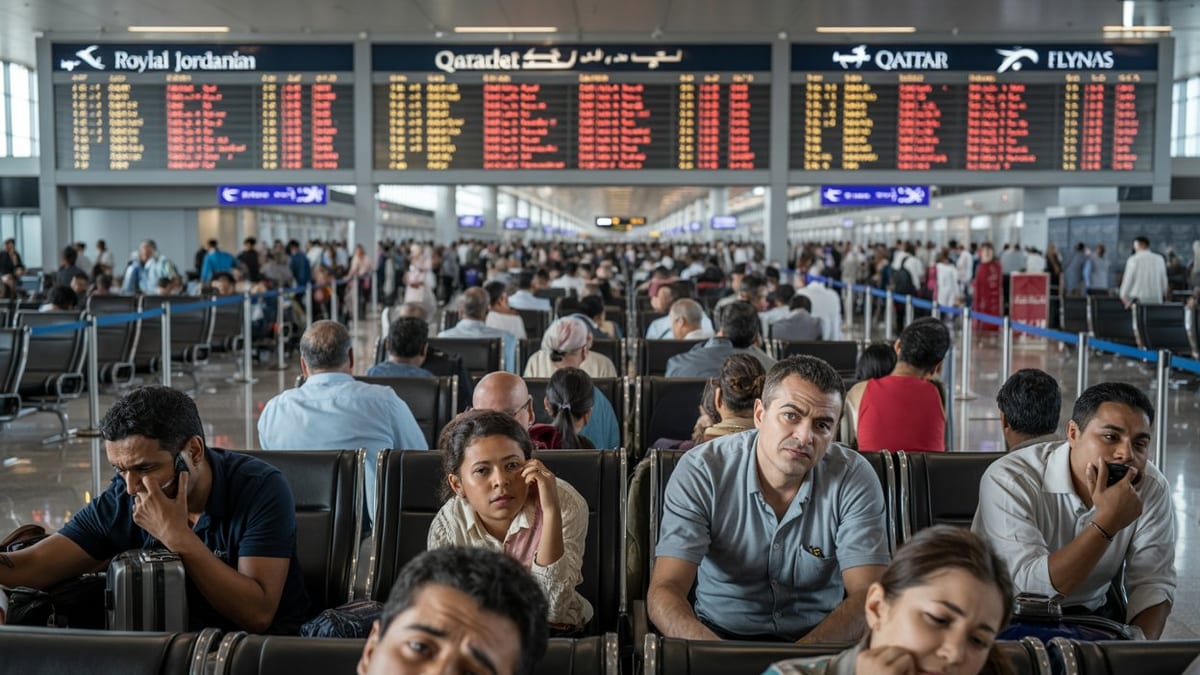
The cumulative effect is visible in crowded terminals, stretched rebooking queues and congested taxiways, as airlines attempt to re-time aircraft and crews while passengers race to salvage connections. For many travelers, the problems in Atlanta are only the most visible sign of a system under prolonged strain.
Weather, Holiday Crowds and Staffing Combine to Hit Reliability
Reports from aviation analysts and travel media link the latest wave of Atlanta disruptions to a confluence of factors, including lingering severe weather in parts of the Eastern United States, residual Easter holiday demand and persistent staffing and capacity constraints. A series of spring storms over the long holiday weekend produced tens of thousands of delays and well over 2,000 cancellations nationwide, and the effects have continued to echo into the new week.
Several carriers, including major European and U.S. airlines, have posted travel alerts in recent days flagging the possibility of schedule changes for flights to and from Atlanta as thunderstorms and unsettled conditions affect the region. In parallel, a busy Easter travel period has kept planes and airports operating near capacity, leaving little flexibility to absorb additional shocks without visible disruption.
Industry commentary also points to ongoing air traffic control staffing issues and high utilization of aircraft and crews across major U.S. hubs. Recent analyses of system-wide performance describe a pattern in which even localized weather events can trigger disproportionate delays once they intersect with saturated schedules, particularly at complex operations such as Atlanta.
The result is a fragile equilibrium in which relatively routine spring storms can trigger large pockets of cancellations, such as the current tally of 73 flights scrapped at Hartsfield-Jackson, and a larger ring of knock-on delays for aircraft and passengers moving through the hub later in the day.
Nationwide Impact Reaches Far Beyond Georgia
Although the disruption is most visible in Atlanta’s terminals and on its tarmac, the effects extend across the country and into international networks. Travel-industry trackers report that Atlanta’s cancellations are bundled within roughly 191 scrubbed flights and more than 3,000 delays across the United States today, with other major hubs such as New York, Boston, Los Angeles, Chicago and Orlando also reporting significant operational challenges.
Because Atlanta functions as a central connecting point for a vast number of itineraries, cancellations at the hub can sever onward connections to smaller regional airports and popular leisure destinations. Flights between Atlanta and cities including New York, Chicago, Miami and Orlando have been highlighted in trade coverage as particularly affected during recent disruption cycles, complicating travel for both business and vacation travelers.
Operationally, airlines are being forced to make trade-offs about which routes to prioritize as they reassign aircraft and crews. Publicly available reporting shows that carriers have focused on preserving core trunk routes and transcontinental services, which can leave thinner regional links vulnerable to last-minute cancellations or extended delays when equipment or staff are out of position.
As schedules remain in flux, travelers across the network are encountering rolling disruption that may manifest as a cancellation in Atlanta, a missed connection in another hub, or a late-night arrival in a secondary city. In that sense, the 73 cancellations at Hartsfield-Jackson represent not just a local problem but a critical pressure point in a much wider system.
Travelers Face Long Lines, Limited Options and Confusing Information
Passengers moving through Atlanta today are contending with the now-familiar symptoms of large-scale flight disruption: long queues at customer-service counters, heavily booked alternative flights, and inconsistent or rapidly changing information on screens and mobile apps. Social media posts and first-hand accounts shared in public forums over the past month from similar disruption days at Atlanta describe late-night cancellations, repeated boarding and deplaning cycles, and difficulties retrieving checked baggage after flights are scrapped.
While conditions vary by carrier and time of day, reports indicate that securing same-day rebooking from Atlanta has been challenging whenever cancellations spike, particularly for travelers relying on tight connections or flying to smaller markets with limited daily service. High overall load factors during the Easter and early-spring period mean that even when seats are available, they may require routing through additional hubs or overnight stays.
Airlines have encouraged customers in recent advisories to monitor their bookings closely and to use digital tools for rebooking where possible, both to avoid long in-person lines and to give passengers more control over alternative options. However, experiences shared in online communities suggest that call-center and chat backlogs can be substantial during major disruption events, particularly when cancellations occur with only a few hours of notice.
For travelers already mid-journey when a connection through Atlanta falls apart, the combination of limited hotel availability, constrained ground transportation and uncertain rebooking timelines can be especially stressful, turning a routine itinerary into an overnight or multi-day ordeal.
What Today’s Chaos Reveals About Atlanta’s Role in U.S. Aviation
The current episode of flight chaos at Hartsfield-Jackson offers a fresh reminder of Atlanta’s outsized influence on U.S. air travel reliability. As a primary hub for one of the country’s largest airlines and a key node in multiple domestic and international networks, the airport’s performance is closely tied to the overall health of the system.
Recent months have seen Atlanta repeatedly appear near the top of U.S. disruption tables during major weather events and holiday peaks, from winter storms that forced large waves of cancellations in January to severe thunderstorms and hail that snarled operations in March. Today’s 73 cancellations fit that broader pattern of vulnerability whenever weather, demand and staffing pressures intersect at the hub.
Aviation analysts argue in published commentary that improving resilience at such mega-hubs will be critical to stabilizing the broader network, whether through additional staffing, more flexible scheduling practices, or infrastructure and technology investments to speed recovery after storms. Until those measures are fully in place, travel observers expect episodes like today’s disruption in Atlanta to remain a recurring feature of the U.S. aviation landscape, particularly during busy holiday and peak travel periods.