

More news on this day
Travelers across Canada faced fresh turmoil on March 9, 2026, as a new wave of 53 flight cancellations and 324 delays hit major hubs from Toronto and Montreal to Vancouver and Calgary, while disruptions rippled into smaller and northern airports including Umiujaq in Quebec.
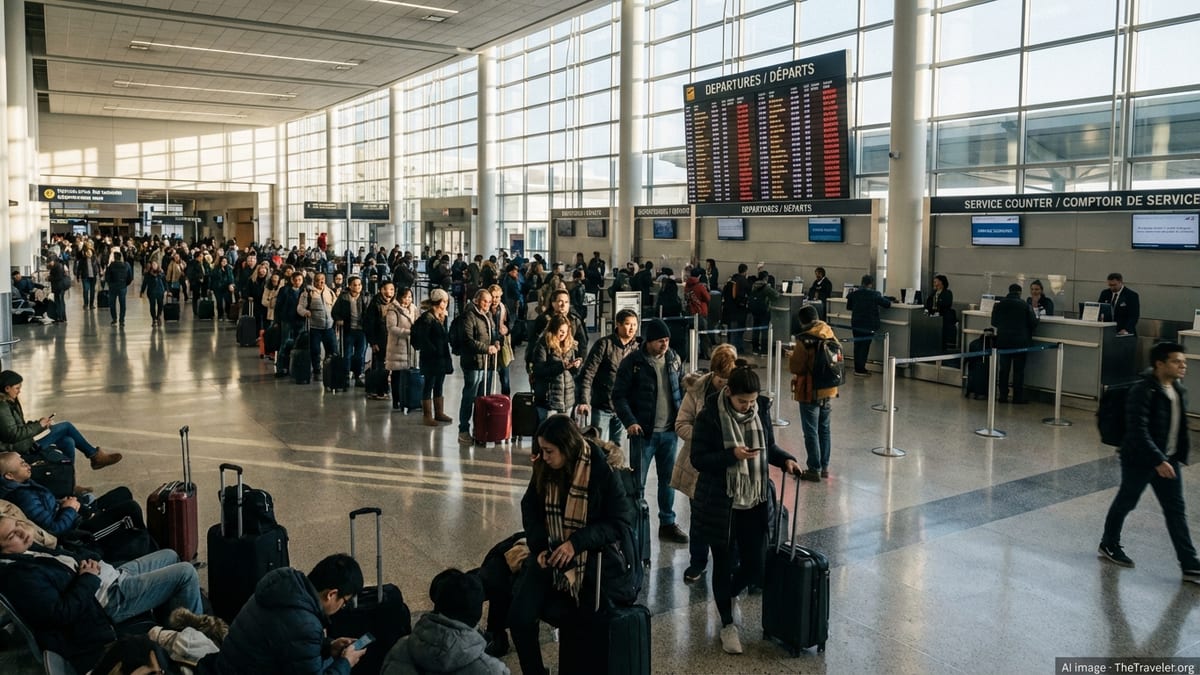
Nationwide Disruptions Hit Major Canadian Hubs
The latest day of turbulence in Canada’s air travel network has left thousands of passengers scrambling to adjust plans as airlines including Air Canada, WestJet, Jazz and Air Inuit reported dozens of cancellations and hundreds of delays. The newest figures add to a difficult stretch for Canadian aviation, with repeated operational challenges over the past week and weekend already stranding and delaying travelers nationwide.
Data compiled from flight-tracking services and industry reports on Monday indicated that at least 53 flights were fully cancelled and 324 more were running late across the country. The bulk of the problems were concentrated at the country’s four largest airports in Toronto, Vancouver, Montreal and Calgary, but smaller regional airports in Quebec and Atlantic Canada also recorded a noticeable spike in disruptions.
At Toronto Pearson, Canada’s busiest airport, airlines logged a mix of domestic and transborder cancellations, alongside a high volume of delayed departures and arrivals. Montreal–Trudeau International also saw mounting disruption, with multiple carriers trimming schedules and pushing back departure times as the day wore on. Similar patterns were visible at Vancouver International and Calgary International, where tight aircraft rotations meant that early delays cascaded through afternoon and evening schedules.
The knock-on effect for travelers was immediate: lengthy check-in and security lines, last-minute gate changes and overflowing customer service desks as flyers tried to secure new itineraries, overnight accommodation or refunds. Many passengers reported missing connections to the United States and Europe, while others faced lengthy waits for the next available seat on heavily booked domestic services.
Weather, Congestion and Tight Schedules Fuel Ongoing Chaos
The latest wave of disruption comes amid a winter season marked by volatile weather and heavy operational strain across North America. While conditions varied across Canada on Monday, lingering weather systems in central and eastern regions, combined with earlier snow and wind events over the weekend, left airlines struggling to reposition aircraft and crew to where they were needed most.
Air Canada and WestJet, Canada’s two largest carriers, have both been working to stabilize operations following repeated weather-related interruptions in recent weeks. Episodes of freezing rain, high winds and rapidly shifting temperatures in southern Ontario and Quebec have triggered recurring ground stops, de-icing backlogs and runway congestion, particularly at Toronto Pearson and Montreal–Trudeau. Each new delay in turn complicates subsequent rotations, amplifying impacts through the domestic network and into transborder and international routes.
Industry analysts note that the tight scheduling typical of modern airline operations leaves little slack in the system when storms or air-traffic restrictions hit multiple hubs at once. Once aircraft and crews are out of place, it can take days for networks to fully recover. Passengers flying on regional affiliates such as Jazz, which operates as Air Canada Express, often feel those effects acutely as thinner schedules mean fewer alternative flights when services are cancelled.
Operational pressure is not limited to weather. Air traffic control staffing constraints and congested airspace around major hubs have also contributed to delays, with some flights held on the ground awaiting departure slots or forced into holding patterns on approach. Ground handling and baggage operations, already strained by winter conditions, have added another layer of complexity, increasing turnaround times and reducing airlines’ ability to make up lost minutes during the day.
Regional and Northern Airports Also Caught in the Disarray
While Canada’s biggest hubs drew the most attention, Monday’s disruptions also extended into smaller and remote communities, underlining the vulnerability of regional travel in a tightly interlinked national network. In Quebec and Nunavik, carriers including Air Inuit reported schedule changes that affected flights to and from remote airports such as Umiujaq, where commercial service is a vital lifeline for residents, medical transfers and cargo.
In these regions, the cancellation of even a single rotation can have outsized consequences. With limited daily frequencies and few alternative carriers, affected passengers may have to wait until the next scheduled service, potentially delaying medical appointments, school returns or work rotations. Cargo containing food, mail and essential supplies can also be set back if flights are scrubbed or severely delayed.
Atlantic Canada and parts of eastern Quebec, which have endured repeated winter weather events this season, saw renewed knock-on impacts as airlines adjusted rotations and repositioned aircraft away from problem areas. Regional operators such as PAL Airlines and other smaller carriers faced their own operational constraints, compounding challenges for remote communities that rely on a mix of mainline and regional flights for connectivity.
Travel experts caution that while the absolute number of cancellations at remote airports may be lower than at major hubs, the human and economic impact of each disrupted flight can be far greater. Lost business days, missed medical treatments and delayed cargo deliveries add up quickly in communities where air travel is not a luxury but a necessity.
Passengers Confront Long Lines, Limited Options and Questions Over Rights
At terminals in Toronto, Montreal, Vancouver and Calgary, scenes of weary passengers stretched into Monday evening. Many travelers reported waiting hours at service counters or on customer service phone lines as they sought new itineraries, hotel vouchers or refunds. Those with tight onward connections faced especially difficult choices, with some opting to abandon trips outright rather than accept multi-day delays.
Travel advocates say the latest bout of disruption is once again highlighting confusion over passenger rights and compensation rules in Canada. Under the country’s Air Passenger Protection Regulations, airlines have defined obligations to provide rebooking, meals and, in some cases, monetary compensation, depending on the cause and length of delays and cancellations. However, determining whether a disruption is within an airline’s control or due to extraordinary circumstances such as severe weather or air traffic restrictions often proves contentious.
On Monday, several major carriers attributed many of the cancellations and delays to ongoing winter weather and knock-on operational constraints, designations that can limit eligibility for cash compensation even when travelers face overnight stays or missed events. Passenger groups argue that this leaves many customers shouldering the financial burden of hotel stays, meals and lost reservations, despite having little control over the situation.
Advisers recommend that affected travelers keep all receipts, document communication with airlines and review the specific conditions of both tickets and any travel insurance policies. They also suggest using airline apps and text alerts for real-time updates, as gate and schedule changes can happen quickly when operations are under stress. For those with flexible plans, voluntarily rebooking to off-peak days or times can sometimes secure more reliable options once networks begin to stabilize.
What Travelers Should Do If Flying in the Coming Days
With Canada’s winter weather season still far from over and airlines working through mounting schedule disruptions, experts warn that further instability is possible in the days ahead. Travelers planning flights through Toronto, Montreal, Vancouver, Calgary or regional airports in Quebec and Atlantic Canada are being urged to build extra time into itineraries and prepare for the possibility of last-minute changes.
Airlines and airports are advising passengers to check flight status frequently before leaving for the airport and again after clearing security, as departure times and gate assignments can shift rapidly during irregular operations. Those connecting onto international flights or cruise departures are encouraged to allow longer layovers or consider arriving a day early to reduce the risk of missed connections.
For travelers yet to book, choosing early morning departures can sometimes improve reliability, as the first wave of flights each day is less exposed to knock-on delays from earlier disruptions. Selecting nonstop routes where possible, rather than itineraries that require multiple connections, can also reduce exposure to cascading delays across several hubs.
As airlines work to restore normal operations after the latest surge of cancellations and delays, Canadian travelers are once again confronting the reality that winter flying in 2026 demands flexibility, patience and careful planning. For now, anyone heading to or from Toronto, Montreal, Vancouver, Calgary or smaller communities like Umiujaq would be wise to keep a close eye on the departure boards and be ready with a backup plan.