

More news on this day
Travelers passing through Cyprus this week are facing mounting disruption at Larnaca and Paphos airports, as escalating regional tensions and drone incidents around the Eastern Mediterranean trigger waves of flight cancellations, diversions and last-minute schedule changes.
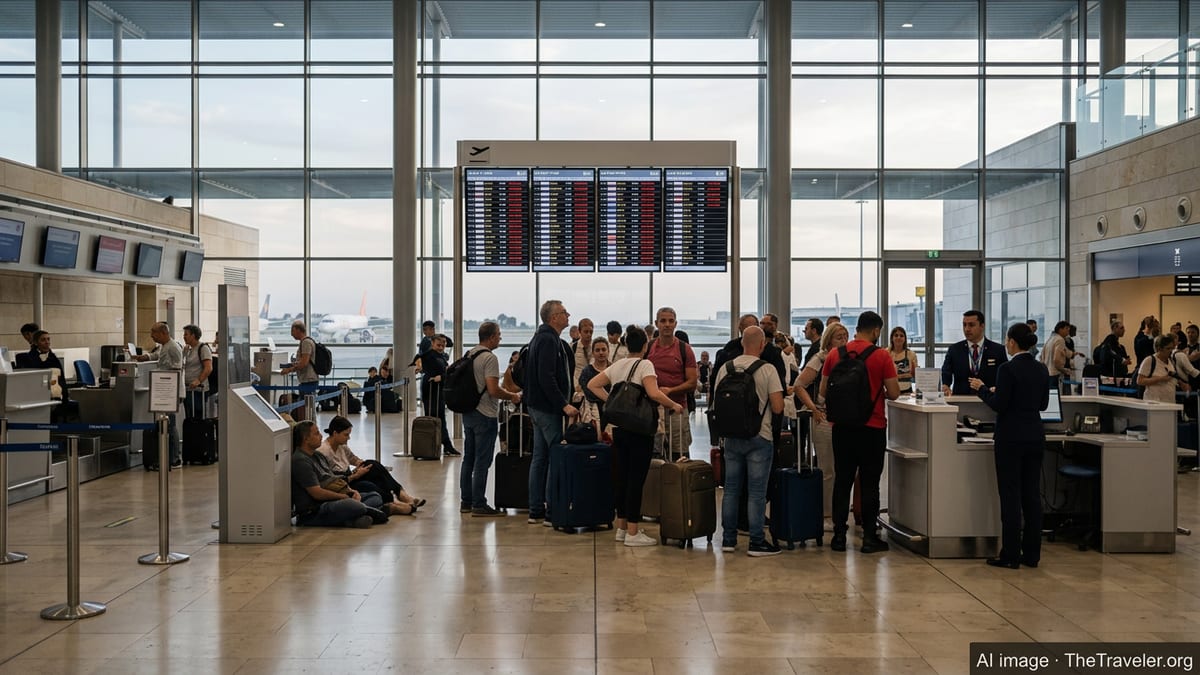
Surge in Cancellations as Regional Conflict Spills Into Air Travel
Larnaca International Airport, Cyprus’ primary air hub, has borne the brunt of the turmoil, with dozens of flights canceled each day since the weekend as airlines reassess routes skirting conflict zones linked to the Iran war and associated drone activity across the region. Local aviation data and airport briefings indicate that between 29 and 39 flights per day have been scrapped at Larnaca since March 7, covering both arrivals and departures to key European and Middle Eastern destinations.
The wave of disruption follows a series of security alerts and drone incidents tied to the wider conflict, including an attack on the British RAF Akrotiri base on Cyprus’ southern coast and temporary closures of airspace in parts of the Gulf and Levant. Although Cypriot authorities stress that the island’s airspace remains formally open, commercial carriers are adopting a more cautious posture, cutting or consolidating services that cross sensitive corridors or rely on onward connections through affected hubs.
Budget and leisure-focused airlines have been among those most visibly reorganizing their schedules, trimming frequencies and rerouting aircraft to minimize exposure to rapidly shifting airspace restrictions. Travelers connecting through Cyprus to destinations such as Tel Aviv, Beirut and Gulf hubs report cancellations being announced only hours before departure, despite aircraft and crews already being in place.
Industry analysts say the current pattern resembles the cascading disruption seen at major Middle Eastern hubs in early March, when airspace closures and security alerts led to thousands of cancellations in a matter of days. For Cyprus, which relies heavily on air connectivity for tourism and trade, the impact has been swift and highly visible at its two main gateways.
Larnaca Hit Hard While Paphos Oscillates Between Normality and Disruption
The contrast between Larnaca and Paphos has become a defining feature of the crisis. Over the weekend of March 7 and 8, local news outlets reported that Paphos International Airport had returned to operating a full timetable after an earlier evacuation linked to a drone alert, even as Larnaca continued to cancel roughly three dozen flights per day. Travel updates from aviation tracking platforms and regional media described Paphos running close to normal, particularly for European low cost carriers and charter services.
That relative calm at Paphos has not fully insulated it from the wider turbulence. On March 10, Cypriot media reported that five flights were canceled at Paphos, directly attributed to the continuing Iran war and resulting route disruptions across the Middle East. These cancellations affected services with links, either direct or via connections, to conflict-adjacent airspace, underscoring how quickly conditions can change even at airports initially perceived as unaffected.
Larnaca, by contrast, has emerged as a focal point for cancellations tied to long haul and regional connections. Reports from passenger rights platforms and local newspapers indicate that carriers have pulled or curtailed services especially on routes to and from the Middle East, while keeping a greater share of European point to point flights intact. As a result, departure boards at Larnaca show a patchwork of on time European leisure flights sitting alongside multiple canceled services to cities further east.
Airport officials and tourism stakeholders describe a dynamic situation that shifts by the hour. Airlines are adjusting schedules in response to evolving security assessments, crew routing complications, and congestion at alternative hubs taking on rerouted traffic from the Gulf. For passengers, that means two travelers departing Cyprus on the same day but from different airports can face very different levels of disruption.
Drone Strikes, Airspace Reroutes and the Roots of the Crisis
The current flight chaos in Cyprus cannot be separated from the broader conflict landscape. Since late February, military strikes involving Iran, Israel and the United States have triggered retaliatory missile and drone attacks across the region, prompting a series of airspace closures and emergency measures. On March 1, a drone attack on the RAF Akrotiri base in Cyprus, followed by further drone activity and alerts in the days that followed, pushed authorities to heighten security across the island’s aviation sector.
On March 4, Larnaca Airport was briefly closed after an unidentified object was reported, a precautionary move reflecting heightened sensitivity to any airborne anomaly near key infrastructure. Paphos Airport experienced an evacuation at around the same period in response to drone alerts, according to regional aviation bulletins. Although neither civilian airport has suffered a direct hit, the proximity of military targets and the complex web of overlapping flight paths over the Eastern Mediterranean have made Cyprus particularly exposed to knock on effects.
Beyond the island itself, widespread airspace restrictions in the Gulf and Levant have forced global carriers to redesign routes and, in many cases, suspend services entirely. Flights that once used Cyprus and nearby hubs as convenient stepping stones between Europe, the Middle East and Asia now face longer detours, constrained slots at alternative airports and uncertainty over the security landscape days or even hours ahead.
Aviation experts note that for commercial airlines, risk is assessed not only in terms of direct physical threat but also operational reliability. Routes that cross contested corridors or depend on airspace corridors that may close at short notice quickly become commercially unsustainable. For Larnaca and Paphos, that translates into sudden schedule cuts whenever tension spikes, even if normal operations resume once conditions stabilize.
Airlines Adjust Schedules as Connectivity Slowly Recovers
Despite the ongoing uncertainty, there are tentative signs of stabilization. In recent days, several European carriers have announced the gradual restoration of flights to Cyprus, particularly from major source markets such as Germany, the United Kingdom and the Netherlands. Industry reports highlight members of the Lufthansa Group, British Airways, easyJet and Transavia among airlines that are resuming or ramping up flights into Larnaca and Paphos as risk assessments evolve.
Long haul connectivity has also begun to edge back. Emirates, which had previously halted some services through Larnaca amid the most acute phase of the crisis, has restarted its Dubai Larnaca route on a daily basis, providing a crucial bridge between Cyprus and one of the world’s key intercontinental hubs. Local travel agents say that as these links return, booking inquiries for spring and early summer holidays have begun to recover from an abrupt slump in early March.
Nonetheless, schedules remain volatile. Airlines such as Aegean have extended cancellations on specific Middle East city pairs, including Tel Aviv and Beirut, into mid March, citing the continuing unpredictability of the security situation. While these cancellations are primarily focused on destinations further east, their ripple effects are felt in Cyprus through reduced feeder traffic and occasional aircraft and crew imbalances that can spill over into intra European routes.
For now, carriers are adopting a cautious step by step approach, reopening routes in phases while preserving the option to cut back quickly if conditions deteriorate. Industry sources suggest that travelers should expect a prolonged period of tactical schedule changes rather than a clean return to pre crisis timetables.
What Travelers Passing Through Cyprus Need to Know
For passengers using Larnaca or Paphos in the coming days, preparation and flexibility are critical. Airlines and tour operators are urging travelers to monitor flight status closely in the 24 hours before departure and again on the day of travel, as same day cancellations remain a risk whenever regional tensions flare. Many carriers have introduced temporary rebooking waivers, allowing customers to change dates or routes without standard penalties if their flights are affected.
Passenger rights organizations remind travelers that, under European air passenger regulations, airlines operating from Cyprus must provide assistance in cases of cancellations, including rerouting and basic care such as meals and accommodation where necessary. However, compensation entitlements can be more complex in situations judged to be caused by extraordinary circumstances linked to security and war, and decisions are likely to vary case by case.
Travel advisors recommend that visitors build extra buffer time into itineraries that rely on tight connections through other regional hubs, particularly in the Gulf and Levant, and consider purchasing travel insurance policies that explicitly cover disruption due to conflict related airspace closures. For those already on the island, local tourism bodies stress that hotels, resorts and attractions across Larnaca, Paphos and other coastal areas remain open and functioning normally despite the airport disruptions.
With regional diplomacy and military developments still fluid, there is no clear timeline for a full normalization of flight schedules. Yet as airlines gradually restore services and refine alternative routing, Cyprus is working to reassure visitors that, despite the short term flight chaos at its airports, the island itself remains accessible and eager to welcome travelers back.