

More news on this day
Hundreds of passengers across the Northeast remain stranded after a powerful winter storm forced more than 110 additional flight cancellations at Boston Logan, New York’s John F. Kennedy International, Nantucket Memorial and Rhode Island T. F. Green airports, compounding multi-day disruptions and prolonging one of the most chaotic travel stretches of the season.
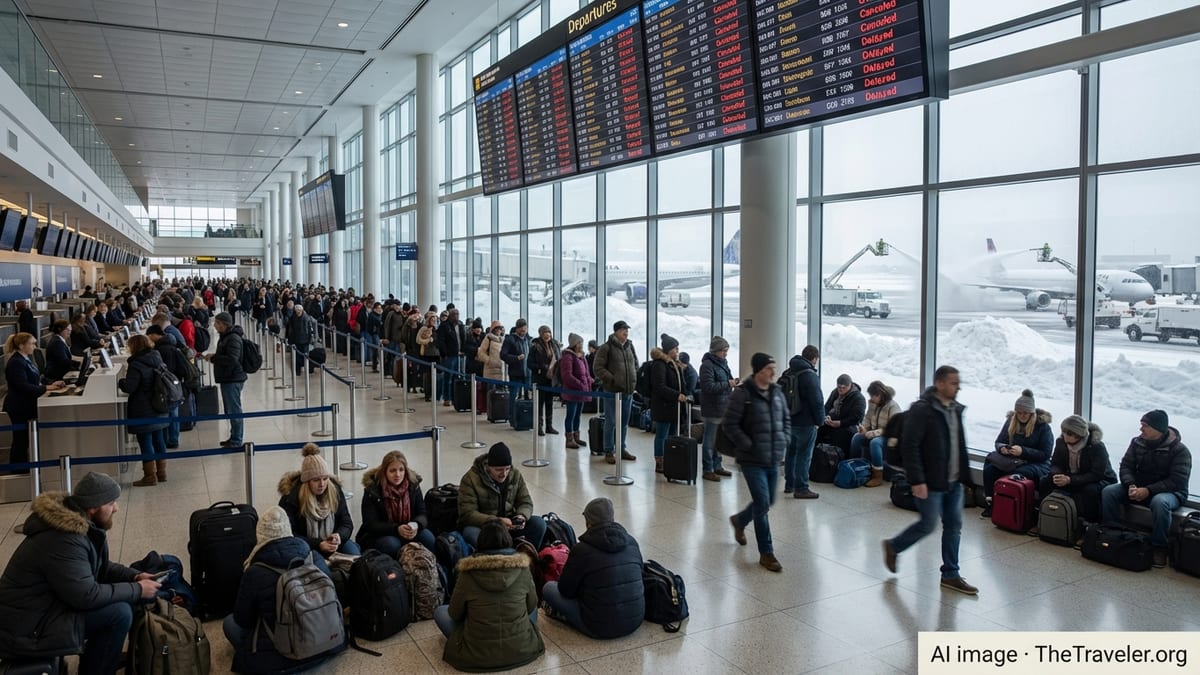
Storm Aftermath Keeps Northeast Skies Severely Constrained
Although the snow has largely stopped falling, the aviation network across New England is still struggling to recover from the blizzard linked to Winter Storm Hernando. Airlines are working through a substantial backlog created when operations were largely halted at major hubs on Monday, with Boston Logan International and New York’s JFK among the hardest hit. By Tuesday, carriers had added more than 110 fresh cancellations across Logan, JFK, Nantucket and Rhode Island’s T. F. Green International, on top of thousands of scrubbed flights earlier in the week.
At Boston Logan, roughly half of scheduled arrivals and departures were canceled again Tuesday, following nearly 1,000 cancellations recorded there on Monday alone. Officials warned that it would take at least a full day, and likely longer, to restore a normal schedule as aircraft and crews reposition and as other East Coast airports dig out from the same system. JFK, which saw most of its Monday schedule erased by whiteout conditions and high winds, continued to post significant cancellations and lengthy delays on northeastern and transatlantic routes.
Across Rhode Island, T. F. Green International temporarily suspended operations at the height of the storm and has been ramping back up cautiously, with dozens of flights canceled or delayed as snow clearance and deicing continue. On Nantucket, the combination of fierce winds, low visibility and limited runway-clearing capacity meant regional flights remained highly vulnerable to last-minute cancellations, further isolating the island’s year-round residents and late-winter visitors.
Flight tracking data show that while national cancellation numbers have begun to ease compared with Monday’s peak, New England’s core air gateways remain among the most disrupted in the United States. For passengers attempting to connect through Boston or New York, that has meant missed onward flights, rolling rebookings and unexpected overnight stays far from home.
Passengers Face Long Lines, Limited Rebooking Options and Hotel Scramble
Inside terminals across the region, the operational challenges are being felt most acutely at check-in counters and rebooking desks. At Logan, digital departure boards remained thick with red "canceled" and "delayed" notices on Tuesday afternoon as travelers queued to speak with airline agents. Many passengers reported waiting several hours just to be assigned new flights later in the week, particularly on heavily used corridors such as Boston–New York, Boston–Washington and transatlantic routes.
With aircraft and crew out of position, airlines have had limited flexibility to add extra sections or upgauge aircraft to accommodate stranded flyers. Some carriers are focusing first on restoring their core business routes and international services, leaving leisure and regional destinations such as Nantucket with thinner options. Travelers connecting through JFK have also seen ripple effects, with missed long-haul connections forcing multi-day reroutes or diversions through alternate hubs like Chicago and Atlanta.
The strain has spilled over into the hotel market around major airports. Properties near Logan, JFK and Providence’s T. F. Green reported a rush of last-minute bookings from passengers whose flights were canceled after arrival at the airport. While some airlines are offering hotel and meal vouchers on a case-by-case basis, weather-related disruptions are generally exempt from mandatory compensation rules, leaving many travelers to shoulder added costs on their own.
Families with young children, elderly travelers and those on tight schedules have been particularly affected. Some stranded passengers have opted to abandon flight plans altogether, turning to long-distance buses, rental cars or trains where available, though those alternatives have also been constrained by lingering road closures and rail service suspensions in the storm’s wake.
Why the Cancellations Are Continuing Even After the Blizzard
Many travelers have expressed frustration that cancellations are persisting long after skies appear clear. Airport and airline officials explain that recovery from a major winter storm involves more than just improved visibility. At Logan and T. F. Green, crews have spent days clearing deep snow from runways, taxiways and ramp areas, a labor-intensive process that must be completed to strict safety standards before normal volumes of traffic can resume.
Deicing capacity is another pressure point. When hundreds of departures are compressed into a shorter operational window after a storm, the demand for deicing trucks, fluid and personnel can far exceed what is available, forcing airlines to trim schedules or accept lengthy ground delays. Strong residual winds have also complicated operations, limiting which runways can be used and occasionally pushing crosswind limits for certain aircraft types.
Compounding those ground issues are wider network disruptions. When thousands of flights are canceled over a day or two, aircraft and crews end up stranded in cities away from their next scheduled legs. It can take several days of careful rescheduling to return planes and staff to where they need to be. For a hub like JFK that feeds domestic and international routes, missing a single rotation can cascade into cancellations across multiple continents.
Airlines are deploying extra operations teams and working closely with airport authorities and air traffic controllers to smooth the restart, but with so many moving parts, officials caution that travelers should brace for additional cancellations and delays through at least midweek. Even flights that appear "on time" when first checked may become subject to rolling schedule changes as the system remains fragile.
What Affected Travelers Should Do Right Now
For those with upcoming departures from Boston Logan, JFK, Nantucket or T. F. Green, the most important step is to confirm flight status directly with the airline before leaving for the airport. Officials are urging passengers to sign up for text or app notifications, which often update more quickly than airport displays when last-minute changes occur. Given that new cancellations are still being added as operations evolve, checking repeatedly in the hours before departure is essential.
Many major carriers serving the Northeast have activated winter weather waivers, allowing customers to change travel dates or reroute through alternate cities without the usual change fees and, in some cases, without fare differences. Travelers who can be flexible on dates or willing to depart from or arrive at different airports, such as Hartford or Manchester, may have better luck securing confirmed seats than those insisting on original itineraries.
Experts advise passengers who are already stranded to prioritize securing new flights through airline apps or websites rather than standing in physical lines whenever possible. Calling customer service lines during off-peak hours, such as late evenings or early mornings, can sometimes reduce wait times. Travelers should keep documentation of all expenses related to the disruption, including hotel stays, meals and ground transport, in case limited reimbursement or travel insurance claims are available later.
Given the ongoing backlog, passengers are also encouraged to pack essential medications, chargers, a change of clothes and basic toiletries in carry-on bags, in case checked luggage cannot be retrieved quickly during rolling cancellations. For those traveling with children, snacks, entertainment and warm clothing are proving especially valuable as waits stretch longer than initially expected.
How Long the Disruption Could Last and What It Means for Future Trips
Airport and airline leaders suggest that operations at Northeast hubs are gradually improving but will remain constrained for several days. At Logan, officials have indicated that the airport may not reach a fully normal schedule until at least Wednesday or Thursday, depending on how quickly carriers can reposition aircraft and clear maintenance backlogs created by heavy use of deicing and ground equipment. JFK and Rhode Island’s T. F. Green are on similar trajectories, with schedules rebuilding in phases.
For travelers planning trips later in the week, that means the likelihood of outright cancellation is decreasing, but flight times may still shift and aircraft may be swapped, affecting seating assignments and baggage allowances. Connections through storm-affected hubs will remain vulnerable to knock-on delays, especially during peak morning and evening banks when traffic is heaviest.
The episode is also reigniting debate about how prepared U.S. airports and airlines are for increasingly volatile winter weather. While major hubs like Logan and JFK have extensive snow-removal equipment and protocols, the sheer intensity of this blizzard and the regional scale of its impact have exposed how quickly the system can reach its limits. Smaller airports such as Nantucket and those in Rhode Island, which operate with leaner resources, face even steeper challenges when storms of this magnitude strike.
For now, frequent travelers are taking the episode as a reminder to build more flexibility into winter itineraries. Booking nonstop flights where possible, allowing longer layovers, avoiding late-night connections and considering travel insurance with strong weather coverage are among the strategies experts say can help reduce the risk of being stranded when the next major storm sweeps across the Northeast.