

More news on this day
Hundreds of travelers across Argentina, Uruguay and Brazil faced unexpected chaos at airports on Friday as Flybondi, Aerolíneas Argentinas, JetSMART, LATAM and other carriers canceled 20 flights and delayed 79 more, disrupting connections between Buenos Aires, Rio de Janeiro and São Paulo at the peak of the Southern Hemisphere summer season.
Get the latest news straight to your inbox!
Ripple Effects Across Regional Hubs
The operational turmoil unfolded across some of South America’s busiest airports, including Buenos Aires’ Aeroparque Jorge Newbery and Ezeiza International, as well as Rio de Janeiro and São Paulo’s main gateways. Passengers bound for regional leisure destinations and business centers woke to overnight notifications of cancellations, rolling delays and last minute gate changes.
Short haul routes linking Argentina with Brazil and Uruguay were among the hardest hit, with low cost carrier Flybondi and state run Aerolíneas Argentinas both reporting operational adjustments, alongside JetSMART and LATAM. The disruption quickly spilled over into connecting traffic, affecting itineraries that relied on onward flights deeper into Brazil or onward to other South American capitals.
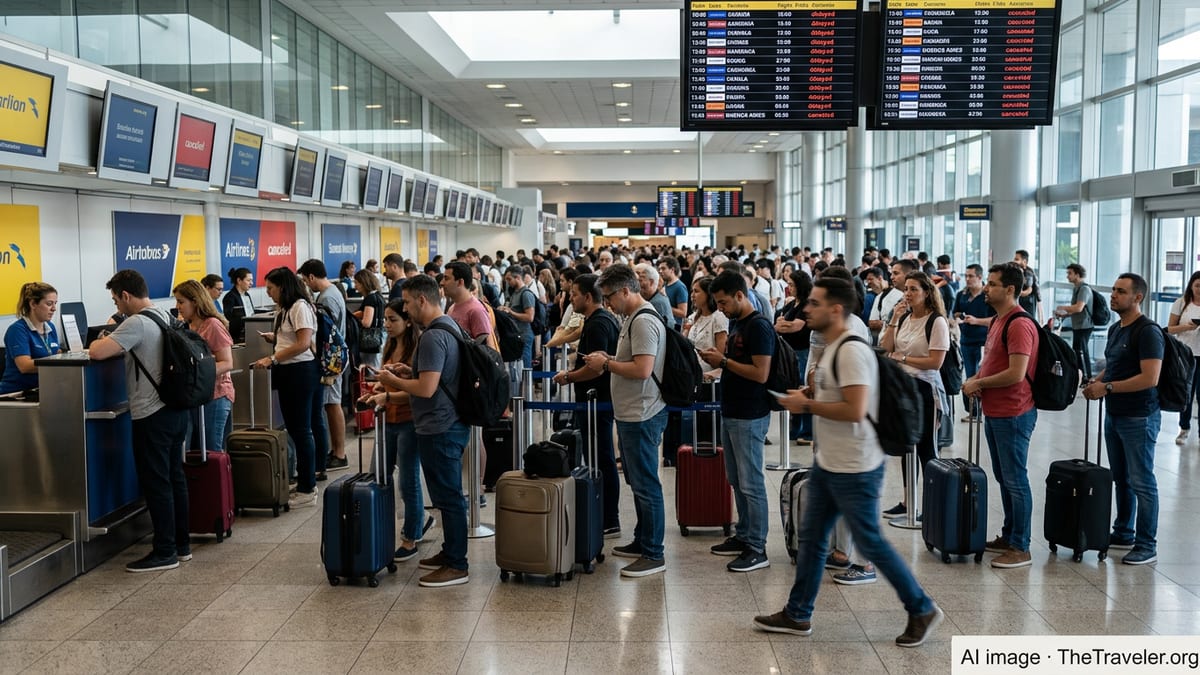
By mid morning, airport terminals in Buenos Aires and Brazil’s southeast corridor saw long check in and rebooking lines as airline staff attempted to re accommodate affected travelers. Many passengers reported being shifted to later departures the same day, while others were informed that they would need to wait until the weekend for the next available seat on heavily booked leisure routes.
Ground teams in Montevideo and other Uruguayan gateways also reported knock on effects from aircraft and crew rotations originating in Argentina and Brazil. While Uruguay accounted for a smaller share of the cancellations and delays, regional carriers acknowledged that the tightly interconnected nature of short haul operations meant disruption in one hub quickly reverberated across neighboring countries.
Mixed Responses From Airlines and Passengers
At airline counters in Buenos Aires and São Paulo, travelers described a patchwork of responses as carriers scrambled to comply with local consumer protection rules while managing limited spare capacity. Some passengers received meal vouchers and hotel accommodation when delays stretched into the night, while others said they were offered only rebooking options and advised to retain receipts for later reimbursement claims.
Flybondi passengers in particular voiced frustration on social media over repeated schedule changes and communication gaps, echoing criticism the Argentine low cost carrier has faced in recent months for reliability problems and last minute cancellations. Travelers on Aerolíneas Argentinas and JetSMART reported more structured rebooking processes but still endured hours long waits at service desks as agents processed queues.
LATAM customers on affected Brazil Argentina routes reported comparatively clearer digital notifications and app based rebooking options, though those traveling in groups or with complex multi segment tickets often still found themselves in airport lines to sort out downstream connections. For many, the uncertainty overshadowed long planned holidays to coastal destinations or family visits timed to school breaks.
Despite visible tensions in crowded terminals, some passengers expressed understanding that airlines were juggling a combination of operational constraints, from aircraft availability and maintenance windows to crew duty time limits. Others, however, argued that carriers had over scheduled high season capacity without sufficient buffers, leaving little resilience when disruptions cascaded across the region.
Operational Strain in a High Demand Season
The disruptions come at a time of strong regional demand, with South American carriers pushing to rebuild and expand networks between key cities such as Buenos Aires, Rio de Janeiro and São Paulo. Low cost operators including Flybondi and JetSMART have pursued rapid growth on cross border routes, while Aerolíneas Argentinas and LATAM continue to defend market share on trunk corridors that are vital for tourism and business travel.
Industry analysts note that this growth has not always been matched by investments in spare aircraft and crew reserves, particularly in a season when maintenance schedules and tight turnarounds leave little room for error. When a handful of flights are delayed early in the day, they can quickly lead to aircraft and crews being out of position for evening departures, triggering a wave of cancellations and rolling delays like those seen on Friday.
Regulators in Argentina and Brazil have in recent years pressed airlines to improve on time performance and to comply strictly with passenger assistance rules in cases of disruption. While Friday’s events did not reach the scale of previous mass cancellation episodes, they highlighted lingering vulnerabilities in regional operations and the balancing act between low fares, high load factors and service reliability.
Airport operators, for their part, are under pressure to manage passenger flows, keep information displays updated and coordinate with airlines to avoid overcrowding at security checks and boarding gates. The situation on Friday underscored how quickly a manageable set of schedule adjustments can escalate into systemwide strain when multiple carriers face concurrent operational headwinds.
Stranded Tourists and Business Travelers Seek Alternatives
As delays mounted, many stranded travelers in Buenos Aires, Rio de Janeiro and São Paulo began weighing alternative transport options, from long distance buses to last minute tickets on competing flights. Those with flexible plans opted to extend hotel stays or reroute vacations to destinations still reachable by road, while business travelers juggled video calls and rescheduled meetings from airport seating areas.
In Argentina, where domestic and regional bus networks provide a dense web of long haul routes, ticket counters at major terminals reported a bump in same day sales from air passengers unwilling to wait for new flight dates. In Brazil, some travelers facing disrupted links between Rio de Janeiro and São Paulo shifted to intercity buses or high demand ride share services to salvage their schedules.
Accommodation booking platforms also saw an uptick in last minute searches near the main airports as passengers sought overnight stays when their rebooked flights pushed into the following day. For local hospitality providers, the unexpected wave of demand offered a modest boost, even as guests arrived exhausted and uncertain about when they would finally reach their intended destinations.
Travel agents and corporate travel managers spent the day reworking itineraries, reissuing tickets and advising clients on their rights under Argentina, Brazil and Uruguay’s passenger protection frameworks. While many large companies have contingency policies for such scenarios, independent travelers often found themselves navigating complex fare rules and claims procedures on their own.
Calls Grow for Stronger Consumer Protections
The latest disruption has renewed calls from passenger advocacy groups for tougher enforcement of compensation and assistance obligations in the Southern Cone’s aviation markets. Consumer organizations in Argentina and Brazil have argued that repeated waves of cancellations and extensive delays highlight the need for clearer communication standards, automatic refunds in certain cases and more proactive rebooking tools.
Advocates contend that while low cost competition has broadened access to air travel across the region, regulatory frameworks and oversight have not always kept pace with the new operating models. They point to patterns of last minute schedule changes and limited transparency around the underlying causes, whether operational, commercial or related to broader industry constraints.
For now, airlines are focused on stabilizing weekend schedules and clearing backlogs of displaced passengers. Flybondi, Aerolíneas Argentinas, JetSMART and LATAM have all indicated that they are working to normalize operations, though they caution that residual delays may persist as aircraft and crews are repositioned.
With demand expected to remain high in the coming weeks, travelers flying between Argentina, Uruguay and Brazil are being urged to monitor their flight status frequently, allow generous buffers for connections and prepare contingency plans in case their journeys are affected by further schedule disruptions.