

More news on this day
Passengers traveling across China, Laos, Thailand, India and other parts of Asia faced widespread disruption this week as China Eastern, Lao Airlines and Tibet Airlines scrapped 33 flights and delayed more than 400, snarling connections through Beijing, Lhasa, Vientiane, Xining and Kunming.
Get the latest news straight to your inbox!
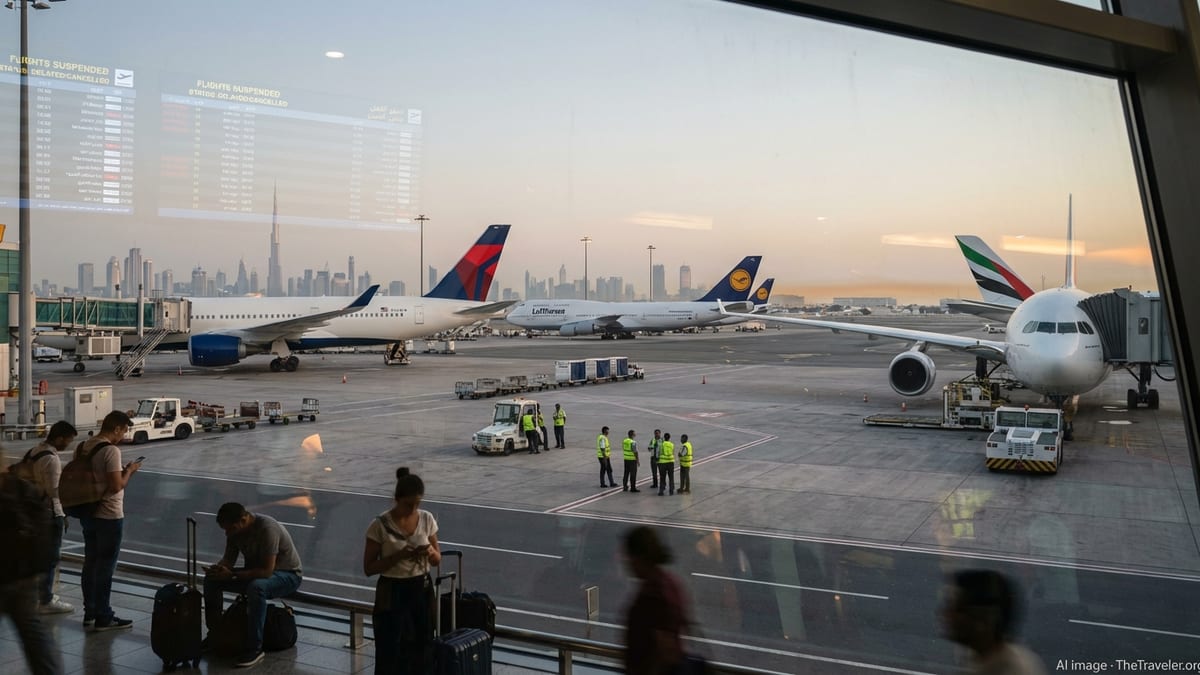
Network Shock Across Key Asian Hubs
The latest disruption unfolded against an already fragile backdrop for regional aviation, with recent data and industry coverage highlighting rising congestion and operational strain at major hubs. Reports indicate that a fresh round of cancellations and rolling delays on April 7 and 8 compounded earlier bottlenecks seen in late February and early March, when mass hold ups left travelers stranded in terminals from Beijing to Kunming.
In the most recent wave, 33 flights operated by China Eastern, Lao Airlines and Tibet Airlines were cancelled outright, while 416 departures and arrivals were reported delayed across multiple airports. The impact was felt most acutely at Beijing Capital, Lhasa Gonggar, Kunming Changshui, Xining Caojiabao and Vientiane’s Wattay International, but secondary airports feeding these hubs also reported knock on effects as aircraft and crew rotations fell out of sequence.
Publicly available aviation analytics show that even modest schedule disruptions can quickly cascade in such tightly timed networks. Once morning and early afternoon flights go off slot, aircraft arrive late for subsequent segments and duty limits for flight crews start to constrain recovery options, leading to growing delay statistics by evening peaks.
According to published coverage tracking Asia Pacific operations on April 7, the broader region already faced hundreds of cancellations and several thousand delays as weather, airspace restrictions and congestion combined to stretch airlines. The 33 additional cancellations and 416 delays linked to China Eastern, Lao Airlines and Tibet Airlines added another layer of difficulty for passengers relying on cross border and domestic connections.
Beijing, Kunming and Xining Bear the Brunt
China’s northern and southwestern hubs once again emerged as focal points. In Beijing, disrupted flights affected both domestic and international passengers, particularly those connecting from China Eastern and Tibet Airlines services arriving from western China and the Tibetan Plateau. Flight tracking platforms showed irregular schedules around Lhasa to Beijing services, with some departures operating significantly behind timetable as control measures rippled across the network.
Kunming, a key gateway to South and Southeast Asia, saw arrivals and departures to cities such as Bangkok, Kolkata and various Indian metros pushed back or cancelled, according to route and timetable data. Travelers connecting from India and Thailand to interior Chinese destinations via Kunming reported extended waits and missed onward flights as delay minutes mounted through the day.
Xining and other regional capitals in western China also played a role in the disruption. These airports often depend on a limited number of daily rotations by carriers such as China Eastern and Tibet Airlines. When a single round trip is cancelled from a city with only a handful of daily departures, passengers can be left with no same day alternatives and limited options for rebooking.
Recent statistics on Chinese airline performance show that cancellation rates remain relatively low in normal conditions, but punctuality can deteriorate quickly during peak travel or poor weather windows. The current episode underscores how even carriers with solid baseline performance can face cascading issues when several hubs experience pressure simultaneously.
Lhasa, Vientiane and Regional Links Under Strain
Tibet Airlines’ operations at Lhasa Gonggar Airport were among the more exposed to the latest disruption. The high altitude hub has a shorter operating window than many coastal airports and is highly sensitive to weather and air traffic control constraints, which can force compressions of the schedule into narrower bands of time. When delays build, mountain and plateau routes are frequently prioritized or curtailed in groups, affecting a large volume of passengers at once.
In Laos, Vientiane’s Wattay International found itself managing a spike in frustrated travelers after several Lao Airlines services were delayed or cancelled. Lao Airlines has a comparatively small fleet, so the loss of a few rotations between Vientiane and secondary cities such as Luang Prabang, Pakse or regional points in Thailand can leave passengers facing overnight stays, especially when alternative flights are not scheduled daily.
Travel forums and recent traveler accounts already highlight a pattern of timing issues on some Lao Airlines routes, with afternoon and evening services occasionally pushed back or consolidated. The latest disruption appears to have amplified those concerns, with passengers bound for Thailand, Vietnam and domestic Lao destinations encountering longer than expected waits and sudden schedule changes.
Regional connectivity between China, Laos, Thailand and India has expanded in recent years, relying in part on mid tier carriers and secondary hubs. While this has created more route options for travelers, it has also introduced new points of vulnerability when a small number of aircraft serve multiple cross border legs each day. Any cancellation along that chain can break several onward connections at once.
Knock On Effects for India and Thailand Connections
India and Thailand, both heavily reliant on air links for tourism and business travel, felt the secondary impacts of the schedule turmoil. Flights linking Kunming and other Chinese hubs to Bangkok, Chiang Mai, Kolkata and other Indian cities connect large numbers of passengers traveling between South Asia, China and onward long haul destinations in Europe and North America.
According to regional travel coverage, the wider Asia Pacific system on April 7 already included more than two hundred cancellations and several thousand delays at major gateways such as Singapore, Bangkok and Kathmandu. Rerouted services and crews stretched thin by weather and airspace restrictions in South Asia reduced the margin for recovery when additional disruptions emerged in China and Laos.
For Indian and Thai travelers using Beijing, Kunming or other Chinese hubs as transit points, the combined effect was an increased risk of misaligned itineraries. Missed connections often require rebooking on later flights, and in some cases travelers must wait until the next day if routes operate only once daily or a few times per week.
Travel agents and online booking platforms tracking the episode reported higher than usual reissue and refund activity as passengers sought alternative routings through other Asian hubs, including Hong Kong, Seoul and Singapore, to bypass congested points.
What Passengers Can Do Amid Ongoing Volatility
The latest wave of cancellations and delays reinforces advice that has become common for travel across China and Southeast Asia in 2026. Industry observers regularly encourage passengers to monitor their flight status closely in the 24 hours before departure and again on the way to the airport, using official airline channels and airport information feeds where possible.
Travel commentary focusing on Chinese carriers notes that while on time performance has improved in many markets, sudden operational disruptions are still a risk, particularly in seasons with volatile weather or when airspace restrictions arise. Passengers connecting through Beijing, Kunming, Lhasa, Xining or Vientiane are frequently advised to build longer layovers into itineraries to reduce the chance of misconnecting.
Flexible tickets and travel insurance products that cover missed connections and extended delays can also mitigate financial losses when flights are cancelled or heavily delayed. Travelers with fixed dates, such as those heading to major events or tours, may benefit from choosing routings with multiple daily frequencies so that rebooking is more feasible if a flight is disrupted.
With demand across Asia continuing to recover and airlines working to balance tight fleets against ambitious schedules, episodes like the cancellation of 33 flights and delay of 416 services show that the regional system remains vulnerable to shocks. For now, passengers flying in and out of Beijing, Lhasa, Vientiane, Xining and Kunming may need to plan for extra time and remain prepared for last minute changes.