

More news on this day
Passengers flying with British Airways and Pegasus Airlines on April 5 faced widespread disruption, as dozens of cancellations and more than a hundred delays rippled across key hubs in the United Kingdom, Türkiye, Austria, the United Arab Emirates and beyond.
Get the latest news straight to your inbox!
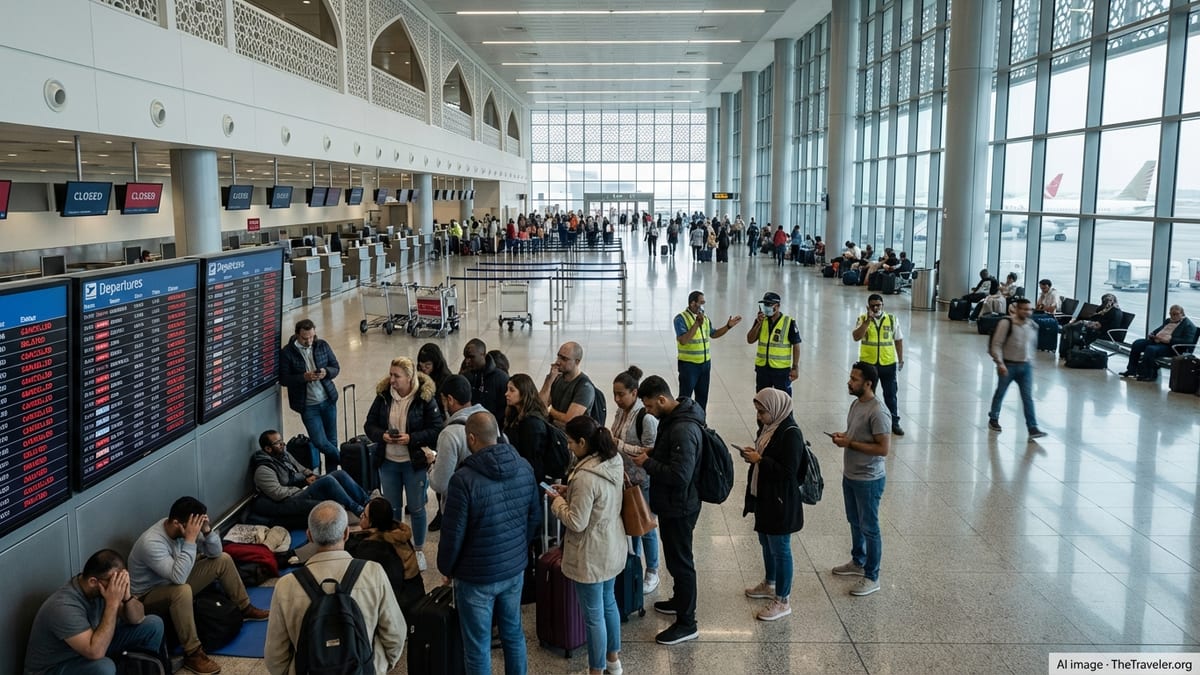
Network Disruption Spreads From Heathrow to Sabiha Gökçen
Operational disruption affecting British Airways and Pegasus Airlines on Sunday led to at least 25 cancellations and 134 delays across Europe and the Middle East, according to live schedule and airport-board data compiled from publicly available sources. The impact was most visible at London Heathrow, Istanbul Sabiha Gökçen and Vienna International Airport, but the knock-on effects extended to secondary cities and onward long-haul connections.
At Heathrow, British Airways continued to operate the majority of its schedule, but a cluster of short and medium haul services was withdrawn or heavily delayed, contributing to crowded terminals and long queues at rebooking desks. Publicly accessible flight-tracking services showed disrupted rotations between London and European capitals such as Vienna and Zurich, with delayed departures feeding into further schedule slippage later in the day.
In Türkiye, Pegasus services at Istanbul Sabiha Gökçen experienced a similar pattern of irregular operations. Industry reports for April 5 highlighted Pegasus among the most affected carriers in the region, with multiple cancellations and dozens of delayed departures on routes linking Istanbul to the Gulf, the Levant and European cities including London and Vienna. The low-cost airline’s dense schedule and short turnaround times meant issues on early flights quickly cascaded across the network.
Austria also saw disruption linked to the broader pattern. Historic punctuality data for the Vienna to London corridor already shows sensitivity to minor timing changes, and on April 5 fresh delays on services between the two capitals added to passenger frustration. Travelers reported missed trains and broken connections onward from Vienna and London after flights arrived hours later than initially planned.
Passengers Stranded and Connections Broken
The immediate human impact of the irregular operations was visible in accounts from travelers describing long waits in terminals and unexpected overnight stays. On April 5, passengers on British Airways long haul services reported significant schedule changes, including a case of a Los Angeles to London flight being retimed by around 24 hours, leaving travelers scrambling to reorganize accommodation and onward plans.
Similar experiences appeared in recent passenger discussions involving Pegasus itineraries through Istanbul Sabiha Gökçen. Travelers connecting from European cities to Dubai and other Gulf destinations described being stranded in the terminal for many hours after a late inbound Pegasus service caused them to miss onward flights, sometimes forcing the purchase of new tickets or visas to retrieve checked luggage.
For some British Airways customers, cancelled return legs or heavily delayed sectors meant holidays and business trips ended with last minute uncertainty. Recent examples include long haul services from Asia to the United Kingdom being withdrawn within days of departure, leaving travelers to negotiate alternatives at short notice. In several cases shared publicly, replacement options were several days away, extending trips far beyond what passengers had originally planned.
Across both airlines, passengers facing missed connections highlighted challenges reaching call centres or travel agents during weekend and holiday periods, particularly over Easter. Some reported that changes had been accepted by third party agents without prior consultation, limiting the options available when they finally reached a customer service representative.
Operational and Weather Pressures Behind the Disruption
Publicly available analysis of recent British Airways and Pegasus performance points to a mix of causes behind the April 5 disruption. UK-focused commentary has noted that Heathrow’s tightly constrained runway and gate capacity, combined with seasonal weather, can quickly translate minor delays into full cancellations when turnaround times or crew duty limits are breached.
In the case of British Airways, industry briefings produced in early 2026 have described a more cautious approach to winter and early spring operations, including stricter de-icing and safety procedures when temperatures fall or winds increase. While such measures are intended to improve safety and reliability over the long term, they can contribute to short-notice cancellations when ground operations take longer than originally planned or when aircraft and crews are no longer in the right place for subsequent departures.
Pegasus, which has expanded rapidly in recent seasons, faces its own operational pressures. Aviation industry analysis has suggested that fast growth, tight turnarounds and stretched ground handling resources at Istanbul Sabiha Gökçen leave little margin for recovery when technical checks uncover issues or when earlier flights run late. A single technical delay on a morning departure can, by evening, result in multiple late or cancelled sectors across Europe and the Middle East, affecting passengers far from the original problem.
Regional disruption in the Middle East has also played a role. Recent travel-industry coverage shows that airspace restrictions and operational adjustments in the Gulf have led to broader schedule changes, including for carriers that interline or connect with British Airways and Pegasus services. As flights are rerouted or retimed, slack in the system is reduced, increasing the likelihood that a localised issue in London, Vienna or Istanbul will trigger missed connections onward to destinations such as Dubai, Riyadh or Cairo.
What Travelers Can Expect Under UK and Turkish Rules
The wave of cancellations and delays on April 5 has renewed attention on the rights of passengers caught up in disruption involving British Airways and Pegasus. For flights departing the United Kingdom or operated by UK carriers, UK261 regulations broadly mirror the former EU261 regime, offering compensation and care in certain circumstances when delays or cancellations fall within the airline’s control.
Specialist consumer and legal resources note that, where a flight is cancelled at short notice for reasons deemed non extraordinary, affected passengers may be entitled to set cash amounts that vary by distance, alongside hotel accommodation, meals and ground transport as necessary until an alternative departure is available. These rights can also apply to some connecting itineraries that begin outside the UK but are operated by a UK carrier on a single ticket.
For Pegasus passengers on flights departing Türkiye, national regulations such as SHY-YOLCU set out similar but distinct entitlements. Guidance issued after a December 2024 update indicates that, for long delays attributable to operational or technical reasons, compensation on international routes can range from lower sums on short sectors to higher amounts on longer flights, with deadlines for claiming that vary by jurisdiction. Travelers are generally advised by consumer advocates to keep boarding passes, written delay notifications and receipts for any expenses incurred.
However, public information also stresses that weather, air traffic control restrictions and broader airspace closures are often considered outside an airline’s control, reducing or removing the obligation to pay financial compensation even when passengers endure lengthy waits. In those cases, carriers may still be expected to provide basic care such as refreshments and, where necessary, overnight accommodation.
Planning Ahead as Spring Travel Peaks
The disruption affecting British Airways and Pegasus on April 5 comes as airlines and airports prepare for a busy spring and early summer period across Europe and the Middle East. Capacity growth, rescheduled routes and evolving airspace patterns mean networks are more complex than in previous seasons, increasing the potential for knock-on effects when a single aircraft or crew rotation goes awry.
Travel industry advisories currently emphasise the importance of checking live flight status before leaving for the airport, particularly for passengers traveling through busy hubs like Heathrow, Sabiha Gökçen, Vienna and Dubai. Publicly available guidance also suggests allowing longer connection times when self-booking itineraries across multiple airlines, in recognition of the heightened risk of knock-on delays.
For those already affected by cancellations or long delays, consumer-rights organisations recommend documenting events as they unfold, including screenshots of schedule changes, photos of airport information screens and copies of any written communication from airlines or agents. This record can help support later compensation or insurance claims, especially where disruption extends overnight or forces travelers to pay out of pocket for alternative transport.
With Easter and spring holidays drawing higher passenger volumes, aviation analysts expect carriers like British Airways and Pegasus to continue fine-tuning schedules in the coming weeks, balancing demand against operational resilience. For travelers, the events of April 5 serve as another reminder that, even on well-established routes between major hubs, a small disruption can quickly become a major detour.