

More news on this day
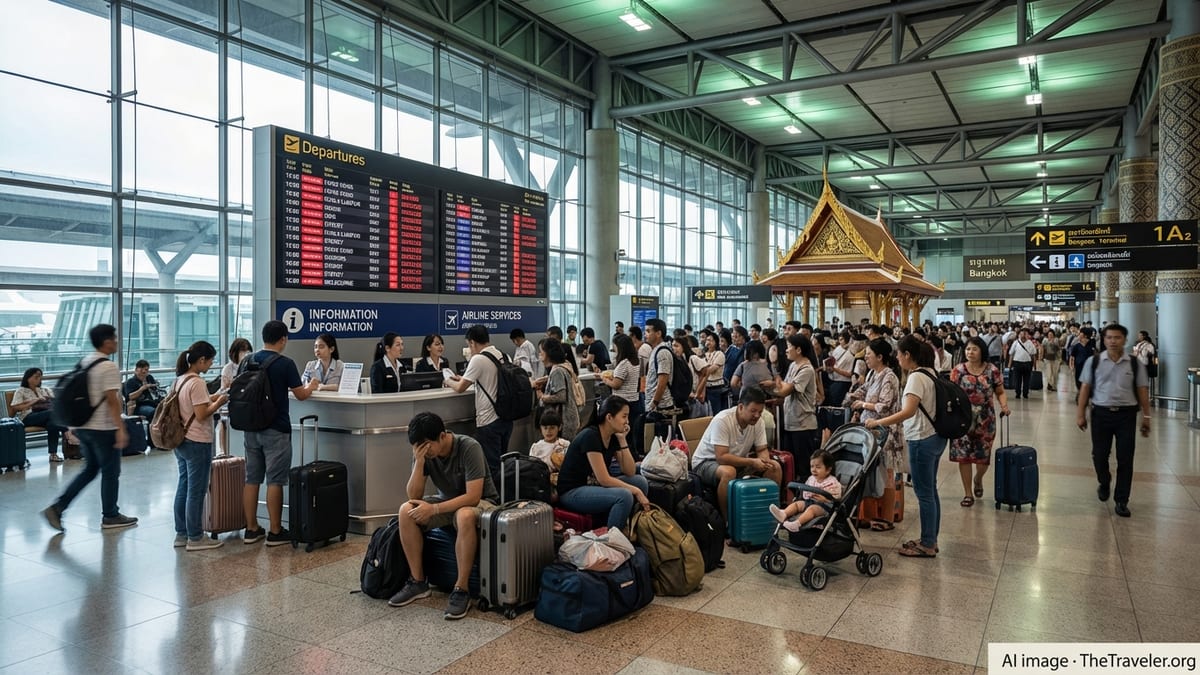
Hundreds of passengers across Southeast Asia and Australia are facing missed connections, overnight airport stays and scrambling rebookings after a fresh wave of last minute cancellations and delays hit key routes through Bangkok and Hong Kong on February 21 and 22, disrupting travel plans for those flying from Kuala Lumpur, Sydney and Melbourne.
What Triggered the Latest Wave of Disruptions
The latest bout of travel chaos began on February 21, when several regional and long haul services operating through Bangkok’s Suvarnabhumi Airport were withdrawn or heavily delayed within hours of departure. Airlines including Cathay Pacific, Malaysia Airlines, Jetstar and MYAirline cut key services linking Bangkok with Hong Kong, Kuala Lumpur, Sydney and Melbourne, citing a mix of operational constraints, crewing issues and air traffic control flow restrictions.
Industry officials and travel management companies say the problem is not a single technical failure but a fragile regional network that is still rebuilding capacity. Many carriers are running tight schedules with limited spare aircraft and lean staffing. When one rotation goes out of sequence, the knock on effect can ripple across multiple hubs, from Bangkok and Hong Kong to Kuala Lumpur and major Australian gateways.
The timing has amplified the impact. The cancellations are hitting just as Southeast Asia moves into its official summer period, with the Thai Meteorological Department warning of unstable weather and summer storms building over Bangkok and central Thailand in the coming days. That has raised fears that further congestion, ground holds and weather related flow controls could worsen delays at Suvarnabhumi through the week.
At the same time, Hong Kong International Airport is operating with high loads as airlines rebuild regional schedules and prepare for the full opening of an expanded terminal later this year. Even when Hong Kong has only moderate same day delays, the combination of tight aircraft rotations and heavy passenger volumes leaves little slack when flights from Bangkok or Kuala Lumpur arrive late or not at all.
Bangkok Bottlenecks: How Suvarnabhumi Became a Pressure Point
Bangkok’s Suvarnabhumi Airport has increasingly become a pressure point in Southeast Asia’s air network. As one of the region’s busiest hubs and a preferred transfer point between South Asia, Southeast Asia and Australia, any disruption there immediately affects passengers headed for Hong Kong and Australian cities such as Sydney and Melbourne.
Airlines and airport staff have been grappling with several converging issues. Ground handling and security staffing have not fully caught up with demand, leading to occasional delays at gates and bottlenecks at check in and baggage loading. On peak travel days, departures are tightly banked within short windows, which means a ground delay or a short weather hold can cascade across dozens of flights in a matter of hours.
Thai weather authorities have also issued advisories for summer thunderstorms expected between February 23 and 25 over Bangkok and its surrounding regions. Thunderstorms, gusty winds and low cloud can force air traffic controllers to increase separation between aircraft and temporarily suspend ramp operations, compounding existing congestion. For passengers, this translates into rolling delays that may not be visible when they first check in but suddenly appear at the gate.
Adding to the pressure are higher operating costs and looming airport fee hikes which have pushed some carriers to trim backup capacity and operate with tighter schedules. With fewer spare aircraft and smaller pools of reserve crew, airlines have less flexibility to recover when an aircraft goes out of service or a crew reaches its duty time limit after prolonged delays.
Hong Kong Strains Under Tight Connections and High Loads
Hong Kong International Airport remains one of Asia’s most important connecting hubs, particularly for passengers traveling between Southeast Asia, Australia and North Asia. While real time data on February 22 indicates only modest cancellation rates, the average delays on both departures and arrivals have been elevated in recent weeks, leaving limited margin for error when inbound flights from Bangkok or Kuala Lumpur are disrupted.
The airport is in the midst of a major expansion, including the progressive reopening and ramp up of a second terminal and the full integration of a third runway. The project is designed to boost long term capacity, but during the transition the system is highly sensitive to schedule shocks. When flights from Bangkok are canceled and passengers are rebooked through other Southeast Asian hubs, Hong Kong can see sudden surges of late evening arrivals that strain immigration, baggage and transfer systems.
For travelers connecting in Hong Kong from Bangkok to long haul destinations such as Europe or North America, even a 60 to 90 minute delay on the first leg can mean missed onward flights. Airlines will generally prioritize reaccommodating premium and frequent flyer passengers on the next available services, but with regional load factors running high after the Lunar New Year peak, seats in the right cabin can be scarce for days on some routes.
The result, travel agents say, is a patchwork of solutions involving rerouting via Singapore, Kuala Lumpur, Manila or Taipei, with multi stop itineraries that are far from the non stop journeys many passengers originally booked. That, in turn, can put yet more pressure on ground operations and connection banks at the alternate hubs.
Impact on Passengers from Kuala Lumpur, Sydney and Melbourne
The disruption is being felt most acutely by travelers originating in Kuala Lumpur, Sydney and Melbourne who rely on Bangkok or Hong Kong as a transit point. For Kuala Lumpur based passengers bound for Hong Kong, canceled Bangkok segments have forced same day rebookings via other cities or overnight hotel stays near the Malaysian capital’s airport while they await new itineraries.
Australian travelers have been hit by a double squeeze. Services from Sydney and Melbourne to Bangkok or Kuala Lumpur that feed onward flights to Hong Kong have been running near full, limiting the ability to rebook large groups of disrupted passengers. When flights out of Bangkok are canceled at short notice, travelers from Australia can find themselves stranded mid journey or facing extended layovers that were never part of their original plans.
Travel consultants in both Australia and Malaysia report that families returning from school holidays and business travelers on tightly timed trips have been especially vulnerable. Many did not leave enough buffer time between regional segments and onward long haul departures, assuming that post pandemic schedules would run with pre pandemic reliability. Instead, rolling disruptions have exposed how thin the margin for error currently is.
Adding to the frustration, some passengers are discovering that basic economy or promotional fares give them fewer rights to free changes and refunds. While individual airlines have issued ad hoc waivers on certain sectors, the rules can vary by route and cabin, leaving many travelers unclear about what they can claim when a flight is canceled or significantly delayed.
Your Rights if Your Flight Is Canceled or Delayed
For passengers caught in this week’s turmoil, understanding their rights and options is essential. In general, when an airline cancels a flight, passengers are entitled to be rebooked on the next available service or receive a refund of the unused portion of their ticket. The specific remedies depend on the carrier’s contract of carriage, the fare type and, in some cases, the jurisdiction where the journey originates.
On routes touching Southeast Asia and Australia, there is no single regional rule equivalent to Europe’s compensation regulation, but consumer protections still apply. If the disruption is within the airline’s control, such as crew or operational planning issues, carriers often provide meal vouchers, hotel accommodation for overnight delays and ground transport between the airport and hotel. When bad weather or air traffic control restrictions are to blame, airlines may still arrange care, but they are less likely to offer additional cash compensation.
Passengers traveling on codeshare tickets or itineraries involving multiple airlines need to pay close attention to which carrier is responsible for each segment. The operating airline, not necessarily the brand on the ticket, is usually the one that handles day of travel disruptions. That can complicate matters when, for example, a passenger flying from Sydney to Hong Kong via Bangkok has a through ticket issued by one airline but flown partly on a partner carrier that cancels a leg.
Travel insurance can fill some of these gaps, particularly for missed connections, extra accommodation costs and non refundable hotel or tour bookings at the destination. Policies, however, vary widely. Some only cover disruptions caused by specific events, while others exclude knock on delays if the original cause was outside the airline’s control. Reading the small print before departure is critical, as is keeping receipts and documentation if you need to file a claim later.
How to Navigate the Chaos: Practical Steps for Travelers
With conditions at Bangkok and, to a lesser extent, Hong Kong likely to remain fragile in the coming days, frequent travelers are adapting their strategies. The first step, experts say, is to build more slack into itineraries. Instead of tight one hour transfers between regional flights and long haul departures, passengers are increasingly booking three to four hour buffers, especially when transiting through Bangkok during the afternoon and evening peak.
Airline mobile apps and notification services have also become essential tools. Most major carriers now push real time updates on gate changes, revised departure times and cancellations. Enabling alerts, double checking flight status before leaving for the airport and re confirming connections during layovers can provide valuable early warning when schedules start to unravel.
At the booking stage, choosing flights with flexible change policies and avoiding the very last departure of the day on critical sectors can improve your odds of staying on track. A morning or midday flight that suffers a delay may still offer options for same day reaccommodation, whereas a canceled late night departure from Bangkok to Hong Kong often leaves passengers with no alternative until the following day.
Travelers transiting from Sydney, Melbourne or Kuala Lumpur can also consider diversifying their routings. While Bangkok and Hong Kong remain key hubs, connecting via Singapore or other regional gateways may reduce exposure to a single airport’s operational problems. That said, with demand high across the region, any rerouting should be planned early, as alternate flights can sell out quickly during disruption events.
What to Expect in the Coming Days Across Southeast Asia
Looking ahead, aviation analysts do not expect the disruption to resolve overnight. With summer thunderstorms forecast over central and northern Thailand and continued high passenger loads moving through Hong Kong, the network is likely to remain vulnerable to further cancellations and extended delays into next week.
Airlines are working to restore normal rotations, but this often depends on aircraft and crew being back in the right place at the right time. When a Bangkok to Hong Kong flight is canceled, that aircraft and its crew are no longer available for the return leg or for subsequent services that day. Restoring balance can take several days, particularly when carriers have limited spare jets or when crews are approaching their legal duty time limits.
In Hong Kong, the phased ramp up of a second terminal and increased short haul services to and from Southeast Asia are expected to eventually ease pressure on certain connection banks. In the short term, however, more flights and fuller terminals may mean longer queues at check in, security and immigration during peak periods, especially when disrupted passengers are being rebooked onto already busy departures.
For travelers planning imminent trips from Kuala Lumpur, Sydney or Melbourne that involve transits through Bangkok or Hong Kong, the most realistic outlook is one of cautious flexibility. Schedules are still operating, and most passengers will ultimately reach their destinations, but the journey may be longer, more complex and less predictable than timetables suggest.
Planning Ahead: How This Affects Upcoming Trips
The current disruption offers a clear warning for anyone booking Southeast Asia itineraries for the coming weeks and months. While airlines and airports across the region are steadily rebuilding capacity, the system remains finely balanced. Weather spikes, staffing shortages, technical issues or sudden surges in demand can all trigger fresh rounds of cancellations similar to those seen in Bangkok and felt across Hong Kong, Kuala Lumpur, Sydney and Melbourne.
Travel planners suggest starting with a realistic assessment of risk. If your trip involves tight, must make connections, such as cruise departures, major events or important business meetings, it may be wise to arrive at your final destination a day early rather than relying on same day connections through congested hubs. Booking directly with airlines, or through travel agents who offer 24 hour support, can also make it easier to rearrange plans quickly when disruptions occur.
Passengers should keep a close eye on official weather advisories for Thailand and on airport announcements from Bangkok and Hong Kong in the days leading up to departure. Staying informed allows travelers to adjust departure times, change connections or switch routings before disruptions peak. Those holding tickets from Kuala Lumpur, Sydney or Melbourne into the affected hubs may also wish to monitor their airlines’ travel alert pages for waivers that allow free date changes during periods of severe disruption.
For now, industry observers say the chaos surrounding Bangkok and its knock on effects in Hong Kong are unlikely to deter demand for travel in and out of Southeast Asia, but they are a reminder that post pandemic aviation remains in a delicate recovery phase. Passengers who plan ahead, build in buffers and stay flexible stand the best chance of getting where they are going, even when the network comes under sudden strain.