

More news on this day
Ben Gurion International Airport is facing renewed disruption this week as El Al, United Airlines, Aegean Airlines, Georgian Airways, Air France and other carriers suspend 37 flights and delay many more, snarling air travel between Tel Aviv and major hubs including Newark, Athens, Larnaca and Tbilisi.
Get the latest news straight to your inbox!
Wave of Cancellations Concentrated on Key International Routes
The latest disruptions at Israel’s main gateway come amid heightened regional instability and evolving security directives, prompting airlines to curb or temporarily halt services into and out of Tel Aviv. Airport data on Tuesday showed a fresh cluster of 37 suspended flights involving a mix of Israeli and foreign carriers, alongside a broader tally of more than one hundred cancellations over the past several days.
Flag carrier El Al has again been at the center of the upheaval, scrapping multiple departures on some of its busiest corridors, including services to Newark, Athens, Larnaca and Tbilisi. Several United Airlines flights linking Newark Liberty International Airport with Tel Aviv were also withdrawn from schedules, while Aegean Airlines, Georgian Airways and Air France each removed at least one rotation serving the Israeli hub.
The halted flights primarily affect transatlantic and regional connections that form a vital bridge between Israel, Europe and North America. Travelers bound for or connecting through Tel Aviv have been urged to verify their itineraries hours before departure, as airlines continue to adjust operations in response to rapidly shifting risk assessments and airspace restrictions.
Operational constraints at Ben Gurion, including tighter slot management and stricter passenger caps on inbound and outbound services, are further reducing capacity. Even flights that remain scheduled are often departing with fewer seats available, complicating efforts to rebook those whose journeys have been disrupted.
Stranded Passengers and Crowded Terminals in Tel Aviv
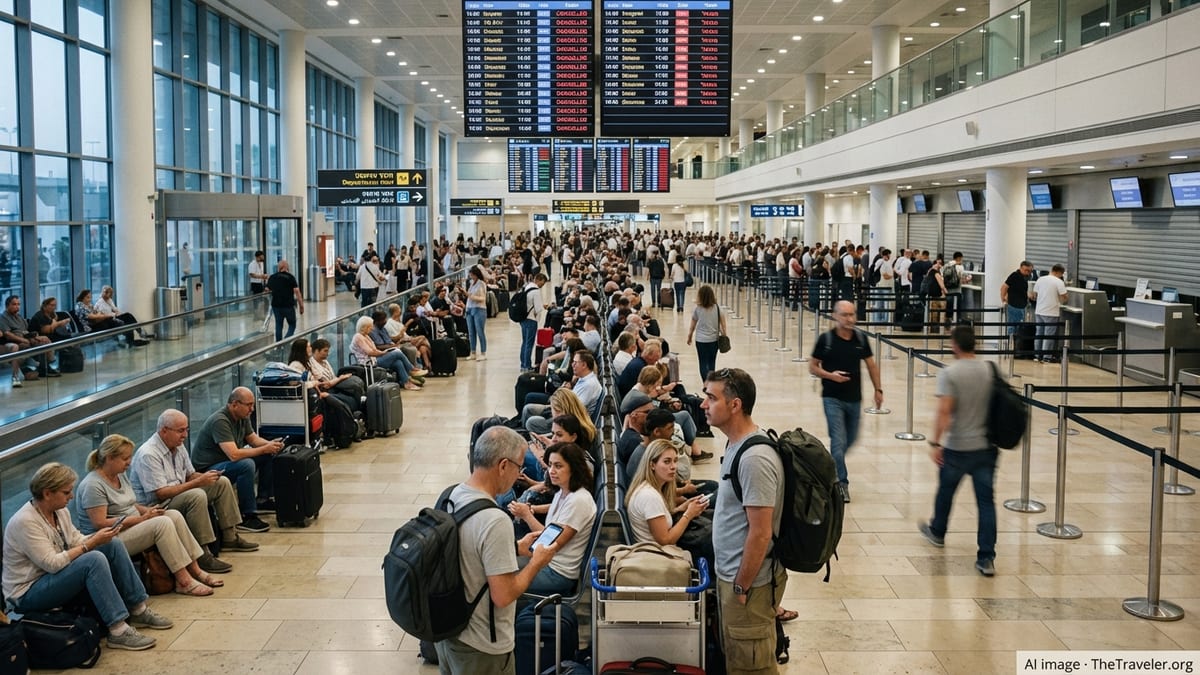
Inside Ben Gurion’s terminals, scenes of frustration and fatigue have become common as passengers try to navigate repeated schedule changes. Long queues have formed at airline service desks after last minute cancellations, with some travelers reporting that their flights were pulled from the departure board just hours before boarding was due to begin.
Travelers on El Al services have been particularly affected, as the carrier attempts to balance limited emergency or recovery flights with a backlog of ticketed passengers. Caps on passenger numbers per flight mean that even when aircraft operate, many customers are being bumped to later dates, fuelling tensions at check in and security lines.
Foreign carriers have also been fielding complaints from passengers whose itineraries included onward connections through Tel Aviv. United Airlines customers traveling from North America and Europe have described being rerouted via alternative hubs or offered future travel credits instead of immediate re-accommodation to Israel, reflecting how constrained capacity into the country has become.
Airport staff and ground handlers are trying to keep crowds moving, but shifting gate assignments, rolling delays and frequent status updates on the information screens are adding to the sense of uncertainty. Loudspeaker announcements throughout the day urge passengers to remain near their gates and stay in close contact with their airlines as circumstances continue to evolve.
Ripple Effects in Newark, Athens, Larnaca and Tbilisi
The impact of the decision to cut at least 37 flights linked to Ben Gurion is being felt well beyond Israel. At Newark Liberty, early morning departures to Tel Aviv operated by United and El Al were among those cancelled or delayed, leaving passengers to queue for rebooking on later dates or different routings through Europe and the Mediterranean.
In Athens, Aegean Airlines has been trimming its Middle East program in recent days, including select flights to and from Tel Aviv. Travelers connecting through the Greek capital have seen itineraries reshuffled, with some being rebooked on remaining El Al services or diverted through other European gateways when space allows.
Cyprus and the Caucasus region are also feeling the pressure. Larnaca, a key alternative for travelers heading to or from Israel, has recorded a spike in cancellations on routes serving the wider Middle East, while Georgian Airways adjustments have disrupted links between Tbilisi and Tel Aviv. The combined effect has reduced options for those attempting to reach Israel via short hop connections from neighboring countries.
These secondary hubs normally act as pressure valves when direct flights to Israel are curtailed. Now, as airlines simultaneously trim schedules across the region, the usual fallback strategy of routing via nearby capitals is providing only partial relief, extending total journey times and limiting available seats.
Airlines Juggle Safety, Capacity and Customer Commitments
Airlines involved in the latest round of suspensions say their decisions are driven first by safety and regulatory guidance. Carriers are reviewing overflight permissions, insurance provisions and crew duty limitations on a rolling basis, leading to dynamic adjustments that can see flights restored or removed from schedules with little notice.
At the same time, commercial pressures and customer obligations are forcing operators to weigh how best to deploy limited capacity. El Al has emphasized the need to prioritize core routes that maintain an uninterrupted air bridge to Israel’s largest source markets, while also operating special flights to repatriate stranded citizens and residents. Foreign carriers such as United and Air France are leaning on broader global networks to offer alternative routings where possible, though these options frequently involve multiple connections and overnight stays.
Industry analysts note that the current disruption underscores how vulnerable long haul and regional networks are to sudden geopolitical shocks. Once a critical mass of cancellations builds at a hub like Ben Gurion, the knock on effects through aircraft rotations, crew planning and onward connections can take days to unwind, even if security conditions later improve.
Travel insurers and consumer advocates are already fielding questions about passenger rights, as some travelers seek refunds for trips they no longer wish to undertake while others push for meal vouchers, hotel accommodation and compensation for missed events. The patchwork of national and regional regulations governing air passenger entitlements is adding another layer of complexity for those caught in the turmoil.
What Travelers Should Expect in the Coming Days
With no firm timeline for a full normalization of schedules into and out of Tel Aviv, airlines and airport authorities are advising travelers to prepare for continued volatility. Same day schedule sweeps, rolling delays and aircraft swaps are expected to remain common as carriers test demand, monitor security conditions and respond to official guidance.
Passengers are being urged to take a more proactive approach than usual, checking flight status repeatedly in the 24 hours before departure, ensuring their contact details are correctly registered with their airline and considering flexible travel options where available. Those with critical travel needs, such as medical appointments or family emergencies, are being encouraged to consult their carriers about backup routing through alternate hubs that still have seats.
For now, the experience at Ben Gurion and across connected airports in Newark, Athens, Larnaca, Tbilisi and other cities serves as a stark reminder of how intertwined global aviation has become. Disruptions at a single hub can quickly cascade across continents, affecting not only those flying to and from Israel but also the broader web of connections that keep international travel flowing.
As airlines, regulators and travelers adapt to this latest round of turbulence, the situation remains fluid. Schedules are likely to be revised repeatedly in the days ahead, and those planning to pass through the affected airports are being warned to expect longer journeys, fuller flights and, in many cases, significant changes to their original plans.