

More news on this day
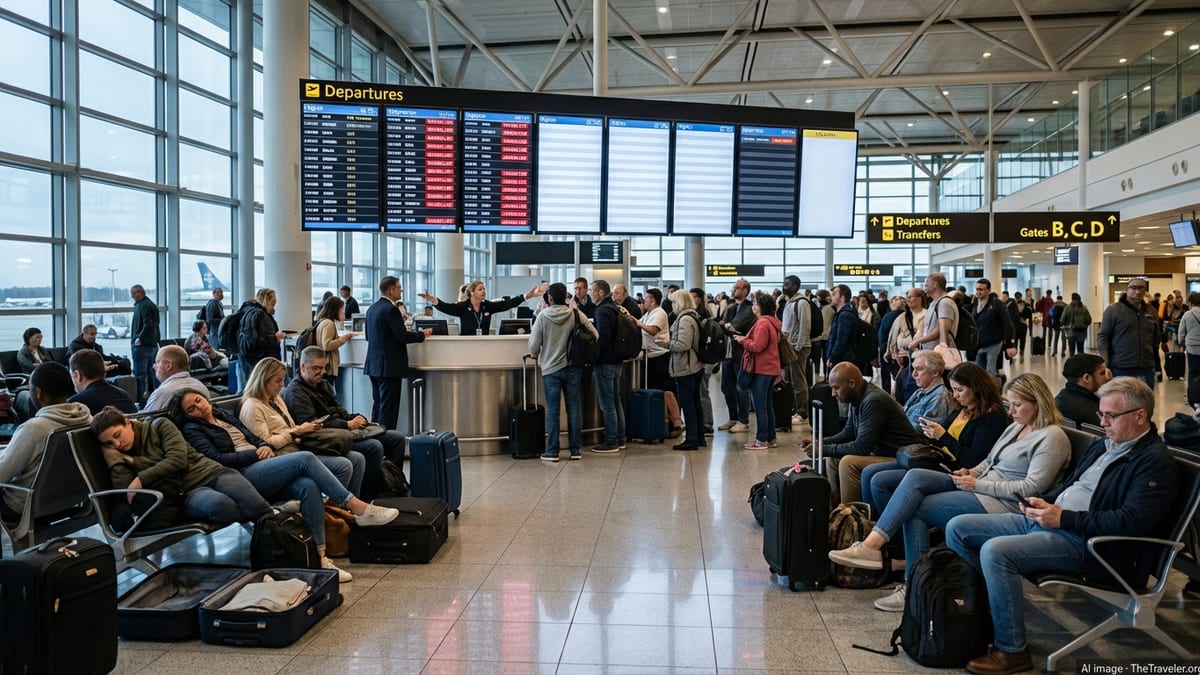
Hundreds of flights have been cancelled and thousands of passengers stranded across Cairo, Dubai and Istanbul as a combination of severe weather, regional security tensions and tight airline capacity triggers one of the most disruptive weeks for air travel in the wider Middle East so far this year.
Get the latest news straight to your inbox!
Severe Weather and Regional Tensions Converge on Key Hubs
Recent days have brought a complex mix of threats to aviation across North Africa and the Middle East, with sand-laden winds over Egypt, powerful storm systems sweeping Turkey and the eastern Mediterranean, and ongoing security concerns around Gulf airspace. Publicly available flight tracking data and regional media coverage indicate that, taken together, these factors have contributed to the cancellation of well over 375 flights touching Cairo, Dubai and Istanbul, alongside thousands more delays across the region.
In Egypt, heavy winds, dust and unsettled weather across Greater Cairo and the Western Desert in late March led the national carrier to issue an emergency alert, advising passengers to allow extra time for journeys to the airport amid reduced visibility and congestion on access roads. The alert coincided with a broader wave of schedule adjustments that has seen Cairo International Airport repeatedly reconfigure departure banks serving Gulf destinations.
Across the eastern Mediterranean, storm systems passing over Türkiye in late March triggered intense disruption at Istanbul’s airports. Industry data compiled by passenger-rights platforms show that storms on 29 and 30 March alone led to hundreds of cancellations and several thousand delays in Europe and Türkiye, with Istanbul’s Sabiha Gökçen among the hardest-hit facilities. That initial shock has been followed into April by rolling knock-on delays and selective cancellations as airlines continue to reset their schedules.
At the same time, Gulf hubs including Dubai have been operating against a backdrop of recent regional military tensions, earlier missile and drone incidents affecting airport infrastructure, and an unusually active storm season in nearby Oman and along parts of the Arabian Peninsula. While Dubai International Airport has remained operational, carriers have applied more conservative scheduling around certain routings, magnifying the impact of any fresh operational challenge.
Cairo: Sandstorms, Rerouted Traffic and Strained Schedules
Cairo’s role as both a national gateway and a diversion hub has amplified the impact of recent disruptions. In early March, Egyptian airports collectively received more than twenty diverted international flights in a single day as nearby airspace closures forced aircraft to reroute, pushing extra volume into already busy terminals and air corridors. On the same day, nearly fifty scheduled services to Gulf destinations were cancelled from Egypt’s airports, underscoring how quickly disruptions can cascade when regional airspace tightens.
For several weeks, Egypt’s flag carrier has maintained an extended flexibility policy for tickets on routes affected by the shifting security picture, covering travel from late February through late April. At the same time, the airline has had to contend with adverse weather at home. A late-March storm system brought strong winds, blowing dust and periods of heavy rain to Cairo and the Suez Canal area, conditions that can limit runway capacity and extend separation between takeoffs and landings.
Operationally, this has translated into waves of day-of-travel cancellations and rolling delays, particularly on shorter regional flights that airlines often trim first when weather or airspace constraints arise. While not all of these cancellations are concentrated on a single day, cumulative figures across the affected period point to well over a hundred flights involving Cairo being removed from schedules or diverted elsewhere, with peak days seeing dozens of cancellations.
Travellers passing through Cairo this week are also adapting to procedural changes that intersect with the broader disruptions. From 11 April, the airport is phasing out paper arrival and departure cards for Egyptian nationals in favour of digital data collection, a move intended to shorten queues but which may initially add to confusion for some passengers already coping with rebookings and tight connections.
Istanbul: Storm-Slammed Operations and Airline Capacity Pressure
Istanbul’s airport system has experienced some of the most visible disruption in the region over the past fortnight. Detailed breakdowns from passenger-advocacy platforms indicate that severe weather across Europe and Türkiye on 29 March contributed to at least 364 cancellations and more than 3,000 delays in a single day, with Istanbul’s Sabiha Gökçen International Airport recording some of the largest impacts. Flight restrictions linked to strong crosswinds and reduced visibility continued into 30 March, stretching crew rosters and aircraft rotations.
The situation has been particularly acute for carriers heavily reliant on Sabiha Gökçen. Recent travel-industry coverage describes a “growing wave” of delays and cancellations for one major low-cost operator based there, with disruption now affecting not only domestic Turkish routes but also connections across Europe, the Middle East and parts of Asia. As that airline pares back selected frequencies and consolidates flights, passengers have reported schedule changes days or even weeks before departure dates, as well as last-minute cancellations when weather or airspace constraints tighten again.
These weather-related problems intersect with more chronic capacity challenges. Istanbul’s role as a bridge between Europe, Asia and the Middle East means that airlines schedule dense waves of connecting flights through relatively narrow time windows. When storms or strong winds force temporary reductions in arrivals and departures, there are limited opportunities later in the day to “catch up” lost movements without causing missed connections and aircraft being out of position for the following morning.
As a result, although immediate weather conditions over Istanbul have improved since the worst of the late-March storms, lingering knock-on effects are still being felt. Industry advisories continue to highlight Istanbul as an alternative hub for travellers avoiding certain Gulf routes, further tightening seat availability and leaving airlines little spare capacity to absorb fresh disruptions.
Dubai and the Gulf: Seasonal Storms Meet Security Concerns
Dubai International Airport, one of the world’s busiest international hubs, has been operating against an unusually volatile backdrop. In recent years, the city has experienced several instances of extreme rainfall that temporarily flooded runways and aprons, with earlier events forcing the cancellation or rescheduling of more than a thousand flights over short periods. Climate analyses now routinely describe the Gulf region as increasingly prone to intense, short-lived downpours that can overwhelm drainage systems and disrupt ground operations.
The current disruption is unfolding amid renewed attention on both weather risks and security vulnerabilities. Heavy rain and thunderstorms across parts of the United Arab Emirates and neighbouring Oman in late March and early April have coincided with regional tensions involving missile and drone activity. Publicly available reporting describes past incidents in which debris and fires linked to such attacks have briefly interrupted normal operations at Gulf airports, including Dubai, prompting carriers to temporarily suspend flights or reroute aircraft as a precaution.
In parallel, travel-industry analyses of March 2026 schedules show that major Gulf hubs collectively recorded at least 181 cancellations and hundreds of additional delays over a recent multi-day period. While those figures cover several airports across the region rather than Dubai alone, they illustrate how quickly operational strain can build when storms, security reviews and tight crew scheduling all converge.
With airlines still managing the after-effects of earlier strikes, equipment shortages and rerouted traffic from other parts of the Middle East, Dubai’s network has had limited slack to accommodate fresh disruption. Travellers connecting between Europe, Asia and Africa through the city have therefore been among the most exposed to missed connections and unplanned stopovers when schedules suddenly shift.
What Travellers Need to Know Right Now
For passengers holding tickets through Cairo, Dubai or Istanbul over the coming days, the immediate priority is to assume that schedules remain fluid. Industry advisories and airline statements across the region continue to encourage travellers to check flight status repeatedly in the 24 hours before departure and again before leaving for the airport, as same-day aircraft and crew reallocations are common when weather or airspace conditions deteriorate.
Flexible rebooking and refund policies remain in place on many affected routes, especially for tickets issued before the latest wave of disruptions on services touching conflict-affected airspace or storm-prone areas. In several cases, carriers are permitting one-time free changes to alternative dates or nearby airports, provided passengers take action within specified windows. However, strong demand for alternative routings via secondary hubs such as Istanbul and Cairo means that the most convenient replacement options can sell out quickly.
At the airport, travellers should be prepared for longer queues at check-in, security and immigration, particularly during the morning and late-night peaks when most long-haul connections depart. Local reporting from Cairo and Istanbul highlights that ground transport to and from airports can also be affected by heavy rain, dust storms or flooding, so building in additional travel time on the roads is prudent.
Finally, passengers connecting through the region are being encouraged by consumer-rights organisations and travel advisers to familiarise themselves with the compensation and care rules that apply to their journey. Depending on the airline’s home country, the origin of the trip and the exact cause of the delay or cancellation, travellers may be entitled to meal vouchers, hotel accommodation or partial refunds, even when adverse weather or security concerns limit eligibility for full cash compensation. Understanding these frameworks before disruption hits can help travellers make faster decisions when rebooking options appear.