

More news on this day
Travelers across Asia faced another difficult day as publicly available tracking data indicated that China Eastern, Lao Airlines and Tibet Airlines together cancelled 33 flights and delayed 416 more, disrupting journeys through Beijing, Lhasa, Vientiane, Xining, Kunming and additional hubs across China, Laos, Thailand, India and neighboring countries.
Get the latest news straight to your inbox!
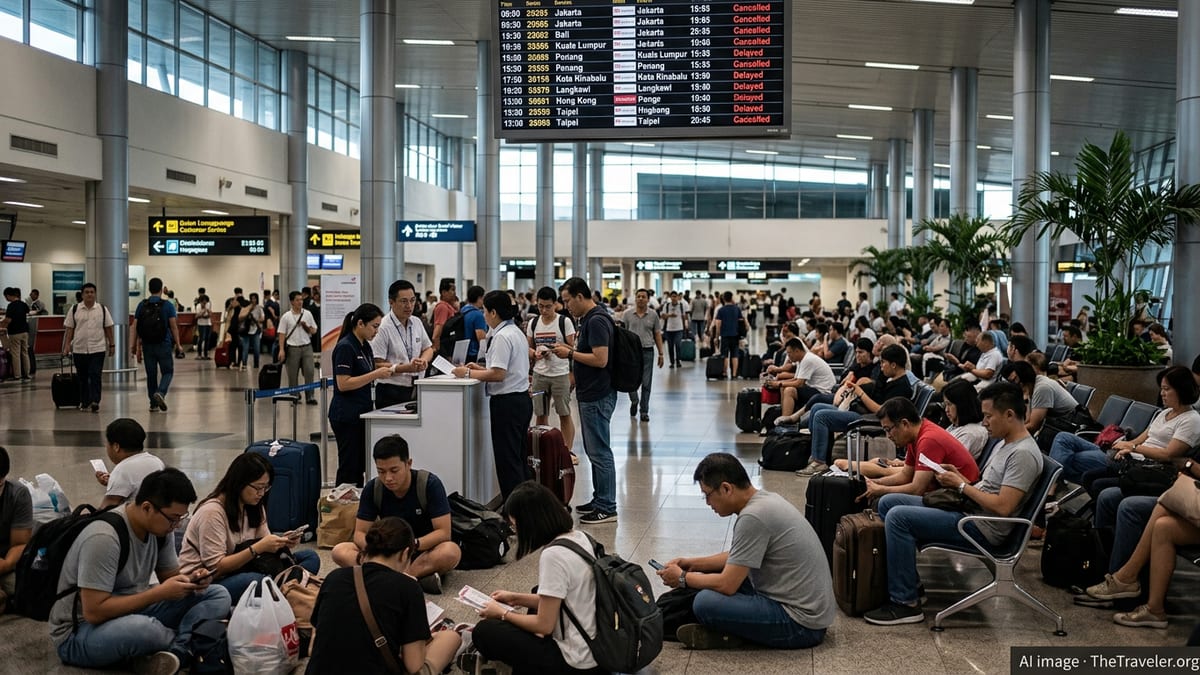
Disruptions Ripple Across a Web of Asian Routes
The latest figures, drawn from flight tracking services and industry summaries for early April 2026, point to an unusually concentrated cluster of operational problems affecting the three carriers. Aggregated reports describe more than thirty cancellations paired with several hundred late departures and arrivals, a scale that has left aircraft and crews out of position and passengers facing missed connections across multiple borders.
China Eastern, one of China’s largest network airlines, appears to account for a significant share of the delays, reflecting its dense schedules from eastern China into Southeast and South Asia. Tibet Airlines, operating thinner networks from high altitude bases in the country’s west, and Lao Airlines, which relies heavily on regional links around Vientiane, have also seen services scrubbed or pushed back, amplifying disruption for travelers using these airlines as regional connectors.
The pattern mirrors earlier early April disruptions, when published coverage highlighted more than 40 cancellations and nearly 500 delays involving China Eastern and Tibet Airlines across China’s domestic network. Observers note that even modest percentages of cancelled or late services at large carriers can translate into thousands of affected passengers once connecting itineraries are factored in.
Because the affected routes link major capitals with secondary cities and resort destinations, the operational strain has spilled beyond the primary hubs and into smaller airports in Laos, Thailand and India, where fewer frequencies make it harder for passengers to secure quick alternative departures.
Pressure Points in Beijing, Lhasa, Vientiane, Xining and Kunming
Beijing, Lhasa, Vientiane, Xining and Kunming have emerged as key pressure points in the current wave of disruption. Data compiled from airport status boards and regional reporting indicate that services touching these cities have been disproportionately represented in cancellation and delay tallies, reflecting their role as strategic nodes in the networks of China Eastern, Lao Airlines and Tibet Airlines.
At Beijing’s major airports, China Eastern’s domestic and international flights serve as vital feeders to onward services across China and into Southeast Asia. When a scheduled departure from a provincial city arrives late into the capital, onward flights to Thailand or India can quickly be affected, forcing passengers to be rerouted through other Chinese hubs or to accept overnight stays.
In Lhasa and Xining, Tibet Airlines has to contend with the operational complexity of flying in and out of high elevation airports that are more vulnerable to changing weather and air traffic control restrictions. Publicly available analyses of recent disruption patterns in China have repeatedly linked western hubs to cascading delays, as thin schedules mean each cancelled or heavily delayed flight removes a key link in already sparse networks.
Vientiane and Kunming illustrate how regional gateways can also become chokepoints. Lao Airlines uses Vientiane as its primary hub for regional services, while Kunming remains a central platform for China Eastern’s flights into South and Southeast Asia. When departures from these cities fall behind schedule, travelers bound for Thailand’s resort markets or Indian business centers may discover that their connection options narrow quickly.
Knock-On Effects in Thailand, India and Neighboring Markets
The turbulence affecting the three carriers is not confined to their home bases. According to regional travel media and aviation analytics, late arriving aircraft from China and Laos are feeding into knock on disruption at airports in Thailand and India, particularly where China Eastern and Lao Airlines operate popular leisure or student travel routes.
Bangkok’s main gateway and Thai resort airports have reportedly seen a rise in arrival delays on China Eastern and Lao Airlines services, complicating onward domestic connections on local carriers. Travelers arriving late from Kunming or Vientiane can miss evening departures to island destinations, forcing last minute hotel bookings and same day ticket changes during an already busy spring travel period.
In India, cities such as Delhi, Mumbai, Kolkata and smaller secondary airports that host China Eastern or codeshare services have experienced similar strains when inbound flights arrive hours behind schedule. Industry commentary on recent regional airspace disruptions and weather events suggests that Indian airports are still working through residual congestion, which can magnify the impact of each late or cancelled arrival from abroad.
These pressures come on top of broader instability in Asia Pacific air travel. Recent airspace closures and severe weather episodes across parts of the Middle East and Europe have already forced many long haul carriers to reroute or trim schedules, leaving global aircraft and crew resources stretched. The latest Chinese and Southeast Asian disruptions therefore land in a network that has limited spare capacity to absorb fresh shocks.
Weather, Airspace Constraints and Operational Strain
While airline specific statements remain limited, publicly available information from aviation data firms and passenger rights organizations points to a familiar mix of underlying drivers. Fast moving weather systems across China and neighboring regions have repeatedly caused widespread delays, with some days in late February and March already recording more than one thousand delayed flights in China alone.
At the same time, airspace restrictions and route adjustments tied to closures in parts of the Middle East have forced many Asian and European airlines to adopt longer routings or temporary suspensions on certain corridors. Reports on those closures describe substantial cancellation rates for Gulf based carriers and a measurable reduction in Chinese airline services to the region, contributing to a tight global aircraft rotation pattern that can magnify even local operational issues.
Operational strain within airports adds another layer of complexity. Staffing challenges in ground handling, security and air traffic control have periodically reduced the margin for error at busy hubs. When combined with strong seasonal demand around holidays and early spring travel, even short bursts of thunderstorms or low visibility can tip schedules into rolling delays.
Analysts tracking the latest figures for China Eastern, Lao Airlines and Tibet Airlines emphasize that the three carriers are exposed to many of these same constraints. As a result, a mechanical inspection, crew scheduling challenge or temporary runway closure at one airport can reverberate across their networks, especially on days when most seats are already sold.
What Stranded Passengers Are Being Advised to Do
Consumer advocates and passenger rights organizations monitoring the situation across Asia are urging affected travelers to rely on official airline mobile apps, airport display boards and verified flight tracking tools for the most current status information. Because schedules are changing rapidly, same day rebooking options often appear first through carrier controlled digital channels rather than through third party sellers.
Guidance shared by travel assistance services stresses the importance of documenting each disruption. Passengers are encouraged to keep boarding passes, booking confirmations and receipts for meals, ground transport and emergency accommodation, as these may support refund or reimbursement requests under airline policies or local regulations.
In markets where compensation frameworks exist for long delays or last minute cancellations, specialized advisory sites recommend that travelers check whether their route and airline fall under those rules. Even in jurisdictions without statutory compensation, many airlines maintain internal guidelines on providing meal vouchers, hotel stays or fee free itinerary changes when disruptions are within carrier control.
For those with multi country itineraries across China, Laos, Thailand and India, travel planners suggest allowing additional buffer time between flights and considering more conservative connection windows while the current wave of disruption continues. With disruptions running into the hundreds of flights across the three carriers, aviation analysts caution that it may take several days of stable operations for aircraft and crews to fully return to their normal positions.