

More news on this day
Travelers across Asia faced cascading disruption as a wave of cancellations and delays involving China Eastern, Lao Airlines and Tibet Airlines left passengers stranded from Beijing and Lhasa to Vientiane, Xining, Kunming and onward to Thailand and India.
Get the latest news straight to your inbox!
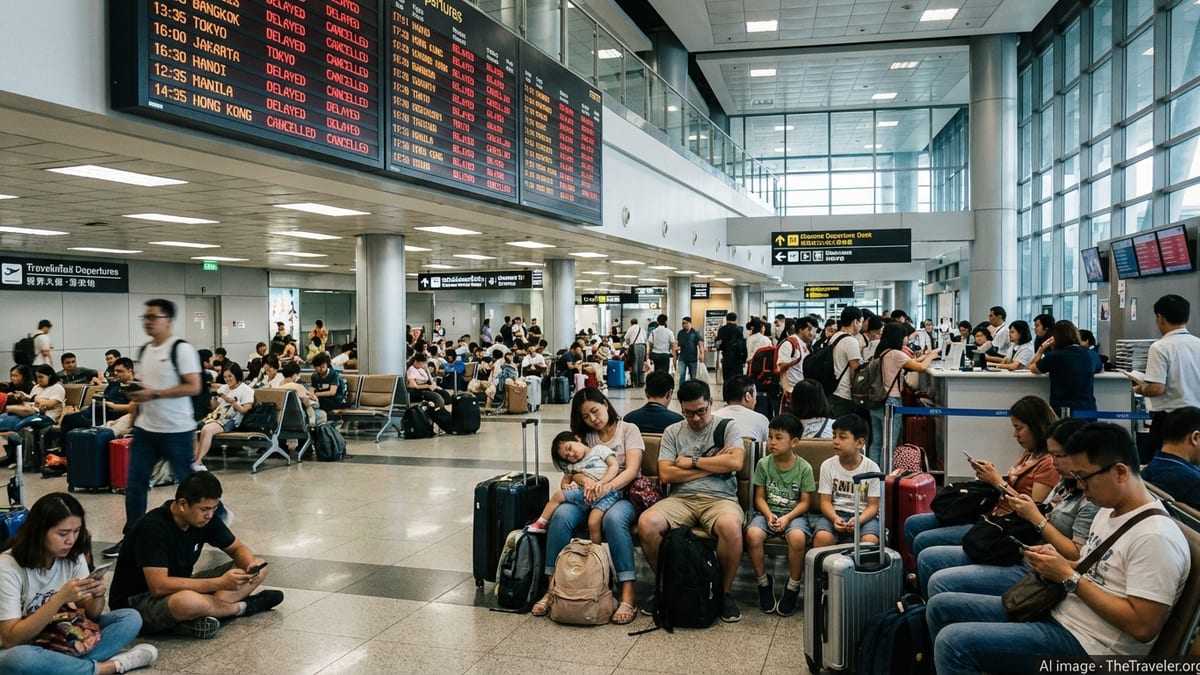
Widespread Cancellations and Delays Ripple Across Routes
Publicly available flight tracking data and regional media coverage indicate that at least 33 flights operated by China Eastern, Lao Airlines and Tibet Airlines were canceled, with a further 416 listed as delayed, over a compressed time window affecting key hubs in mainland China, Laos, Thailand and India. The pattern of disruption centered on trunk routes linking Beijing, Kunming, Xining and Lhasa with Southeast Asian gateways such as Vientiane and and onward connections into Bangkok and Indian cities.
The affected services span a mix of domestic Chinese sectors and international routes, including links from Kunming and Xining to other Chinese provincial capitals, as well as cross-border operations between Vientiane and major cities in China. The irregular operations created a knock-on effect for connecting travelers, particularly those using regional hubs in Yunnan and the Tibetan Plateau as transfer points toward Thailand and India.
Flight status boards at impacted airports showed rolling delays extending well beyond scheduled departure times, with some aircraft held on the ground for several hours before either departing late or being removed from the schedule. For travelers attempting same-day onward connections, this meant abrupt itinerary changes and, in many cases, enforced overnight stays.
While precise passenger numbers are not published, the volume of disrupted flights suggests that several thousand travelers may have been affected across the three airlines, given the typical capacity of narrowbody aircraft used on these regional routes.
Key Hubs From Beijing to Vientiane Struggle to Cope
Beijing’s main airports, along with Kunming Changshui International Airport and Xining Caojiabao International Airport, emerged as some of the hardest hit nodes in the network. These hubs handle substantial volumes of domestic and regional traffic for China Eastern and its partners, meaning even a limited number of cancellations can quickly translate into packed departure halls and long queues at service counters.
In the Himalayan region, flights operated by Tibet Airlines into and out of Lhasa were reported among the disrupted services. Lhasa’s Gonggar Airport sits at high altitude and is particularly vulnerable to weather and airspace constraints, which can compound operational challenges when airlines are already under pressure elsewhere in their networks.
Further south, Vientiane’s Wattay International Airport experienced its own share of delays on routes involving Lao Airlines and codeshare services connecting to Chinese carriers. As a smaller regional gateway with more limited spare capacity and fewer alternative departures each day, even a handful of delays and cancellations can leave passengers with few immediate rebooking options.
Additional ripple effects were noted at busy transit points in Thailand and India, where passengers arriving late from China or Laos missed onward flights and were forced to reschedule for later departures. Airline and airport information channels highlighted extended queues at transfer desks as staff worked through rebooking backlogs.
Operational Pressures and Weather Among Likely Drivers
Published schedules and operational updates suggest a complex mix of factors behind the spike in cancellations and delays, including localized weather issues, congestion in busy air corridors and routine technical or crew-rotation constraints. In high-altitude and mountainous regions such as Tibet and parts of Yunnan, low cloud, strong winds and changing visibility can quickly lead to revised departure times or diversions.
China Eastern’s publicly available conditions of carriage outline general procedures for handling delays and cancellations, noting that passengers may be rebooked onto later flights or provided with documentation attesting to disruption for insurance or employer purposes. Similar policies are referenced by Lao Airlines and Tibet Airlines, where disruptions typically trigger options for date changes, rerouting or refunds in specific circumstances.
Industry data for Asian carriers show that on-time performance can fluctuate significantly during busy travel periods or when airspace restrictions come into play, particularly around major hubs that already operate near capacity. When several airlines experience issues simultaneously in a connected region, the resulting network effect often magnifies the disruption felt by individual travelers.
Aviation analysts regularly point to the vulnerability of multi-leg itineraries that involve tight connections at regional hubs. In such cases, even relatively short delays on the first sector can cascade into missed onward flights and the need for ticket reissuance, hotel stays and alternative routing through different airports.
Passengers Face Long Queues, Missed Connections and Extra Costs
Passengers caught up in the latest wave of disruption reported spending extended periods waiting for information at departure gates and transfer desks as airlines worked to reshuffle aircraft and crews. In larger airports such as Beijing and Kunming, high passenger volumes added to the pressure on ground staff as rebooking, voucher issuance and baggage tracing had to be handled simultaneously.
Travelers on itineraries connecting to Thailand and India were especially exposed, as many relied on single daily departures for specific city pairs. When these services were delayed beyond connection windows or canceled outright, some were forced to rebook on later flights or accept rerouting that added significant hours to their journeys.
Additional out-of-pocket expenses are a recurring theme in such scenarios, with stranded passengers often needing to pay for meals, local transportation and sometimes last-minute accommodation if airlines or airports are unable to provide full coverage. Consumer advocates in the region regularly emphasize the importance of keeping boarding passes, receipts and written disruption records when seeking reimbursement.
For travelers with time-sensitive commitments, such as business meetings, medical appointments or tour departures, the operational turmoil can translate into missed opportunities and complicated insurance claims. In the absence of unified regional compensation rules, the level of support available can vary significantly depending on the carrier, ticket type and the stated reason for the disruption.
Guidance for Affected and Future Travelers
Travel organizations and aviation-focused consumer groups recommend that passengers currently affected by irregular operations prioritize confirming their latest flight status through airline apps, airport displays and official communication channels. Where flights show extended delays or cancellations, travelers are advised to request written confirmation of disruption along with clear information on rebooking or refund options.
For those planning upcoming trips through Beijing, Lhasa, Vientiane, Xining, Kunming and related hubs, recent events underscore the value of building longer connection windows, particularly when traveling during peak seasons or when transiting through weather-sensitive airports. Booking slightly earlier departures on the first leg of a multi-flight itinerary can provide additional flexibility if delays occur.
Insurance specialists frequently highlight the role of comprehensive travel policies that explicitly cover missed connections, accommodation for extended delays and reasonable incidental expenses. Travelers are encouraged to review policy wording carefully before departure to understand what documentation may be required in the event of a disruption similar to the latest cancellations and delays affecting China Eastern, Lao Airlines and Tibet Airlines.
As airlines and airports across the region work to clear backlogs and return operations to normal, passengers are likely to see residual delays and occasional last-minute schedule adjustments. Monitoring flight information closely and maintaining flexible plans remain key strategies for navigating an increasingly complex regional aviation landscape.