

More news on this day
Air travel to and from Cyprus has been thrown into turmoil this week, with dozens of flights cancelled at Larnaca and Paphos airports as regional tensions linked to the Iran conflict and a recent drone incident near RAF Akrotiri trigger mounting safety precautions and schedule upheaval.
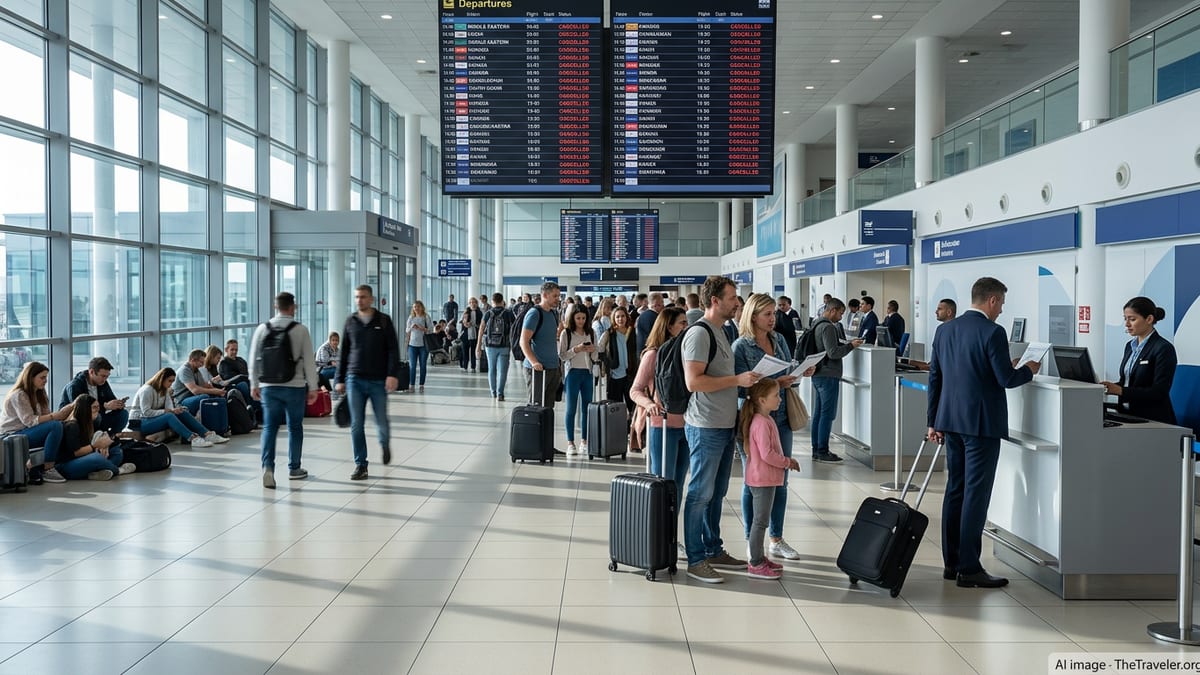
Dozens of Flights Scrapped as Regional Crisis Ripples Across Cyprus
On Tuesday 10 March, Larnaca International Airport faced another wave of disruption, with roughly 30 to 40 flights cancelled in a single day, following a similar pattern on Monday when 38 flights were scrapped amid the ongoing crisis in the Middle East. Airport scheduling data indicates that the bulk of the cancellations involve services linking Cyprus to key regional hubs in Israel, Lebanon, the Gulf and certain UK routes, reflecting carriers’ caution around volatile airspace and operational risks.
Paphos International Airport, which initially appeared more insulated, has also been affected, with a smaller but still significant number of flights cancelled or reshuffled. Local reports on Tuesday cited around five cancellations to and from Paphos, primarily on routes intersecting with the broader conflict zone. The result is a patchwork of disruption that is catching many holidaymakers and returning residents off guard at the height of the late-winter travel period.
Officials and airline representatives stress that the safety of passengers and crew remains the overriding priority, especially after a drone strike earlier this month targeted the RAF Akrotiri base on the island and prompted a brief closure of Larnaca following the sighting of an unidentified object. Those incidents have reinforced Cyprus’s proximity to the region’s flashpoints and underlined the sensitivity of air operations in its skies.
Although both airports remain open, the cancellations underscore how quickly regional security flare-ups can cascade into widespread travel disruption in a country that depends heavily on smooth air connectivity for tourism and business.
Lufthansa Group, British Airways and Low-Cost Carriers Juggle Schedules
The cancellations have hit a mix of full-service and low-cost airlines that connect Cyprus to Europe and the wider region. Carriers within the Lufthansa Group, including Lufthansa, Austrian Airlines, Edelweiss and Eurowings, temporarily pulled back from parts of their Middle Eastern networks and adjusted Cyprus frequencies in recent days. British Airways, easyJet and other European airlines have also reworked schedules, balancing strong demand to and from Cyprus with the constraints posed by closed or congested air corridors further east.
Budget carrier easyJet, which had briefly suspended some flights linking Larnaca and Paphos with major UK bases such as London Gatwick and Manchester in the immediate aftermath of the drone incident and airspace alerts, has begun restoring services while continuing to monitor security assessments closely. Similar patterns are evident among regional and Gulf-based airlines that use Cyprus as a bridge between Europe and the Middle East, with some routes operating normally and others still on hold.
Hermes Airports, the operator of both Larnaca and Paphos, has highlighted that despite the cancellations, overall connectivity with mainland Europe is gradually stabilising. Flight plans for early this week show more than 100 scheduled movements at Larnaca and around three dozen at Paphos on certain days, underlining that a significant proportion of services are still running even as specific destinations remain affected.
Airline industry analysts say the constant recalibration of timetables is likely to continue as long as airspace restrictions, military activity and insurance considerations remain fluid. In practical terms, that means travellers can expect rolling changes rather than a single, clear-cut period of disruption followed by a quick return to normal operations.
Stranded Travellers Face Long Queues, Uncertain Rebooking Options
For passengers caught in the middle of the upheaval, the impact has been immediate and personal. At Larnaca, travellers have reported early-morning queues at airline desks, last-minute cancellation notices and difficulty reaching customer service channels as call centres and online chat teams struggle with a surge in demand. Some visitors transiting through Cyprus to reach destinations in the Gulf or Asia have found themselves unexpectedly grounded, with onward flights cancelled and limited alternative routings available.
At Paphos, where the volume of cancellations is lower, the experience is still disruptive. Tourists preparing to fly back to the United Kingdom or northern Europe have described receiving late-night messages advising them that their flights have been scrapped or retimed, leaving them to negotiate new arrangements with airlines or tour operators. While many carriers are offering free rebooking or refunds, the shortage of available seats on remaining services means not all passengers can be accommodated quickly.
Travel agents across Cyprus report a spike in calls from anxious customers seeking clarity on upcoming trips. Some are choosing to postpone non-essential travel to and through the region, while others are pressing ahead but building in extra contingency time for possible delays or overnight stops. Industry representatives insist that Cyprus itself remains safe for visitors, emphasising that the disruptions relate to regional airspace and operational precautions rather than direct threats on the island’s main tourist resorts.
Consumer rights experts note that under European passenger protection rules, travellers whose flights are cancelled are generally entitled to a choice between a refund and rerouting, although compensation may be limited when disruptions are caused by extraordinary circumstances such as war or security emergencies. Passengers are being urged to keep documentation of all expenses and communications with airlines in case of later claims.
Authorities Stress Safety While Promoting Cyprus as Open for Tourism
The Cypriot government and airport authorities have moved to reassure both residents and international markets that the country’s airports are operating under heightened but tightly managed security conditions. Additional surveillance measures and coordination with European and regional air traffic control centres have been implemented following the strike near RAF Akrotiri and the escalation of the Iran conflict, according to official statements.
Tourism officials are also keen to reinforce the message that Cyprus remains open for business. They point out that flights from key European source markets, including the United Kingdom, Germany and central Europe, are largely running, and that the island’s hotels, resorts and coastal towns are welcoming guests as normal. The main pinch points are routes intersecting with troubled Middle Eastern airspace and connections relying on Gulf hubs that have experienced temporary closures or military activity.
Local tourism associations warn, however, that sustained uncertainty could dampen last-minute bookings and complicate planning for the crucial summer season. Many hoteliers and tour operators are encouraging guests to purchase flexible fares and travel insurance with robust disruption cover, even as they express confidence that the current shock can be absorbed if stability returns to regional skies in the coming weeks.
Behind the scenes, Cyprus is working closely with European Union partners and regional aviation bodies to keep air corridors open where it is safe to do so and to ensure that contingency plans are in place should the conflict worsen. For a country whose visitor economy is heavily dependent on air links, maintaining confidence in the reliability and safety of its gateways at Larnaca and Paphos is a strategic imperative.
What Travellers Should Do If Their Cyprus Flight Is Affected
With the situation evolving day by day, airlines, airports and travel experts are offering consistent advice to anyone with upcoming flights to or from Cyprus. The overriding message is to check flight status repeatedly in the 24 hours before departure and again before leaving for the airport. Timetables published days in advance are proving highly vulnerable to last-minute changes as carriers adapt to new security notices and airspace bulletins.
Passengers whose flights are cancelled are being advised not to rely solely on airport desks, which can quickly become overwhelmed, but to use multiple channels including airline apps, official websites and authorised travel agents to request rebooking. Where possible, travellers are encouraged to be flexible on departure times and even departure airports in order to secure the fastest alternative route out of or into Cyprus.
Those already on the island are being told to allow additional time for airport procedures, as extra document checks and security screening may add to queues at peak periods. Travellers with tight connections through other regional hubs should consider contacting airlines to discuss options, given that onward legs through the Middle East remain particularly vulnerable to disruption.
For now, Cyprus finds itself at the intersection of a global travel industry under strain and a region grappling with conflict-related uncertainty. As Larnaca and Paphos airports work to restore predictable operations, anyone planning to pass through their terminals in the coming days will need patience, flexibility and a close eye on the latest updates.